



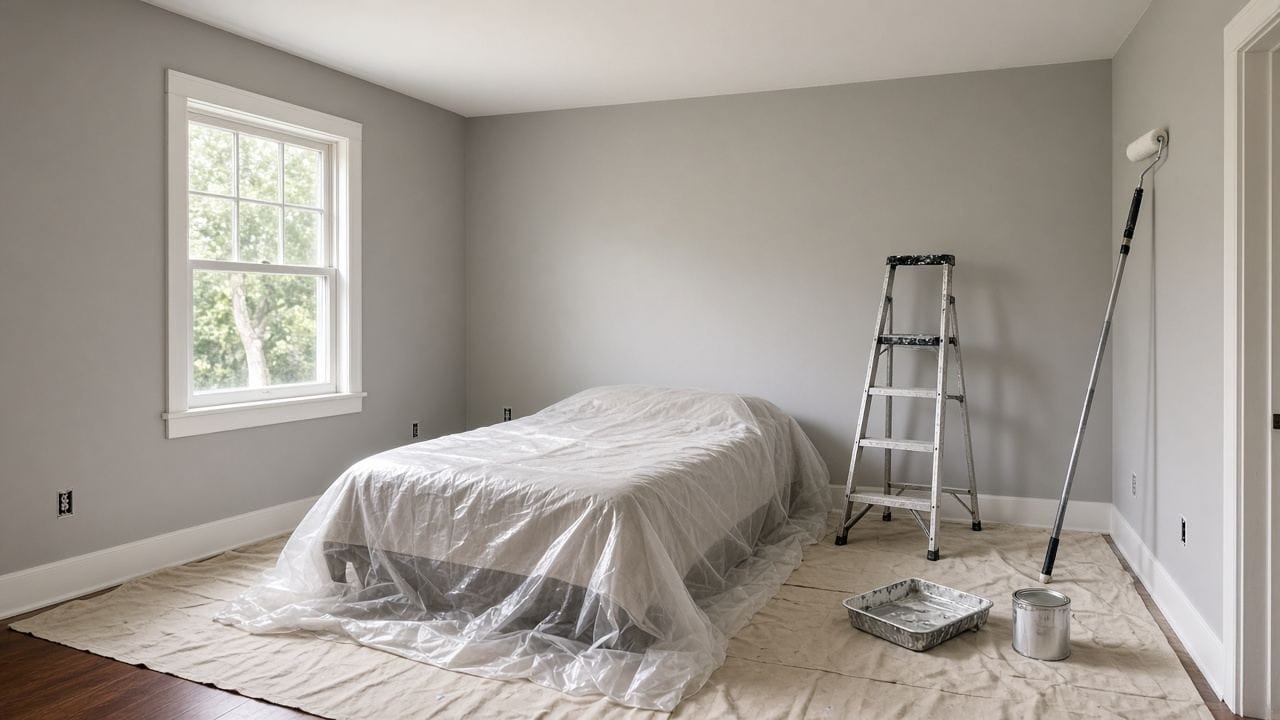
TL;DR: When you hire a painter for your interior, the crew protects the room, cleans the walls, patches and sands, primes what needs it, then paints in a set order: ceiling, trim, walls. Walls get two coats, which is what Benjamin Moore recommends for full hide and color. With recoat times of 1 to 4 hours on common premium paints, a 12x12 bedroom in good shape usually fits in one working day: HomeAdvisor puts a room at six to ten hours, including prep and drying between coats.
Getting estimates for an interior? Call or text Dave at (774) 217-9567. We walk the rooms with you and write down exactly what the crew will do in each one.
You have picked a color, signed an estimate and cleared the room. Then a crew arrives and, for the first part of the day, nobody opens a can of finish paint. That surprises a lot of people. Here is what a professional crew does between the first drop cloth and the final walkthrough, with the manufacturer guidance behind each step.
Do painters clean walls before painting?
Yes. A good crew washes or wipes down every wall it paints, because dirt and grease stop new paint from bonding. Sherwin-Williams says cleaning "will remove grime, cobwebs, dust and stains that can prevent your paint from adhering."
The manufacturers agree on the method:
- Warm water, top down. Benjamin Moore's guide to painting a room says to clean walls "with damp rags or a sponge and warm water, starting at the top and working downward," then "allow them to dry completely."
- Mild soap, then a rinse. Sherwin-Williams' wall prep guide calls for lukewarm water and mild soap, rinsed with a slightly damp cellulose sponge.
- Old paint gets a full wash. Sherwin-Williams' product data sheet for Duration Home Interior Latex Satin says existing painted surfaces "must be thoroughly washed clean and allowed to dry" before the finish goes on, because surfactant residue can remain on old paint if it is not removed.
Your part is smaller: clearing shelves, taking down art and giving the crew room to work. That checklist lives in our guide on how to prepare your home for painters.
What do painters do to prep walls?
They protect the room, then repair the surface so it is clean, solid and dry. On most MetroWest repaints that means filling holes, sanding the repairs, sealing stains and caulking gaps, in that order, before any finish paint goes on.
- Protect. Floors and remaining furniture under drop cloths, switch plates and outlet covers off.
- Fill and sand. Benjamin Moore says to repair cracks and small holes with spackling compound and sand them with 220-grit sandpaper or a sanding sponge. The dust comes off before anything else happens.
- Dull the gloss. The Duration Home data sheet says "glossy surfaces should be sanded dull," so new paint has something to grip.
- Seal stains. Water, smoke, ink, pencil and grease stains "should be sealed with the appropriate primer-sealer," per the same data sheet. Paint alone will not hold them back.
- Caulk after priming. Sherwin-Williams says gaps between trim and wall get acrylic caulk "after priming the wall and trim surface."
Older houses add steps. Cracked plaster needs real repair, which we cover in plaster wall repair before painting. And in any home built before 1978, the EPA's Renovation, Repair and Painting rule applies to "anyone paid to perform work that disturbs painted surfaces," which changes how sanding and cleanup are done. The Massachusetts side of that is in our lead paint guide for homeowners.
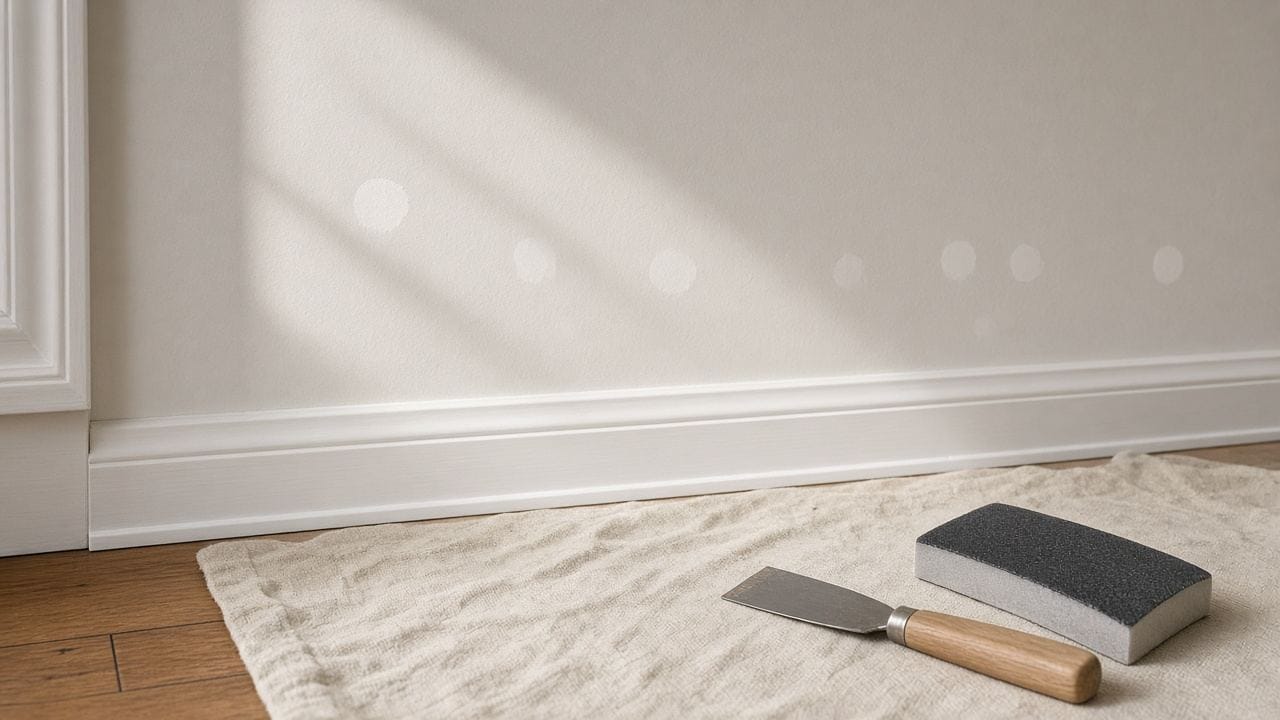
What is each prep step for, and what does it add to the time and cost?
Every prep step stops a specific failure. Washing and light patching are part of any professional repaint; real repairs, wallpaper and popcorn ceilings are priced on top. The figures below are national or Boston-area market figures from published cost guides, not our prices, and Angi notes that its Boston figures are national averages adjusted with a local price index rather than a survey of Boston painters.
| Prep step | What it is for | Market cost figure |
|---|---|---|
| Wash and dry the walls | Removes grime and residue so paint can bond | No published line-item figure; part of the base job |
| Fill, sand and patch | A smooth, solid surface with no dents or ridges showing through | $0.50 to $0.75 per sq ft for sanding and patching (Angi, national and Boston) |
| Drywall repair (water damage, cracked or peeling paint) | Rebuilds a wall that paint alone cannot fix | $300 to $900, average about $600 nationally; $300 to $1,000 on Angi's Boston page |
| Plaster repair | Stabilizes cracked, crumbling or water-damaged plaster | Average $48 per sq ft: about $22 for holes, $30 for cracks, $70 for crumbling, $100 for water damage (Angi) |
| Dull glossy or oil-based trim | Gives new paint something to grip | No published line-item figure; Angi's nearest is the sanding-and-patching rate |
| Seal stains with primer-sealer | Stops water, smoke and ink stains bleeding through the finish | Stain-blocking formulas sit at the high end of Angi's $15 to $40 per gallon paint range |
| Extra coat or primer for a big color change | Full hide when going dark to light | $50 to $70 per additional coat per 300 to 400 sq ft of wall (Angi) |
| Move furniture | Clear access and protection for what stays | $25 to $50 per hour of extra labor, likely wrapped into a per-square-foot estimate (Angi) |
| Remove wallpaper | Bare, sound wall before any primer goes on | Average $793, most pay $423 to $1,192, or $0.60 to $3 per sq ft; minor wall repair afterward $100 to $500 (Angi) |
| Test, then remove a popcorn ceiling | Rules out asbestos before anyone scrapes | Asbestos test average $483 ($231 to $776); removal $3 to $7 per sq ft on Angi's Boston page |
Sources, all Angi: interior (October 14, 2026), room and Boston room (July 8, 2026), plaster (July 9, 2026), wallpaper (September 29, 2026), asbestos testing (September 24, 2026), Boston popcorn removal (February 26, 2026).
Prep also adds drying time. Patch compound dries before sanding and primer before the finish. New plaster is slower: Benjamin Moore's Regal Select data sheet says new plaster "must be allowed to cure (30 days) before applying base coat." Angi's trim guide (October 1, 2026) puts one room's trim at 30 minutes to an hour per coat.
A popcorn ceiling has to be tested before it is scraped. Angi says that if your home was built before 1980, your popcorn ceilings may contain asbestos. The EPA's asbestos overview lists "textured paint and patching compounds used on walls and ceilings" among home products that may contain it, and its homeowner page says you generally can't tell by looking: "Taking samples yourself is not recommended." Our popcorn ceiling removal cost guide covers the steps. For wallpaper, see painting over wallpaper vs removing it.
What is the correct order to paint a room: ceiling, trim or walls first?
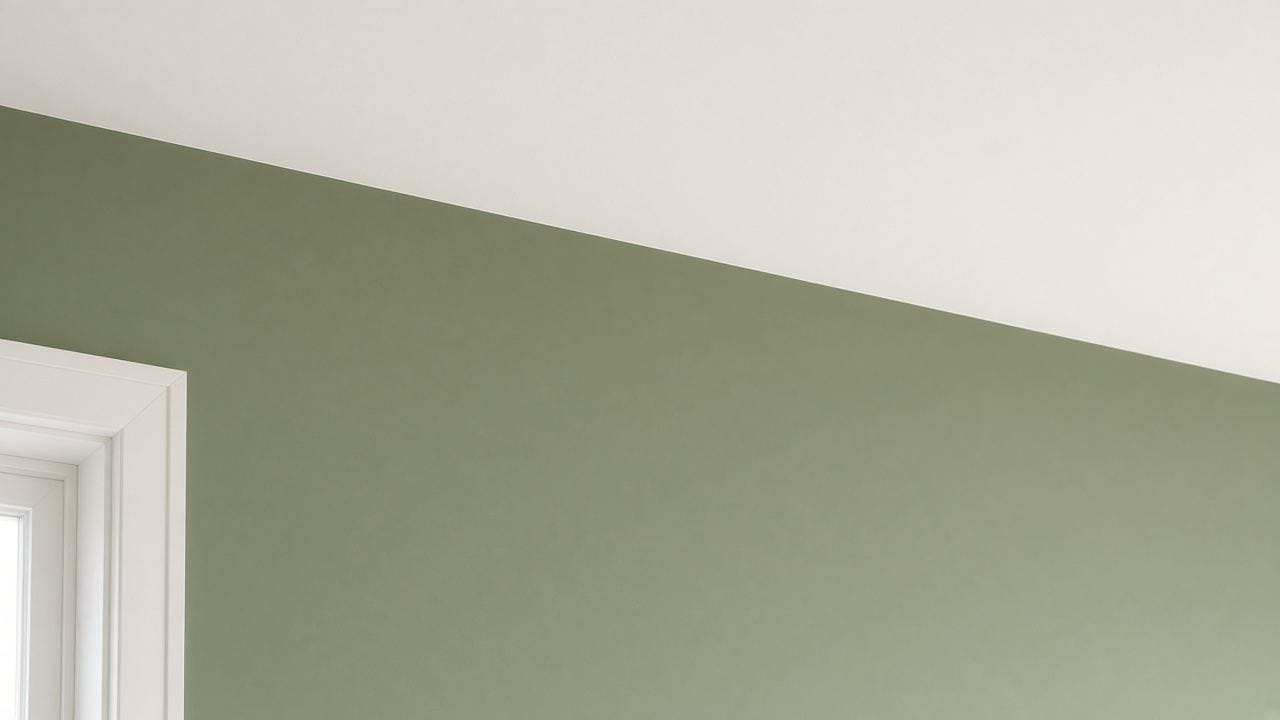
Ceiling first, then trim, then walls. That is the sequence in Benjamin Moore's seven-step guide: paint the ceiling, then trim, moldings and baseboards, then the walls, then let dry and apply a second coat.
The ceiling goes first because anything that drips or spatters from overhead lands on surfaces that have not been finished yet. Trim before walls lets the crew cut the wall color to finished, dry trim. Some painters reverse trim and walls, and both orders can produce a clean line. What should not change is that the ceiling leads and that each surface is fully dry before tape or a brush edge touches it.
How many coats do walls need, and do professional painters use primer?
Plan on two finish coats. Benjamin Moore says, "We recommend applying at least two coats of your top coat product for optimal hide and color development." Primer is used where the surface needs it, not on every wall by default.
Where primer goes, according to the manufacturers:
- Bare surfaces. Unfinished drywall and unpainted trim get primed. Sherwin-Williams' data sheet lists one coat of primer plus two finish coats for drywall, or two coats of the finish paint used as its own primer.
- Big color changes. The same data sheet says that when repainting "involves a drastic color change, or coating over heavily stained areas, a coat of primer will improve the hiding performance of the topcoat color." Sherwin-Williams also recommends a tinted primer, not white, under a darker color.
- Previously painted walls in good shape. Benjamin Moore says, "If your walls have been previously painted, you may not need to prime them." Patched spots still get primer so they do not show through.
Why two coats even with a "paint and primer" product? The first coat seals and covers, the second evens out color and sheen. The longer answer, including when one coat really is enough, is in the one-coat paint myth. Going from a deep color to a pale one is its own job, covered in painting over dark colors.
How long does it take a professional painter to paint a 12x12 room? Can it be done in one day?
A 12x12 room with walls in good shape is usually a one-day job for a professional, including two coats. HomeAdvisor's interior painting guide (updated June 17, 2026) says "painting a room takes six to ten hours, including prep, application, and drying intervals." It runs longer when the walls need real repair, the color change is dramatic, or the ceiling, trim and doors are all included.
The deciding factor is recoat time, the wait before the second coat can go on. The manufacturers publish it:
- 1 to 2 hours for Benjamin Moore Regal Select Interior Matte, which is dry to the touch in 1 hour.
- 4 hours for Sherwin-Williams Duration Home Interior Latex Satin at 77°F and 50 percent humidity. The data sheet notes that drying and recoat times depend on temperature, humidity and film thickness.
On a room in good shape, the day runs prep, then the first coat, then the second coat after the recoat window, then cleanup. Patch compound has to dry before it can be sanded and primed, so a room with a lot of repair can roll into a second day. Angi's room painting timeline (updated July 9, 2026) puts the hands-on work at 2 to 8 hours, plus 2 to 24 hours of drying, and Benjamin Moore's homeowner guide allows two to three days for a standard room once wall prep and drying are counted. Whole-house schedules are in our interior painting timeline.
Dry is not the same as cured. Sherwin-Williams says to wait at least 14 days before washing Duration Home "to assure maximum washability and durability." For when the room is usable again, see how long after painting you can sleep in the room.
What changes the price of an interior paint job?
The surfaces you include and their condition decide most of the price, because labor is most of the bill. Angi's interior cost guide puts labor at 75 to 95 percent of a professional interior painting project. Anything that adds hours moves the number more than the paint does.
Boston-area market figures for the parts of a room, not a Paint Pro price:
| Part of the job | Market figure |
|---|---|
| Average room, Boston | $1,191; most projects $433 to $1,733 |
| 12x12 room, Boston | $505 to $1,010 |
| Walls only, per sq ft of wall | $2 to $3.50 |
| Smooth ceiling, per sq ft | $1 to $3 |
| Baseboard and trim, per linear ft | $3 to $5.35 |
| Interior door and frame (national) | $75 to $150 |
| Hard-to-reach areas, per sq ft | $4 to $8 |
| Stairway walls (national) | $400 to $600 on average |
Sources, all Angi: Boston room (July 8, 2026), Boston interior (August 4, 2026), doors (national, October 7, 2026), stairway walls (national, July 9, 2026). The full one-room breakdown is in how much it costs to paint a room in Massachusetts.
What moves a room up or down that range:
- Season and scheduling. Guides disagree. Angi's national interior page says the best time to paint inside is "during the late fall or winter," while its Boston page says late spring through early fall, because "Boston's cold winters and humid summers can slow drying, increase labor hours," and call for pricier paints. HomeAdvisor says painters "may have more availability during the off-season." No source we checked puts a number on seasonal savings.
- Existing condition and prep add-ons. Water damage, peeling paint, failing plaster, wallpaper, popcorn ceilings and old glossy trim each add a step before painting starts, priced as in the prep table above.
- Color changes and extra coats. Angi says going from a dark color to a lighter one usually needs additional coats, at $50 to $70 per extra coat per 300 to 400 square feet of wall. An accent wall adds 20 to 30 percent to a room budget, and textured walls can add up to 50 percent because they often take double the paint.
- Hard-to-work areas. Angi's ceiling painting guide (September 18, 2026) says some painters don't charge extra for 10-foot ceilings, but anything beyond that can add $100 to $500, and vaulted ceilings or ceilings over stairs run $2 to $6 per square foot. A two-story foyer runs $2 to $6 per square foot, or $600 to $1,800 or more for 300 square feet. More in our hallway and stairway guide.
- Trim, doors and ceilings priced separately. Walls are priced by area, trim by the linear foot, doors by the piece and ceilings as their own line, which is why "walls only" and "whole room" numbers sit far apart. Angi's ceiling guide adds that many contractors charge a minimum project fee of around $150 to $300.
Massachusetts adds two pressures of its own. The first is wages. Federal data for May 2025 from the Bureau of Labor Statistics show Massachusetts painters earn a mean of $30.81 an hour, against $26.64 nationally, and a median of $27.65 against $23.75. Those are wages, not billed rates, which also cover overhead, insurance, materials handling and profit. The second is age. In the Census Bureau's American Community Survey (2024 1-year estimates, via Census Reporter), 66.2 percent of Massachusetts homes were built before 1980, compared with 48.1 percent nationally. Older walls mean more plaster, old glossy paint and, before 1978, lead-safe work rules.
What should a written scope and estimate list?
A written estimate should describe the work room by room, so you can compare painters on the same job.
- Rooms and surfaces. For each room: walls, ceiling, trim, doors and closets, each marked in or out.
- Prep, item by item. Washing, patching, caulking and stain sealing, with repairs, wallpaper or popcorn work as their own lines.
- Primer, and where. Bare patches, stains, unpainted trim and any big color change.
- Product, sheen and coats. The brand and product line by name for walls, ceilings and trim, the sheen for each, and the number of finish coats. "Premium paint" is not a product.
- Colors. How many, and whether samples go on your wall first. We sample it on your wall first.
- Schedule. A start date and an expected finish date.
- Price and payments. The total, the deposit and when each payment is due. Our guide to painting deposits and payment schedules in Massachusetts covers what is normal.
- Cleanup and warranty. Daily cleanup, who moves furniture, a final walkthrough and written warranty terms.
For work covered by the state's home improvement contractor law, Massachusetts General Laws chapter 142A, section 2 requires contracts over $1,000 to be in writing with "a detailed description of the work to be done and the materials to be used," the start and substantial completion dates, the total price and a payment schedule. It is a good checklist for any painting estimate.
Frequently asked questions
Do professional painters use primer?
Yes, where the surface calls for it: bare drywall, unpainted trim, patched spots, stains and big color changes get primer, while previously painted walls in good condition often do not, according to Benjamin Moore and Sherwin-Williams guidance.
Should you paint the ceiling or the walls first?
Paint the ceiling first, then the trim, then the walls, which is the order in Benjamin Moore's seven-step guide, so drips from overhead land on surfaces that have not been finished yet.
How many coats of paint does a room need?
Most rooms need two finish coats, and Benjamin Moore recommends at least two coats of the topcoat for full hide and color, with a primer coat added under bare surfaces, stains or a drastic color change.
Can a room be painted in one day?
Often, yes: HomeAdvisor puts a room at six to ten hours including prep and drying between coats, and common premium paints can be recoated in 1 to 4 hours, though repairs or a big color change can add a day.
Do painters wash walls before painting?
A professional crew cleans walls before painting, because Sherwin-Williams says grime, dust and stains can prevent paint from adhering, and both major manufacturers call for washing, rinsing and letting walls dry fully first.
Do painters charge extra for prep work?
Washing, light patching and caulking are part of a professional repaint, while bigger repairs are priced on top of the painting. Angi lists sanding and patching at $0.50 to $0.75 per square foot and drywall repair at $300 to $900 nationally, and wallpaper or popcorn ceiling removal is priced as its own job.
Does going from a dark color to a light one cost more?
Yes, going from a dark color to a lighter one usually costs more, because it takes a primer coat or extra finish coats to hide the old color. Angi puts each additional coat at $50 to $70 per 300 to 400 square feet of wall and notes that extra coats raise both material and labor costs.
The bottom line
Hiring an interior painter buys you a sequence: protect, clean, repair, prime where needed, then ceiling, trim and walls with two finish coats and the right wait between them. Most single rooms in good shape fit in a day. A written scope that lists the repairs, coats and extras lets you compare painters on the work, not just the total.
How we price: Paint Pro New England is an expert, quality-first painter, and every price is built around the job. Dave works with each customer on the price after a free estimate, once he has seen the rooms, the walls and the prep they need, so the number reflects your house rather than a rate card. Paint Pro is an expert painter, not a bargain shop: thorough prep and premium Benjamin Moore and Sherwin-Williams paints, priced for the work your home actually needs.
We have painted interiors across our 18 MetroWest towns for more than fifteen years with Benjamin Moore and Sherwin-Williams paints, full insurance including workers' compensation, a 2-year warranty and more than 60 five-star reviews on Houzz. Dave personally oversees each project, from the initial estimate through the final walkthrough. See our interior painting in Holliston and interior painting in Natick pages, or request your free estimate. Call or text Dave at (774) 217-9567.
Dave Griffiths
Dave Griffiths is the owner of Paint Pro New England, a professional painting company serving MetroWest Boston since 2011. With 15+ years of interior and exterior painting experience across the region, he leads every project with thorough prep, premium Benjamin Moore and Sherwin-Williams paints, and a 2-year warranty.

