



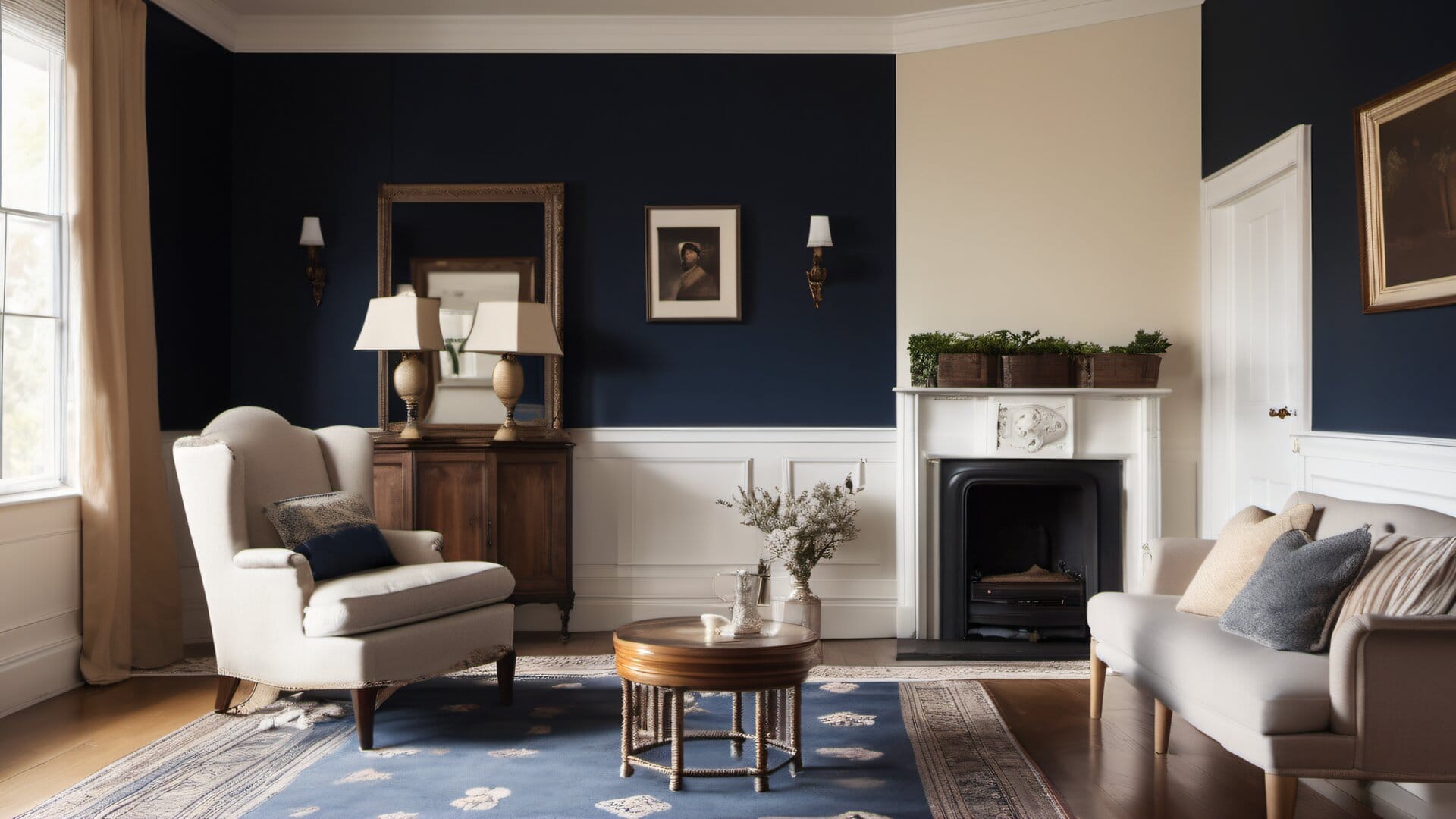
TL;DR: Painting over dark walls requires gray-tinted primer (not white) to block the old color, followed by two coats of your new finish color. White primer over dark paint often needs three or four coats to stop bleed-through, while a gray-tinted bonding primer blocks the dark color in one coat and gives your finish paint a neutral base to cover evenly. Budget an extra half-day and $50-100 in primer for a typical bedroom.
You painted the bedroom navy blue three years ago and loved it. Now you want warm cream. You pick up a gallon of Benjamin Moore White Dove, roll it on, and the wall looks like a bruise — blue bleeding through everywhere, uneven, patchy, and clearly not done after one coat. Or two. Or three.
Painting over dark colors is one of the most common requests we get in MetroWest Boston, especially in spring when homeowners want to brighten up rooms after a long New England winter. It's absolutely doable — but it takes a different approach than most people expect.
Why White Primer Doesn't Work Over Dark Walls
Most homeowners reach for a can of white primer when covering dark paint, which seems logical — white should cover everything, right? But white primer over a deep navy or charcoal creates a high-contrast situation where any thin spot in the primer lets the dark color bleed through. You end up chasing bleed-through with additional coats, and even after three coats of white primer, the dark undertone can still ghost through in certain light.
According to Benjamin Moore, the solution is tinted primer. Ask the paint store to tint your primer to a medium gray — roughly 50% of the way between the dark color you're covering and the light color you're applying. This gray primer blocks the dark color in one coat and provides a neutral mid-tone base that light finish colors cover evenly in two coats.
The Right Primer for the Job
Not all primers are equal when it comes to blocking dark colors. High-hide bonding primers with heavy pigment loads outperform standard drywall primers significantly. Two products we use regularly for dark-to-light transitions across Holliston, Natick, and MetroWest:
- Benjamin Moore Fresh Start High-Hiding Primer: Excellent adhesion to previously painted surfaces, tintable to gray, good block-out of dark colors in one coat.
- Sherwin-Williams Extreme Cover Primer: Heavy pigment load designed specifically for high-contrast color changes. Blocks deep reds, navies, and charcoals reliably in one coat when tinted to gray.
Both of these cost more than basic drywall primer — typically $35-50 per gallon versus $15-25 for standard primer. But the cost difference is trivial compared to the labor savings of one coat of primer versus three coats of white primer that still doesn't fully block.
How Many Coats to Expect
Here's a realistic coat breakdown for different color-change scenarios:
| Color Change | Primer | Finish Coats | Total Coats |
|---|---|---|---|
| Dark to light (navy → cream) | 1 coat gray-tinted | 2 coats | 3 total |
| Dark to medium (charcoal → sage) | 1 coat gray-tinted | 2 coats | 3 total |
| Medium to light (green → white) | 1 coat tinted | 2 coats | 3 total |
| Light to dark (cream → navy) | Optional tinted | 2 coats | 2-3 total |
| Light to light (beige → gray) | Usually none | 2 coats | 2 total |
Going light-to-dark is more forgiving because the dark finish paint has more pigment to cover whatever's underneath. But even then, a tinted primer helps the finish color read true — a warm cream underneath a cool navy can make the navy lean warm in ways you didn't intend.
The Cost Impact of Dark-to-Light
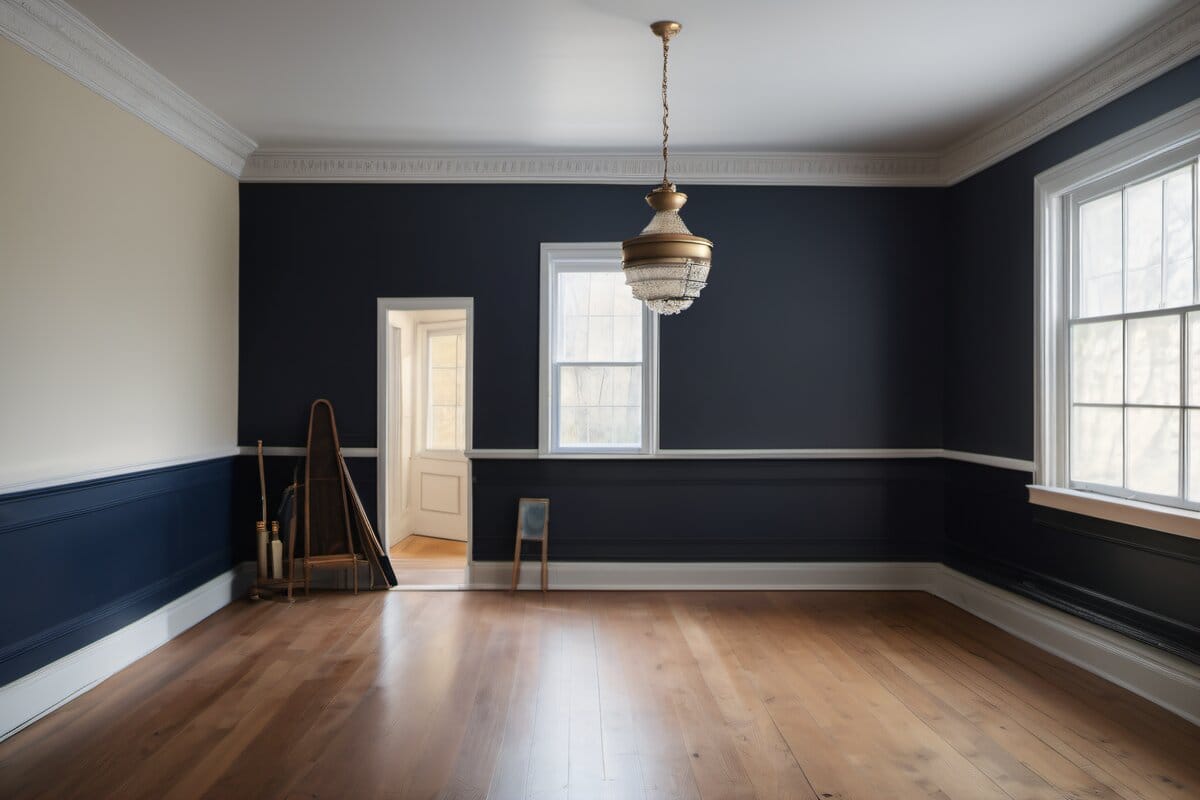
The primer coat adds labor and material to the project. For a typical 12x14 bedroom with 8-foot ceilings, expect roughly:
- Extra material: 1-2 gallons of high-hide primer ($35-50/gallon)
- Extra labor: 2-3 hours for primer application and dry time
- Total added cost: $150-300 for a single room, depending on wall area and complexity
When we quote a project that involves dark-to-light color changes, we always include the primer step in the estimate. If a quote doesn't mention primer for a dark-to-light change, ask — because skipping it means you'll either get visible bleed-through or an unexpectedly high number of finish coats.
Special Cases: Red and Deep Green
Red and deep green pigments are the hardest colors to cover because of how their pigments interact with primer and topcoat. Red pigments are notoriously "hot" — they bleed through even gray-tinted primer in some cases. For covering deep reds, we sometimes use a shellac-based primer like Zinsser BIN, which creates an impenetrable seal before the latex primer and finish coats go on.
If you're painting over a red accent wall in your Wellesley dining room or a hunter green study in Dover, mention it when you call for an estimate. These colors require a specific approach, and the primer and finish strategy needs to be planned before we start.
FAQ
How many coats of paint do I need to cover dark walls?
Covering dark walls typically requires one coat of gray-tinted high-hide primer plus two coats of your finish color — three coats total. Skipping the primer and using only finish paint often requires four or more coats to fully block dark colors.
Should I use white or gray primer to cover dark paint?
Gray-tinted primer blocks dark colors far more effectively than white primer. Ask the paint store to tint your primer to a medium gray — roughly halfway between the dark color you're covering and the light color you're applying.
Can I paint dark over light without primer?
Light-to-dark color changes are more forgiving and often work with two coats of finish paint alone. However, a tinted primer helps the finish color read true and prevents the light undertone from affecting the dark color's appearance.
Why does the old dark color bleed through my new paint?
Dark pigments in the old paint dissolve slightly when wet paint is applied over them, causing color to migrate through the new coat. This is especially common with reds and deep greens, which have aggressive pigments that require shellac-based primer to block completely.
How much more does it cost to paint over dark colors?
The primer step adds roughly $150-300 per room for materials and labor, depending on room size and the specific colors involved. This is significantly less than the cost of applying four or five coats of finish paint without primer.
Planning a color change and not sure what it'll take? Give us a call at (774) 217-9567 — we'll give you a straight answer on coats, primer, and cost.
Related Reading
Dave Griffiths
Dave Griffiths is the owner of Paint Pro New England, a professional painting company serving MetroWest Boston since 2011. With 15+ years of interior and exterior painting experience across the region, he leads every project with thorough prep, premium Benjamin Moore and Sherwin-Williams paints, and a 2-year warranty.

