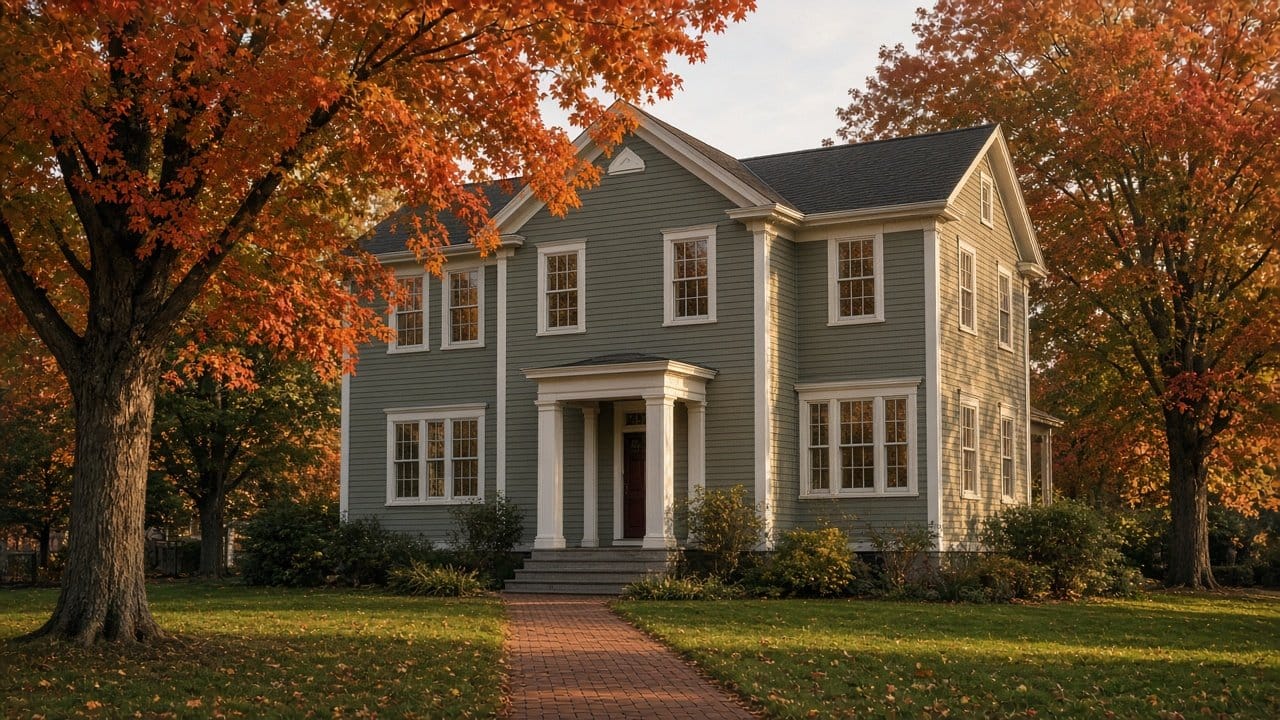
Wellesley's housing is older than many people expect. Of the town's 9,400 housing units, 33.7% were built in 1939 or earlier and 71.6% before 1980, and the median year built is 1955, according to Census ACS 2020-2024 estimates and the median year built table. About 84% of occupied homes are owner-occupied. In a town where a third of homes are pre-war, painters in Wellesley should expect old wood, plaster and many layers of paint. Our Wellesley painting guide and notes on painting older Wellesley homes cover more.
Old exteriors need careful prep, not just another coat. The National Park Service says exterior paint on wood needs re-application every 5-8 years, and warns that once paint builds to about 1/16 inch, roughly 16 to 30 layers, one more coat may be enough to trigger cracking and peeling. Its advice is to remove failed paint to the next sound layer using the gentlest means possible, then repaint. In homes built before 1978, the EPA lead rule covers anyone paid to do work that disturbs painted surfaces. We use lead-safe methods on every pre-1978 home: containment, HEPA vacuums, wet scraping and proper disposal. Ask painters in Wellesley how they will handle each of these steps.
Wellesley's historic districts are small. The Cottage Street Historic District, created in 1980, protects 65 properties, houses once occupied by workers in the town's nineteenth-century shoe manufacturing, and five single-building districts followed between 2011 and 2020. The town's zoning bylaw lists among the exceptions to Commission review "the color of paint, provided that the paint color does not cause substantial derogation from the intent and purpose of the Bylaw and is in keeping with accepted aesthetic standards." If your house is in a district, ask the Historic District Commission before painters in Wellesley change colors or replace trim.