



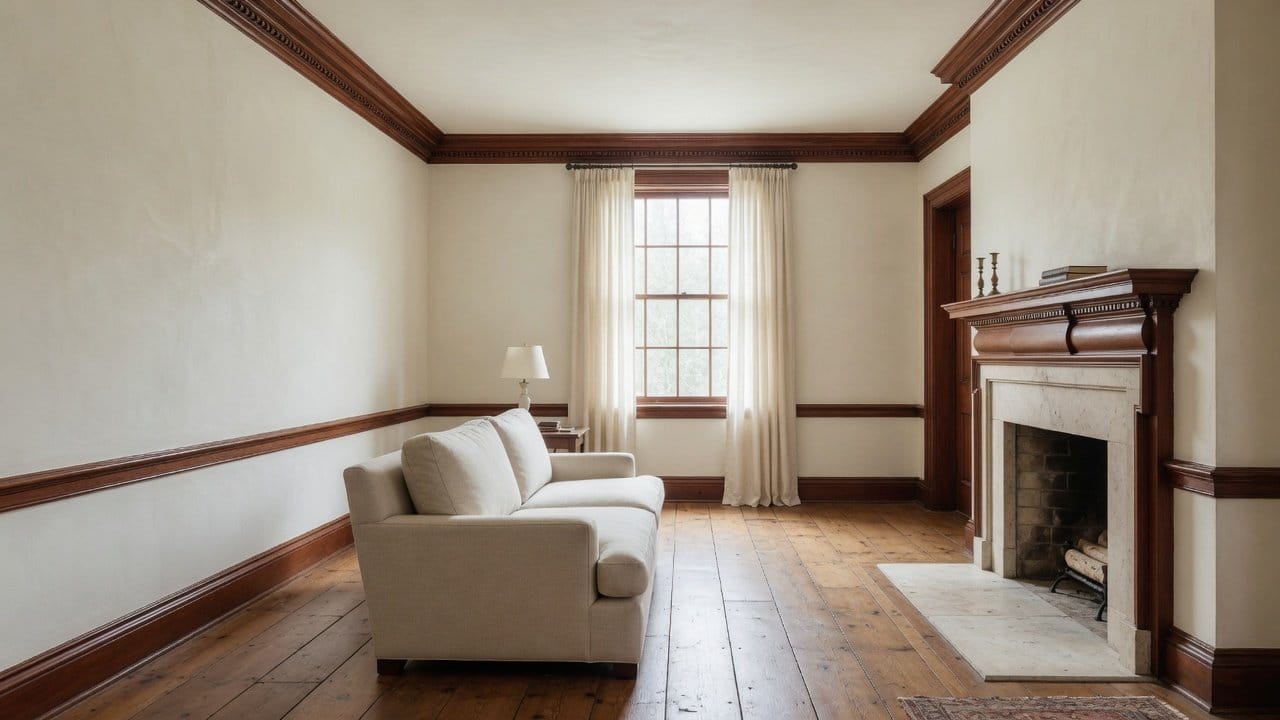
TL;DR: In a MetroWest home built before about 1950, paint is only as good as the plaster under it. Hairline cracks can take a setting-type compound and a spot prime in 1 day. Loose plaster, hollow spots, or a wall that already has three generations of patches needs a bonding agent, a repair, and often a full skim, which is 2 to 5 days of work before the first coat of paint. Paint over movement and you will see the same line again in 6 to 12 months. Fix the wall first, then paint.
Want a plaster-honest paint estimate? Call or text Dave at (774) 217-9567. We sound the walls before we quote, because a Holliston colonial and a 1990s Natick Cape are not the same job.
Every spring I walk into a Wellesley or Dover living room where last year's "fresh paint" already has a thin crack tracing the same path as the old one. The color is fine. The wall was never stable. In this part of Massachusetts, plaster on wood lath is the default in older stock, and paint cannot glue a loose field back to the lath.
How do you know the plaster needs repair before painting?
Tap it. A sound plaster wall is dull and solid. A hollow, drum-like note means the keys have broken and the plaster has let go of the lath. That field will move, and new paint will telegraph the crack within a year.
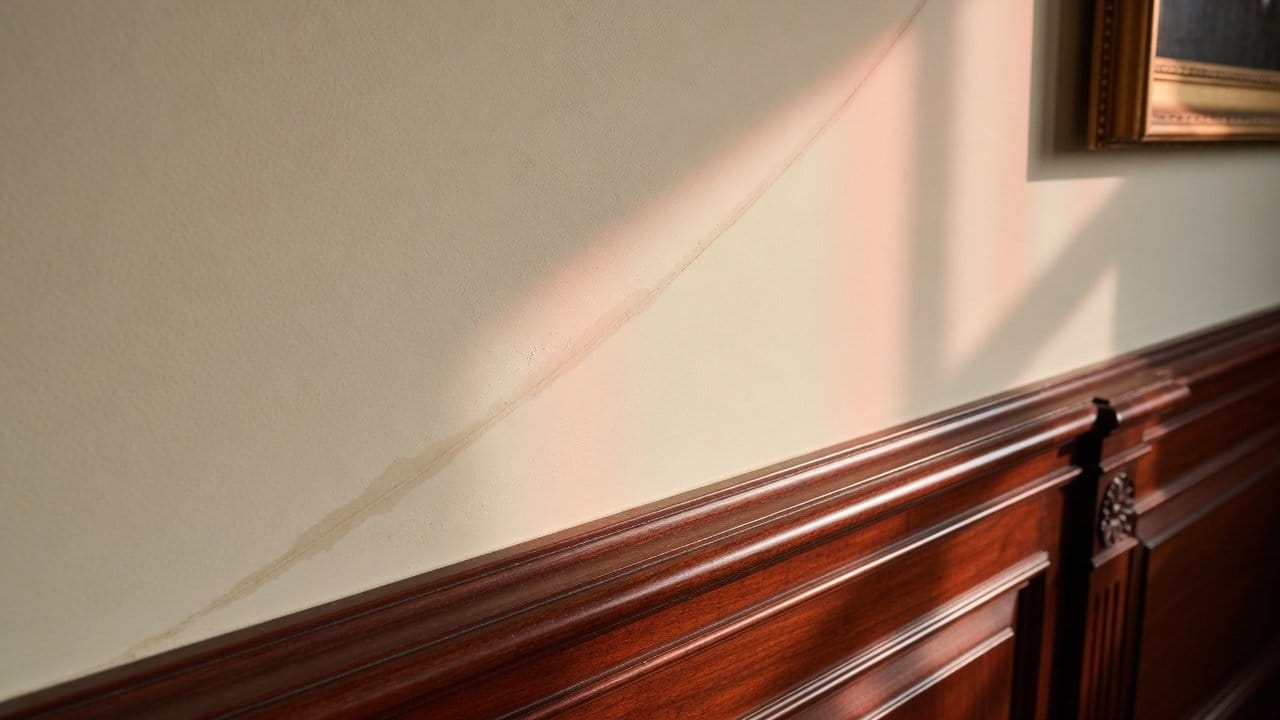
What we look for on a typical MetroWest walkthrough:
- Hairline map cracks that do not move when you press near them. These are cosmetic and take a setting-type compound, a light sand, and a stain-blocking prime.
- Stepped or repeating cracks along old patches. The wall has already been "fixed" with the wrong mud. Another coat of paint will not hide the ridge.
- Hollow or sprung plaster that flexes. This needs fasteners or a rebuild, not filler.
- Stains, popping nails, or crumbling edges at trim. Moisture or settlement is still active. Paint last, after the cause is dry.
This is the same prep-first logic we write about in why prep work is 80 percent of a great paint job. On plaster, prep is not sanding dust. It is making the wall one surface again.
What repair does each plaster problem actually need?
Match the repair to the failure, or you will pay twice.
- Stable hairlines: score, dust, fill with a setting-type compound (the 45 to 90 minute bags, not premixed topping), sand flush, prime.
- Open cracks down to brown coat: undercut the crack so the fill has a key, fill in two passes, feather wide, prime the repair plus a margin.
- Bare plaster or a shiny old oil film: use a plaster bonding agent before new material. This is the same adhesion problem we cover in painting over oil-based paint in older Massachusetts homes.
- Too many old patches: stop chasing them. A full skim coat (a thin, even layer over the whole plane) is faster and looks like one wall again.
A single Holliston parlor with three hairlines is often 1 day of repair plus paint. A Needham dining room that has been patched for 40 years is closer to 3 to 5 days before color goes on. That is not padding. Setting compounds need time, and a skim has to dry before it will take primer evenly.
Does lead paint change plaster work in a pre-1978 house?
Yes. The EPA Renovation, Repair and Painting Rule applies when paid work disturbs painted surfaces in housing built before 1978. Massachusetts runs its own authorized RRP program and publishes the Massachusetts Lead Law. Sanding plaster that already has old paint on it is a disturbance. Containment, HEPA cleanup, and a certified renovator are the legal path, not a shop-vac and an open window.
We walk this out in our Massachusetts lead paint homeowners guide. On a Wellesley or Medfield house from the 1920s, assume the paint stack includes lead until a test says otherwise. Do not dry-sand a mystery coating "just to feather a crack."
Can you paint plaster the same week it is repaired?
Usually, if the repair is small and the house is dry. Setting-type compound hardens in under 2 hours, but it still needs to be fully dry before primer. A full skim in a humid July week in Framingham can need overnight between coats. We do not rush a room into color on a damp wall. The tell is a cool, dark patch that stays after the rest of the wall has gone uniformly light.
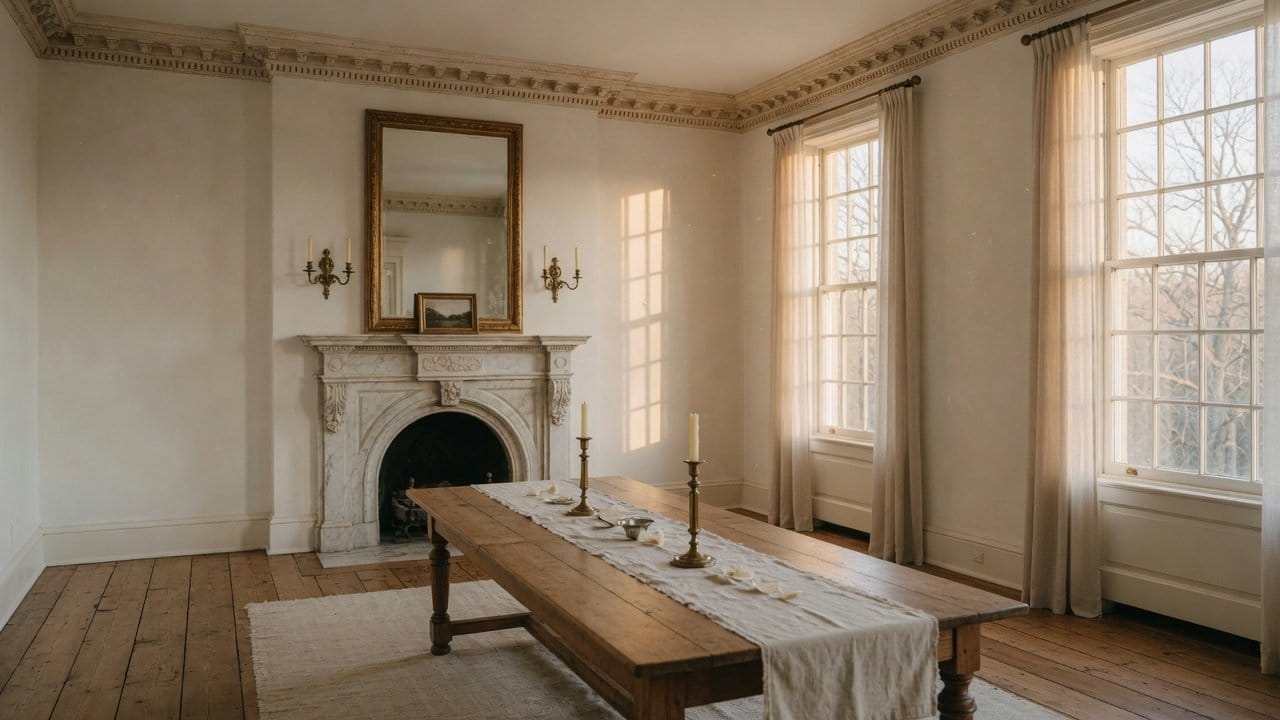
Once the wall is sound and primed, the finish choice matters. Older plaster likes a breathable system. That is why limewash is often the better topcoat than a plastic film in a closed-up 1840s Holliston center-entrance, which we cover in our guide to limewash and lime paint interiors in New England. For a historic overlay that has to read period-correct, see our piece on historic district paint approval in Massachusetts. Once the wall is sound, period woodwork is often a milk paint job, and a wet room is a microcement job, not more plaster.
Town by town, the housing stock is not the same. Holliston and Medway still have a lot of original plaster. Wellesley, Needham and Dover have larger rooms and more previous renovations, so we find more mixed plaster-and-drywall planes in one elevation. Natick and Ashland have more mid-century additions butted into older cores. We treat the joint, not just the room name. If you are lining up a whole-house interior, start with how to prepare your home for painters so the plaster work is not boxed in by furniture the same week.
Frequently asked questions
Do you have to repair plaster before painting in an older Massachusetts home?
Yes when the wall is hollow, cracked through, or already patched in ridges that you can feel with a hand. Paint will not lock loose plaster to the lath, and the same line will show again, usually within 6 to 12 months, on a typical MetroWest colonial.
How long does plaster repair take before painters can start?
Stable hairlines in one room often take 1 full day of repair and prime before any finish coats can start. A full skim on a dining room or stair hall is usually 2 to 5 days of dry time before the first finish coat, longer in humid New England weather.
Can you skim coat old plaster instead of replacing it?
Yes, if the plaster is still keyed to the lath you can skim the whole plane instead of replacing the wall. A skim coat hides old patchwork and gives one surface for paint. Loose or sprung fields have to be refastened or rebuilt first, or the skim will crack on the same hollow.
Is plaster repair a lead-safe job in a pre-1978 house?
If the work disturbs existing paint, federal RRP rules apply in pre-1978 housing and Massachusetts still runs its own program. Test first, contain the dust, and do not dry-sand an untested coating in a Wellesley or Holliston home from before 1978.
The bottom line
The paint color is the easy part. In Holliston, Wellesley, Dover, Needham, Natick and the rest of our 18-town area, the question is whether the plaster is one surface. Sound it, repair what moves, skim what is already a patch quilt, respect lead rules on pre-1978 homes, and then paint. That sequence is how a living room still looks newly painted two winters later.
Paint Pro New England has been painting MetroWest interiors for 15 years from Holliston, serving Medway, Hopkinton, Sherborn, Dover, Wellesley, Natick, Needham and the surrounding towns, with a 2 year warranty and 5.0 stars across 62+ reviews. For a free estimate that includes the plaster, not just the gallons, call (774) 217-9567.
Dave Griffiths
Dave Griffiths is the owner of Paint Pro New England, a professional painting company serving MetroWest Boston since 2011. With 15+ years of interior and exterior painting experience across the region, he leads every project with thorough prep, premium Benjamin Moore and Sherwin-Williams paints, and a 2-year warranty.

