



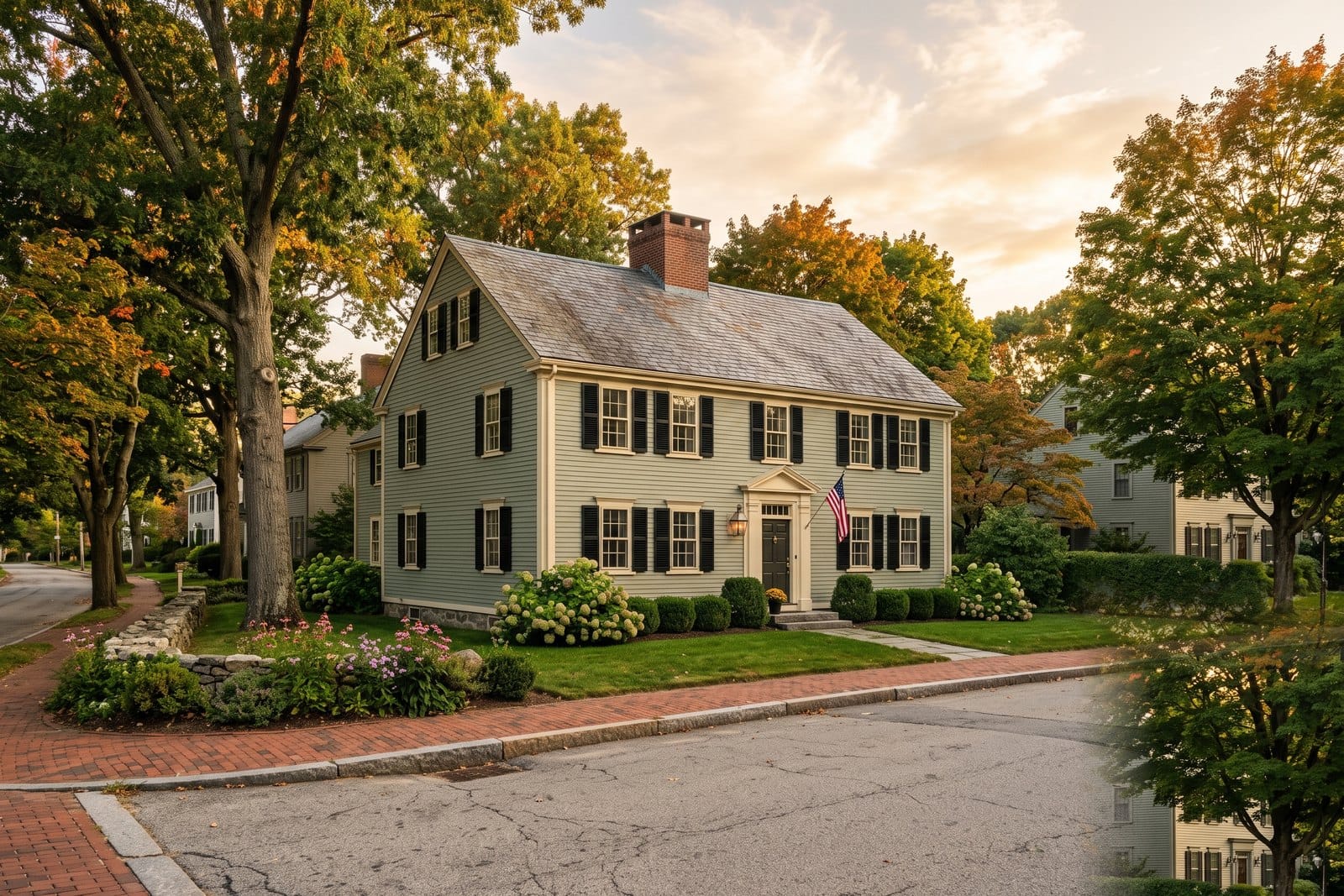
TL;DR: If your home sits in a designated Local Historic District in Massachusetts, you may need a Certificate of Appropriateness from your town's historic district commission before you paint the exterior — but the rules vary a lot by town. Many districts don't regulate paint color at all; some keep an approved palette; and only features visible from a public street are reviewed. Interiors are never regulated. Being on the National Register alone does not require paint approval unless you're also in a local district. The single smartest move is to call your town's historical commission before you buy paint. Approvals are usually free but commissions often meet only monthly, so plan ahead.
Not sure whether your home is in a local historic district? Call or text Dave — (774) 217-9567. After fifteen years painting MetroWest's older homes, we know how to check, and we can prep your color choices so a commission review goes smoothly.
MetroWest Boston is full of the kind of homes people fall in love with: antique Colonials, Greek Revivals, Victorians, and center-chimney capes with two centuries of history. If you own one, painting it can come with a wrinkle newer homes never face — local historic rules. Here's a plain-English guide to when they apply, what they cover, and how to paint a historic home without a surprise from town hall.
Do you need approval to paint a historic home in Massachusetts?
Sometimes — it depends entirely on which kind of historic status your home has. This is where most homeowners get confused, so it's worth being precise:
- Local Historic District (the one that matters for paint): Created by your town under Massachusetts General Law Chapter 40C and administered by a local historic district commission. This is the designation that can require review before exterior work, and in some towns, before a color change.
- National Register of Historic Places: An honorary federal listing. On its own it does not restrict what you do to your own home with your own money, including paint — unless the property also happens to sit in a local district.
- No historic designation: Most homes. Paint whatever you like (subject to any HOA rules — see our guide to HOA painting rules in Massachusetts).
So an old house is not automatically a regulated house. The question is never “is my home old?” — it's “is my home inside a Local Historic District?” Massachusetts has more than 220 of them, and their boundaries are often just a few streets.
Does paint color actually get reviewed?
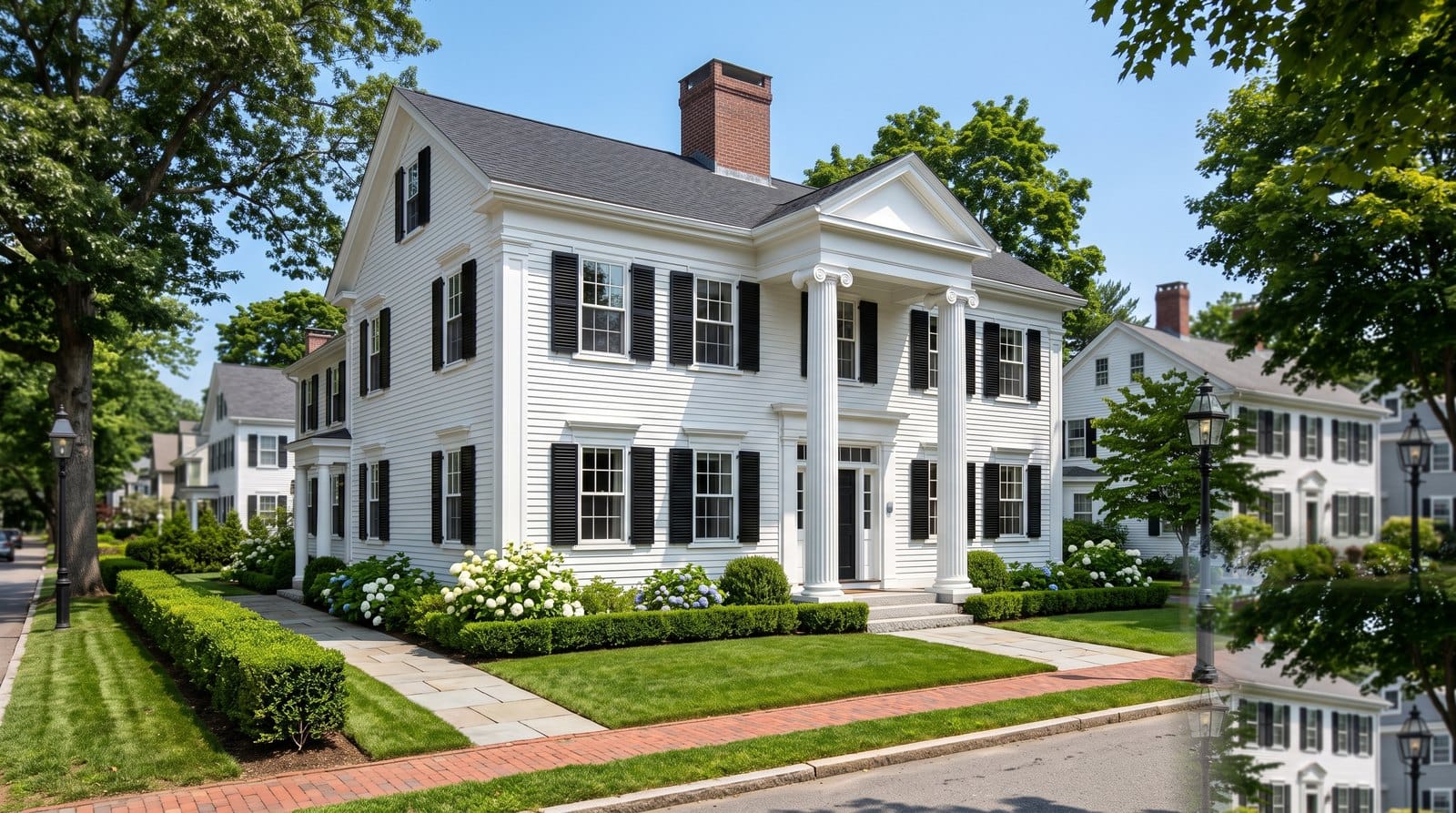
This is the most misunderstood part, so here's the honest answer: it varies by town. Under Chapter 40C, each community writes its own bylaw and decides what its commission reviews. In practice:
- Many districts don't regulate paint color at all, reasoning that paint is reversible and not worth reviewing.
- Some maintain an approved historic color palette and ask you to choose from it or apply for anything outside it.
- A few require an application for any repaint, even in an already-approved color.
Two rules are consistent statewide, though. First, only features visible from a public street or public way are reviewable — a rear elevation a passerby can't see is generally out of scope. Second, interiors are always exempt. No commission reviews the color of your living room. For interiors that should still read period-correct, we often use milk paint on historic Massachusetts woodwork and plaster. If you want period-right exterior direction while you're at it, our roundup of best exterior colors for Holliston Colonial homes is a good starting point.
What else does a historic district commission review?
Paint is often the smallest piece. The broader term in most bylaws is “exterior architectural features,” and it can be surprisingly wide — the parts of a paint or restoration project most likely to need a Certificate of Appropriateness include:
- Replacing or altering windows, doors, and storm windows.
- Changing trim, shutters, railings, or decorative detail.
- Siding changes, or swapping natural wood for a synthetic material.
- Adding or removing exterior features visible from the street.
Straightforward maintenance — scraping, priming, and repainting the same colors — is the least likely to trigger review, but in a strict district even that can require a quick application. When in doubt, ask first; it's free and fast compared to redoing work.
How does the approval process work?
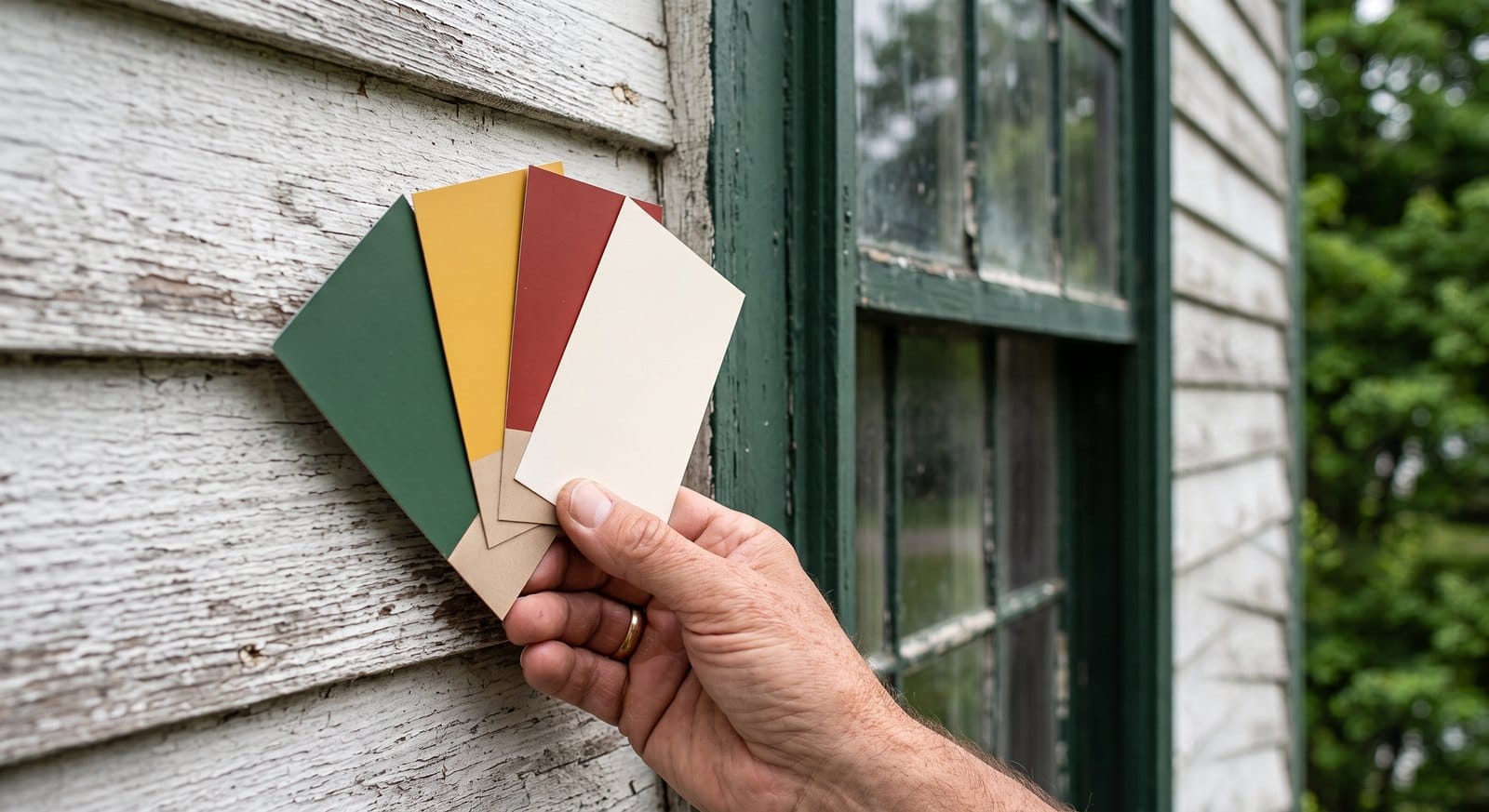
If your project needs review, the path is predictable:
- Apply to the commission for a Certificate of Appropriateness, with photos, color samples, and product specs for anything you're changing.
- Attend the public hearing. Most commissions meet monthly and review applications in an open meeting.
- Get one of three outcomes: approved, approved with conditions, or denied (in which case you can revise and resubmit).
- Take the certificate to the building department before pulling any permit the work requires.
The practical tip that saves everyone time: engage the commission early, before you've committed to plans or bought materials. Many will do an informal preliminary review and tell you what will and won't fly. Because meetings are monthly, building this into your timeline matters — it's the same “plan ahead” logic behind why we tell clients to book an exterior painter early in MetroWest.
Painting an antique home the right way
Historic homes reward doing it properly. Beyond the paperwork, antique houses often mean older substrates, delicate trim, and — on any home built before 1978 — the near-certainty of lead paint, which carries its own legal requirements we cover in our Massachusetts lead paint homeowner's guide. Careful, EPA Lead-Safe prep isn't just about compliance; on a two-hundred-year-old clapboard it's the difference between a finish that lasts and one that fails in a season. If you're weighing period-authentic interior colors too, see our guide to interior paint colors for New England Colonials.
The bottom line
Owning a historic home doesn't mean you can't paint it — it means doing a little homework first. Find out whether you're in a Local Historic District, and if you are, call the commission before you buy paint. Many won't regulate color at all; the ones that do will usually work with you, especially if you come early with samples and photos. Then the real work begins: careful, lead-safe prep and a finish worthy of the house. That's the part we love.
Paint Pro New England has painted and restored historic and antique homes — navigating local commissions, lead-safe prep, and period-appropriate colors — across Holliston, Sherborn, Dover, Medfield, Needham, Wellesley, and the rest of MetroWest Boston for 15 years. EPA Lead-Safe certified, fully insured, 2-year warranty, 5.0 stars across 60+ reviews. For a free consult and honest estimate, call (774) 217-9567. (This article is general guidance, not legal advice — always confirm the rules with your own town's historical commission.)
Dave Griffiths
Dave Griffiths is the owner of Paint Pro New England, a professional painting company serving MetroWest Boston since 2011. With 15+ years of interior and exterior painting experience across the region, he leads every project with thorough prep, premium Benjamin Moore and Sherwin-Williams paints, and a 2-year warranty.

