



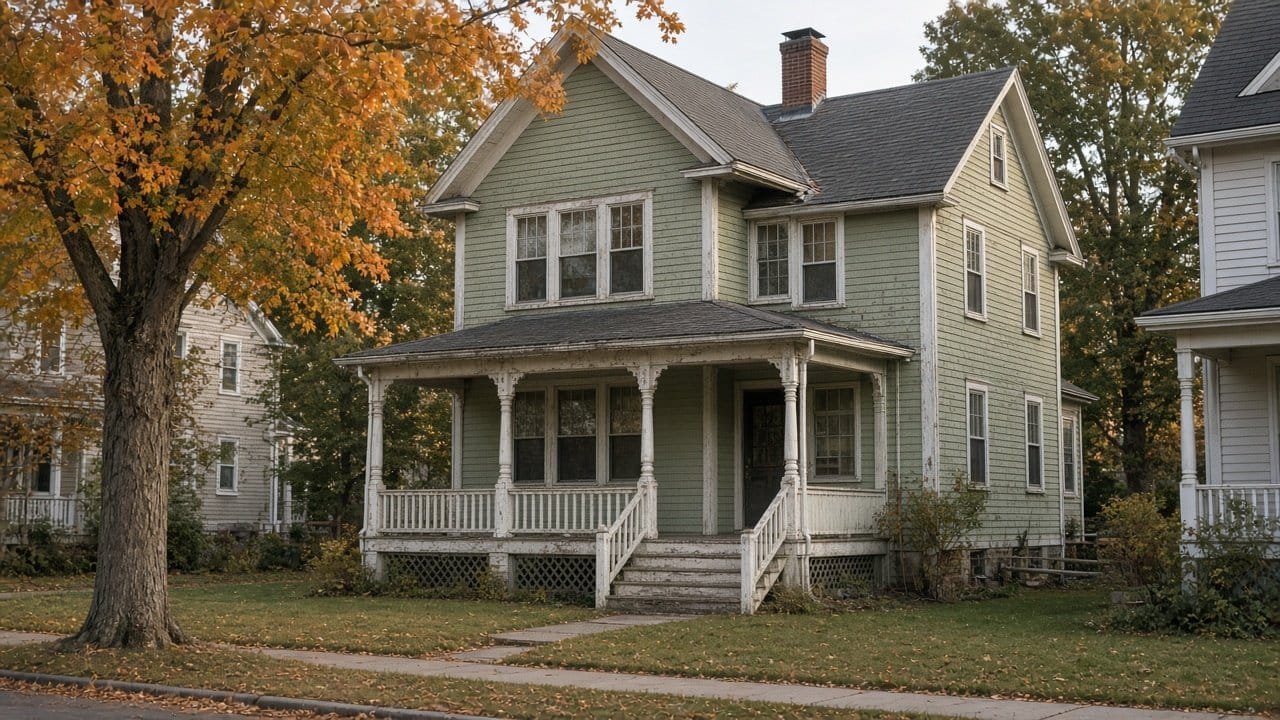
TL;DR: In Milford, 22.6 percent of homes, a bit more than 1 in 5, were built in 1939 or earlier, and 63.8 percent before 1980 (ACS 2020-2024). Repainting one of those pre-1940 houses is mostly prep: decades of paint layers, often with oil underneath, lead-safe work practices on anything built before 1978, and wood clapboard and trim that needs repair before it takes a coat. Color is the easy part. We found no local historic district in Milford's compiled by-laws (August 5, 2026 edition), so the color choice is yours.
Have a pre-war Milford house that is due? Call or text Dave at (774) 217-9567. We will walk every side of the house and show you where the prep time goes before you commit to anything.
Picture the paint peeling again on the sunny side of an old Milford house, only a few years after the last job. On a house built before 1940, the answer is almost never the last paint job alone. It is what is underneath it: a stack of coats from many decades, some of them oil, sitting on wood that has moved through a hundred New England winters. This post covers what a repaint on that kind of house actually involves.
How many Milford homes were built before 1940?
Roughly 2,600 of them. The American Community Survey counts 11,627 housing units in Milford, and 22.6 percent were built in 1939 or earlier, which puts a pre-war house on roughly every fifth lot in town.
- 22.6 percent built in 1939 or earlier.
- 48.2 percent built before 1970.
- 63.8 percent built before 1980.
- 1971 is the median year built (plus or minus 2 years).
The year-built table is public on Census Reporter, which mirrors the ACS 2020-2024 5-year estimates. Milford's older housing is also unusually varied in size: 21.8 percent of its homes sit in buildings of 2 to 4 units, the highest share of the 18 towns we serve. If yours is a two-family or a triple-decker, the scheduling and tenant side of the job is covered in painting a two-family house; the prep below applies to it all the same.
What do all those old paint layers mean for a repaint?
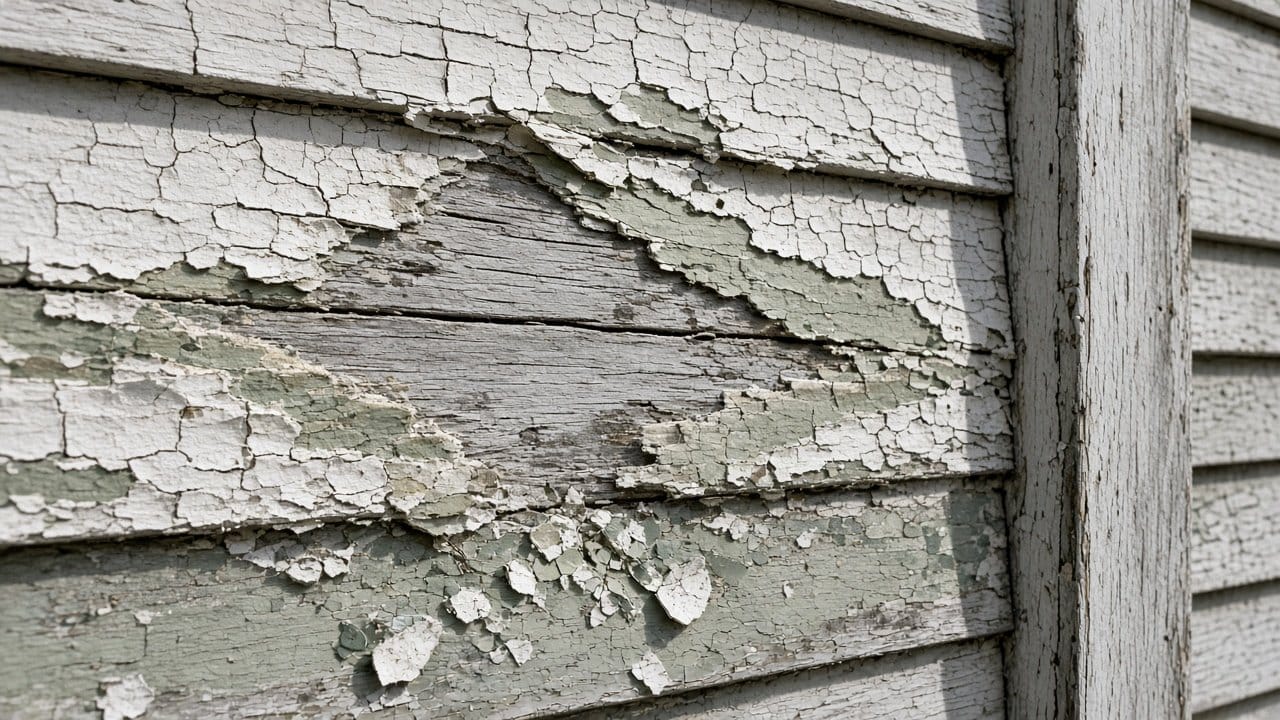
They mean adhesion is the whole job. A new coat is only as sound as the oldest coat underneath it, so the first task on a pre-war house is finding out which layers are still bonded to the wood and which are about to let go.
On older Milford houses we usually find three things:
- Oil under latex. Most houses this age were painted with oil-based paint for decades. Latex applied straight over hard, chalky old oil is a common cause of peeling in sheets. The fix is a bonding primer after proper scraping and sanding, which we explain in painting over oil-based paint in older homes.
- Film that is too thick. Past a certain build, the stack of coats cracks as the wood moves with the seasons. Those areas get taken down further rather than coated again.
- Moisture coming from behind. Peeling that returns in the same spots every few years usually points to water getting into the wall or trim, not to bad paint. The common causes are in why house paint peels.
Does a pre-1940 Milford house need lead-safe painting?
Yes, plan on it. Every home built before 1978 falls under the federal Renovation, Repair and Painting rule when a paid contractor disturbs painted surfaces, and a house built before 1940 almost certainly has lead in its older layers.
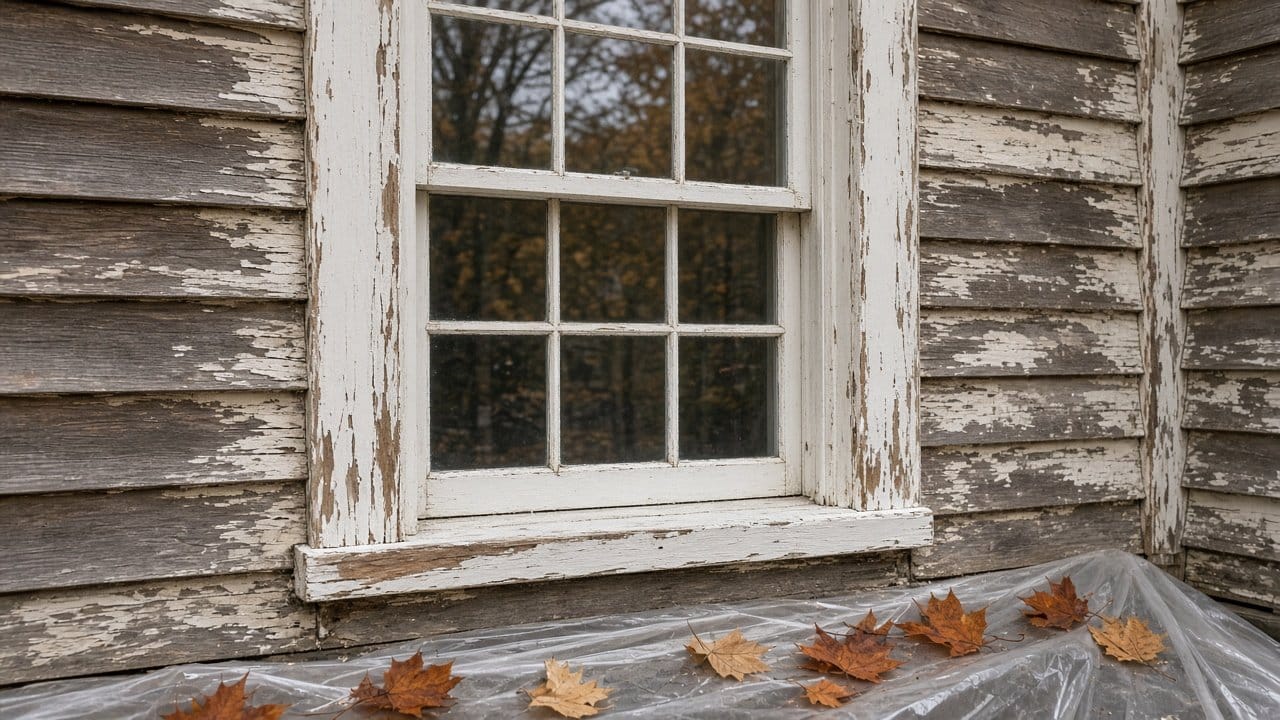
The EPA's RRP program page says the rule covers "anyone paid to perform work that disturbs painted surfaces in homes, childcare facilities and preschools built before 1978," and lists Massachusetts among the states that run their own program. In practical terms, lead-safe work on an exterior means plastic sheeting on the ground below the work, containing the scrapings, avoiding methods that make dust or fumes from old paint, and a careful cleanup at the end of each day. It adds time to the prep, and it should be in the written scope.
The state law, testing options and what owners are responsible for are all in our Massachusetts lead paint guide, so we will not repeat them here.
What wood repair should you expect on clapboard and trim?
Expect some, concentrated low and on the weather sides. On pre-war houses the trouble spots are predictable: window sills, the bottom edges of casings, corner boards near the ground, and the lowest courses of clapboard where snow sits each winter.
- Window sills and casings. Sills take standing water. Soft spots get cut out and patched or replaced with matching profile wood before priming. Original sashes are usually worth keeping; see painting wood window sashes in older homes.
- Corner boards and skirt boards. These wick moisture from the ground and from splash-back. Rot here is usually local and repairable.
- Individual clapboards. A split or cupped board gets re-nailed or replaced one at a time.
Whether a given piece gets repaired or replaced, and how we decide, is laid out in repairing versus replacing rotted trim before painting. Bare wood from repairs gets primed promptly rather than left to weather, for the reasons in whether bare wood can sit before painting.
Can you choose any color for an older Milford house?
As far as we can find, yes. Milford's compiled general by-laws, in the edition dated August 5, 2026, list a Historical Commission adopted at a 1971 Special Town Meeting but no local historic district under Chapter 40C, and the Historical Commission's page mentions no district either.
You can read the Town of Milford by-laws compilation yourself. If your plans go beyond paint, a quick call to the town is still worth it before work starts. In towns that do have a local district, the rules vary a lot, and our guide to historic district paint approval in Massachusetts explains how they work.
Without a district, the question is what suits the house. Pre-war houses usually look best when the trim color follows the original trim lines, so corner boards, casings and cornices read clearly against the body.
How do we plan a repaint on a pre-war Milford home?
We start with a walk around every side of the house, noting which layers are failing, where the wood is soft and what the windows need. From that we write a scope that lists the prep by area, because on a house built before 1940 prep is often the larger share of the labor.
For the scope of a Milford job, see exterior painting in Milford, interior painting in Milford and power washing in Milford, and the town overview at painters in Milford, MA.
Frequently asked questions
How many homes in Milford, MA were built before 1940?
About 22.6 percent of Milford's 11,627 housing units were built in 1939 or earlier, according to American Community Survey 2020-2024 estimates, which is a bit more than one home in five.
Why does paint keep peeling on my old Milford house?
On a pre-1940 house, repeat peeling usually comes from latex applied over old oil-based layers, a paint film that has grown too thick to flex, or moisture getting behind the wood, rather than from the most recent coat alone.
Is lead-safe work required when painting a house built before 1940?
Yes, any home built before 1978 falls under the federal Renovation, Repair and Painting rule when a paid contractor disturbs painted surfaces, and Massachusetts runs its own version of that program under EPA authorization.
Does Milford have a historic district that controls paint color?
We found no local historic district in Milford's compiled general by-laws dated August 5, 2026, only a Historical Commission adopted in 1971, so owners generally choose exterior paint colors freely.
Should old clapboard be replaced before painting a pre-war house?
Usually not; most old clapboard can be scraped, re-nailed and primed, and only split, cupped or rotted boards need replacing, and those are handled board by board before priming.
The bottom line
Repainting one of Milford's pre-1940 homes is a prep job first: find out which old layers are still sound, work lead-safe, repair the sills, corners and low clapboards, and prime bare wood promptly. The color is the one part with no town review behind it. Get the prep right and the new coat has something solid to hold onto.
Paint Pro New England has painted older homes in Milford, Holliston, Hopkinton, Bellingham and the rest of our 18 towns since 2011, with Benjamin Moore and Sherwin-Williams products, full insurance, a 2-year warranty and 5.0 stars across 62+ reviews. If you want a second opinion on an older house, call (774) 217-9567.
Dave Griffiths
Dave Griffiths is the owner of Paint Pro New England, a professional painting company serving MetroWest Boston since 2011. With 15+ years of interior and exterior painting experience across the region, he leads every project with thorough prep, premium Benjamin Moore and Sherwin-Williams paints, and a 2-year warranty.

