



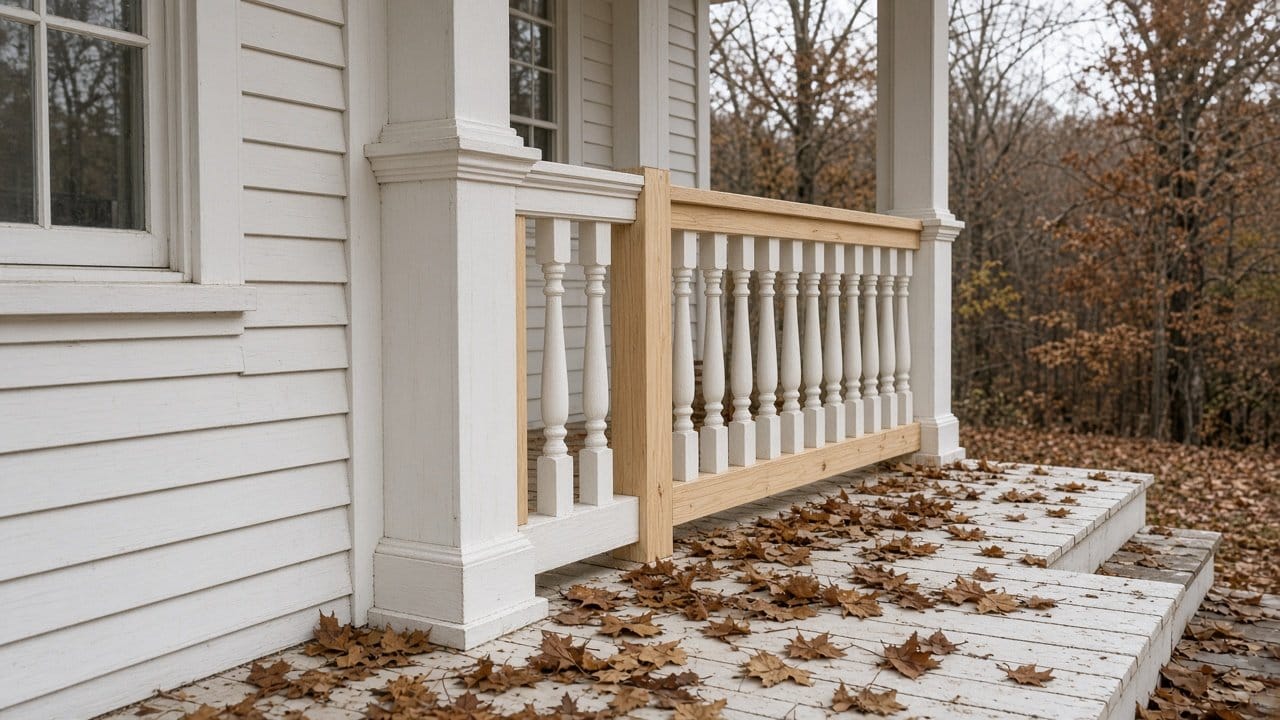
TL;DR: No. USDA Forest Products Laboratory research found that leaving smooth, unpainted wood out in the weather for as little as one to two weeks reduced paint adhesion and shortened the life of the paint applied afterward. Boards left bare for 16 weeks held about 50 percent less paint adhesion than boards that were never exposed. A Massachusetts winter is longer than that. Prime new or exposed wood before the season closes, and if it has already weathered, scuff-sand it before you prime.
Had carpentry done this fall and the painters cannot get there until spring? Call or text Dave at (774) 217-9567. We can tell you what to protect now and what can wait.
Late fall is when a lot of exterior carpentry finishes: a new porch rail, a replacement window sill, a run of fresh trim boards after a rot repair. The paint schedule often slips past the end of the season, and the new wood sits there, bare and pale, through the winter. It looks harmless. The research says it is not, and the reason is the sun more than the snow.
What did the Forest Products Laboratory actually find?
Bare wood exposed outdoors for one to two weeks lost paint adhesion, and after 16 weeks adhesion was about half that of unexposed wood. Paint on the 16-week boards started cracking after three years; the unexposed boards were in almost perfect condition after 20.
The study is summarized by R. Sam Williams of the USDA Forest Service Forest Products Laboratory in "Don't get (sun) burned: exposing exterior wood to the weather prior to painting contributes to finish failure", published in the Journal of Architectural Coatings in July 2005 (record on the Forest Service research site). The key findings:
- One to two weeks of exposure on western redcedar "caused decreased paint adhesion and subsequent loss of paint service life."
- 16 weeks of exposure left boards with "approximately 50 percent less paint adhesion than controls that were not preweathered."
- Three to four weeks was enough to reduce adhesion on other species, which the paper describes as slightly more resistant than redcedar.
- 20 years on an outdoor test fence near Madison, Wisconsin showed the result over time. Boards that went straight to paint were "in almost perfect condition." Boards weathered 16 weeks first began cracking after only three years, and on some of them most of the paint had peeled.
The boards were preweathered in the summer of 1984, when sunlight is strongest, so a Massachusetts winter will not match those numbers week for week. But the direction is clear, and a bare board sitting from November to April is outside far longer than the one to two weeks where the damage started.
Why does a few weeks of weather matter so much?
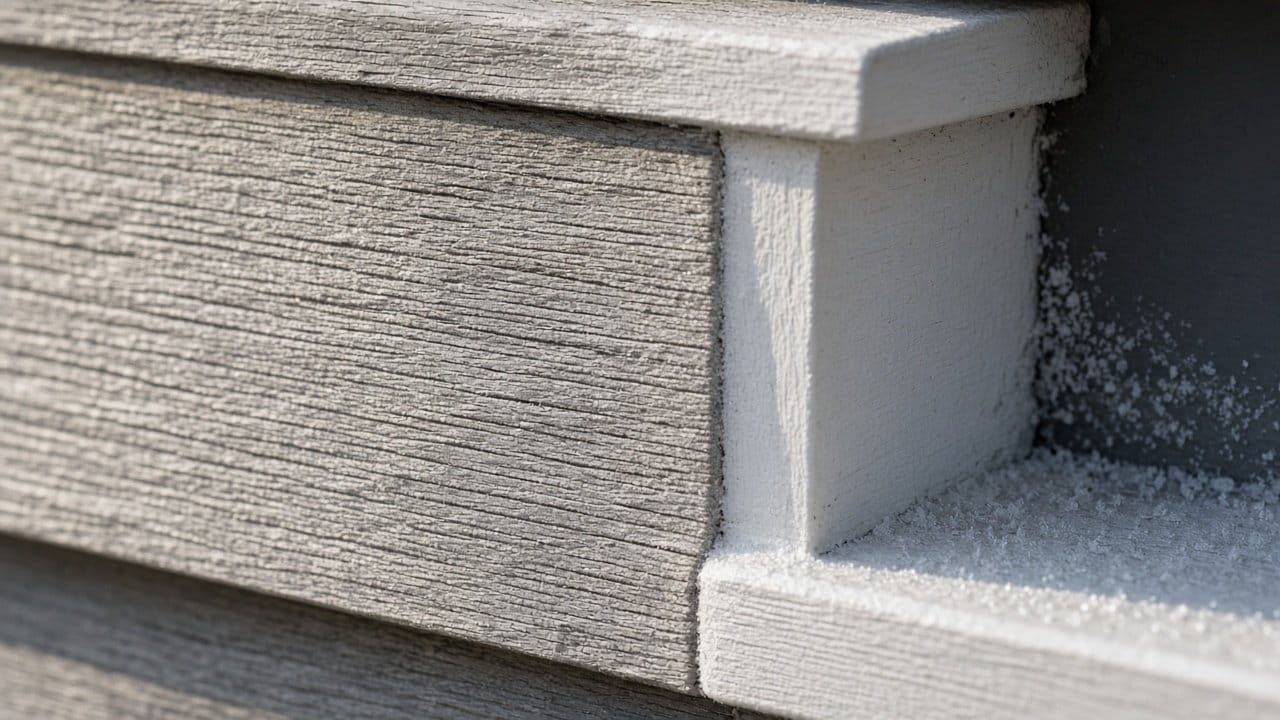
Ultraviolet light breaks down the outermost layer of the wood. Primer then bonds to that weakened layer instead of to sound wood, and when the layer fails, the paint comes off with it.
Williams describes it as a failure at the paint and wood "interphase." Ordinary paint wears away slowly, by erosion, over a decade or more, and can be renewed with another topcoat. Interphase failure is different. The paper says the film "will debond within a short time and the paint will blister, crack, and peel." That is the peeling you see on a few-year-old porch or trim job where the paint lifts in sheets down to bare wood, one of the patterns covered in why house paint peels.
The fix is not more paint. It is getting rid of the degraded surface first, which is why timing and prep matter more than the product on the label.
Which wood on a house does this apply to?
Any wood that will be painted and is left unpainted outdoors: new trim boards, replacement sills, porch rails and balusters, fence pickets, and any spot scraped to bare wood during prep. Pressure-treated decking that you plan to stain is a separate question.
A common case in MetroWest is the rot repair that finishes in October. New stock goes in at a sill or casing, the carpenter leaves, and the board waits for paint. Our post on rotted trim repair versus replacement says primed and protected is a legitimate winter stopping point and bare wood is not. The FPL numbers are the reason.
The same goes for the bare patches left after scraping an older house. If a fall exterior gets cut short by weather, the scraped spots should not sit open until April. On a house built before 1978, scraping also falls under lead rules, which are covered in our guide to lead paint in Massachusetts.
Is a coat of primer enough to get through the winter?
It is far better than bare wood, but it is not the ideal finish. Purdue Extension advises against priming in the fall and topcoating in the spring, because a primer left too long needs cleaning before it will bond well to the next coat.
The bulletin, Paint Failure Problems and Their Cure, written by Daniel Cassens of Purdue and William Feist of the Forest Products Laboratory, is direct about it: "Do not apply a primer coat in the fall and wait until spring to finish with the top coat." It explains that if you wait longer than two weeks to topcoat an oil-base primer, "soap-like materials may form on the surface" and interfere with the bond, and it says "When the period between applications exceeds two weeks, scrub the surface before applying the second coat."
So the order of preference is plain:
- Best: prime and topcoat within about two weeks, while conditions still allow it.
- Acceptable when the season runs out: prime the new wood, then in spring scrub the primed surface, lightly sand, and topcoat. The primer keeps sunlight off the wood surface, which is the damage the FPL study measured.
- Avoid: leaving the wood bare until spring and painting straight over it.
What if the wood has already sat bare?
Sand it back to fresh wood before you prime. The FPL paper says that if some weathering occurs, the wood should be scuff-sanded before primer and paint go on, which removes the degraded surface layer.
Wood that has turned gray or feels fuzzy is clearly past the point where you can prime it as is. Even wood that looks fine after a few weeks has lost some of its surface, so a light sanding is worth the few minutes it takes. After that, the Purdue bulletin's sequence for new or stripped wood is:
- Treat with a paintable water-repellent preservative or water repellent.
- Let it dry for at least two warm days before priming.
- Prime with an oil-base primer or a stain-blocking latex primer.
- Topcoat with at least one coat of high quality acrylic latex paint.
Caulking comes after priming, not before. The same bulletin says to caulk large cracks and openings after treating and priming, and if that work is happening late in the year, the cold-weather limits on caulk are in can you caulk outside in cold weather.
How should you time new wood in MetroWest?
Book the painter for the same week the carpentry finishes, not a month later. If carpentry runs into late October, plan on primer only and a spring topcoat, and schedule both visits up front.
The limit on that final coat is set by temperature and dew point, not the calendar, as we explain in the fall exterior painting cutoff. Primer has its own label minimum, so check the can before a cold-day primer visit. In practice, the projects that go wrong are the ones where nobody owns the gap between the carpenter leaving and the painter arriving.
Frequently asked questions
How long can bare wood be left outside before painting?
As little as one to two weeks of weather reduced paint adhesion on western redcedar in USDA Forest Products Laboratory research, so new exterior wood should be primed within about two weeks of installation.
Does weathered wood need to be sanded before painting?
Yes, the Forest Products Laboratory recommends scuff-sanding wood that has weathered before applying primer and paint, because sunlight degrades the surface layer that the primer would otherwise bond to.
Can I prime in the fall and paint in the spring?
You can, and it beats leaving wood bare, but Purdue Extension advises against it as a plan and says to scrub the primed surface before topcoating whenever more than two weeks have passed.
Does the 50 percent adhesion loss apply to all wood?
The 50 percent figure comes from western redcedar left bare for 16 weeks, and the Forest Products Laboratory found other species slightly more resistant but still losing adhesion after three to four weeks of exposure.
Is new trim already primed when it is installed?
Some is factory primed and some is not, so check the stock before the carpenter leaves, and treat any cut ends or unprimed faces as bare wood that needs primer before winter.
The bottom line
Bare wood should not sit over a New England winter. Forest Products Laboratory research shows adhesion starts dropping within one to two weeks of exposure and is about halved by 16 weeks. Prime new or exposed wood before the season closes, scrub and lightly sand the primer before the spring topcoat, and if the wood has already weathered, scuff-sand it back to fresh fibers before priming.
Paint Pro New England has painted and finished exterior wood in Holliston, Sherborn, Dover, Medfield and the rest of our 18 towns since 2011, with Benjamin Moore and Sherwin-Williams products, full insurance and a 2-year warranty on our work. If new carpentry is waiting on paint, call (774) 217-9567 and we will help you plan the gap. For the full scope in your town, see exterior painting in Sherborn, exterior painting in Dover and exterior painting in Holliston.
Dave Griffiths
Dave Griffiths is the owner of Paint Pro New England, a professional painting company serving MetroWest Boston since 2011. With 15+ years of interior and exterior painting experience across the region, he leads every project with thorough prep, premium Benjamin Moore and Sherwin-Williams paints, and a 2-year warranty.

