



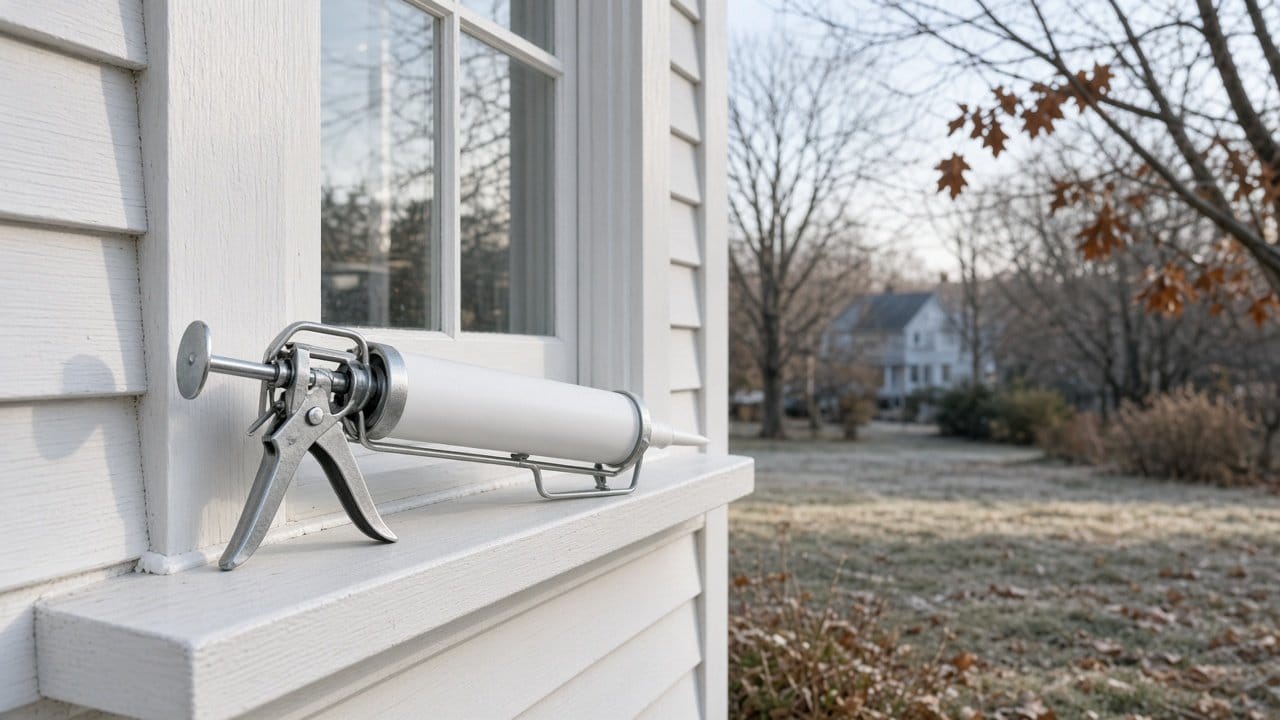
TL;DR: Yes, if the caulk matches the temperature. A standard acrylic latex caulk such as DAP Alex Plus is rated for application from 40°F to 100°F, and DAP says not to apply it when rain or freezing temperatures are forecast within 24 hours. A polymer sealant such as OSI Quad Max is rated for application from 0°F to 140°F, on a surface cleared of ice, snow and frost. Caulk and paint have separate limits, so sealing joints in November and painting in spring is a workable plan.
Have open joints around your windows and trim going into winter? Call or text Dave at (774) 217-9567. We will tell you which joints need sealant now and which can wait for the spring paint job.
It is a common late-season situation: the exterior paint season has closed, and then someone notices an open joint at the corner of a window casing. Can anything be done before winter, or does it all have to wait for spring? The answer depends almost entirely on which tube is in the gun. Painters' caulk and modern sealants have very different cold-weather limits, and the difference is printed on the data sheets.
What is the actual temperature limit for caulking outside?
For standard acrylic latex caulk the floor is 40°F, with no rain or freeze forecast for 24 hours. For polymer sealants rated for cold work, the floor drops to 0°F. Read the data sheet for the exact product before you buy it.
Here is what the two most common types say, word for word from the manufacturers:
- 40°F to 100°F is the application range for DAP Alex Plus acrylic latex caulk. The DAP Alex Plus technical data sheet says "Apply in temperatures above 40°F" and "Do not apply when rain or freezing temperatures are forecasted within 24 hours."
- 0°F to 140°F is the application range for OSI Quad Max, a silane modified polymer sealant. The OSI Quad Max technical data sheet says the temperature of the product, the surfaces and the working area should all sit inside that range.
Note the OSI wording: the cartridge and the surface have to be in range too, not only the air.
Why does latex caulk stop at 40 degrees?
Acrylic latex caulk is water-based and has to dry, and cold, damp air slows that drying down. DAP's own sheet says cooler temperatures and higher humidity slow dry time, which is why the 24-hour forecast rule exists.
The DAP sheet lists water as the volatile. Typical figures are tack free in 30 minutes and dry through in 24 hours, and cold and humidity stretch both. A bead that goes on at 42°F and meets a freezing night before it dries through is the case DAP tells you to avoid.
If your caulking happens alongside a paint job, the paint limits will usually stop you first, and those are covered in the fall exterior painting cutoff and exterior painting temperature requirements in Massachusetts. We will not repeat them here.
What changes with a polymer sealant like OSI Quad Max?
A silane modified polymer sealant can go on well below freezing, as long as the surface is clean, dry, and free of ice, snow and frost. The tradeoff is a slower cure in the cold and a stricter joint design.
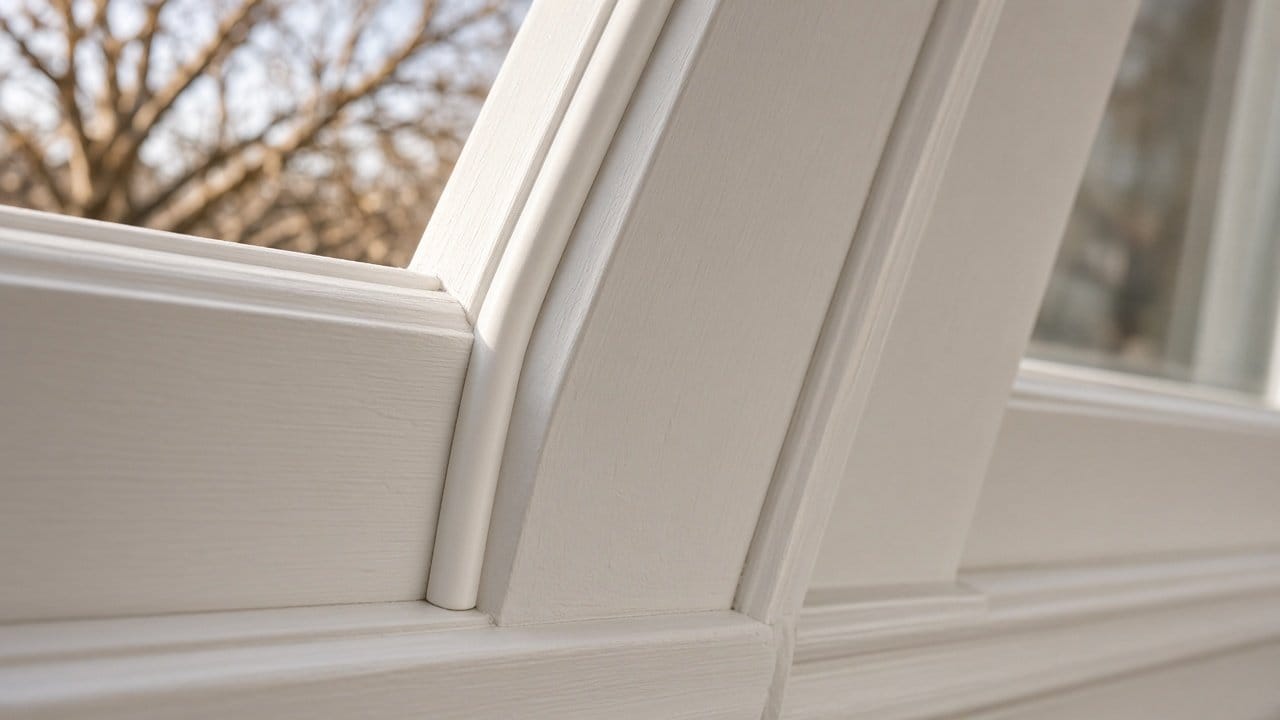
The details on the OSI sheet that matter for a cold-weather job:
- Store the cartridge at room temperature for at least 24 hours before use. OSI says this makes the sealant easier to extrude at lower temperatures. A tube that spent the night in an unheated garage fights you.
- Remove any ice, snow or frost from the surface. The sheet still asks for clean, dry joints, free of old caulk and dust.
- Paintable in 1 hour with latex paint, with full cure in 24 to 72 hours depending on temperature, humidity and bead depth. Tack-free time is listed at 15 hours at 72°F and 70 percent humidity, so expect longer in November.
- Joint size has limits. OSI recommends a joint width of 1/4 to 5/8 inch, a sealant depth of half the joint width, and a backer rod once the joint is deeper than 3/8 inch.
Once cured, both products are rated for a service range that covers a Massachusetts winter: -20°F to 180°F for DAP Alex Plus and -14°F to 158°F for OSI Quad Max. The cold limit that matters is the one at application, not the one in January.
Where does caulk belong on the outside of a house?
Caulk is for small, stationary gaps around window frames, door frames, trim and corner joints. It is not a filler for rot, wide cracks or joints that are designed to move a lot, and both data sheets say so.
DAP lists window frames, door frames, trim, molding and corner joints among its uses, and says Alex Plus is not for butt joints, surface defects or expansion joints, with a maximum joint of 1/2 inch wide by 1/2 inch deep before backer rod is needed. OSI uses the same backer rod logic at a shallower 3/8 inch depth.
Order matters too. Purdue Extension's long-standing bulletin, Paint Failure Problems and Their Cure, written with the USDA Forest Products Laboratory, puts it in one line: "Caulk large cracks and openings after treating and priming." Caulk sticks best to sound, primed wood. If the gap you are looking at is really soft or punky wood at a sill or casing, sealing over it only hides the problem, and the repair decision is laid out in rotted trim: repair or replace before painting.
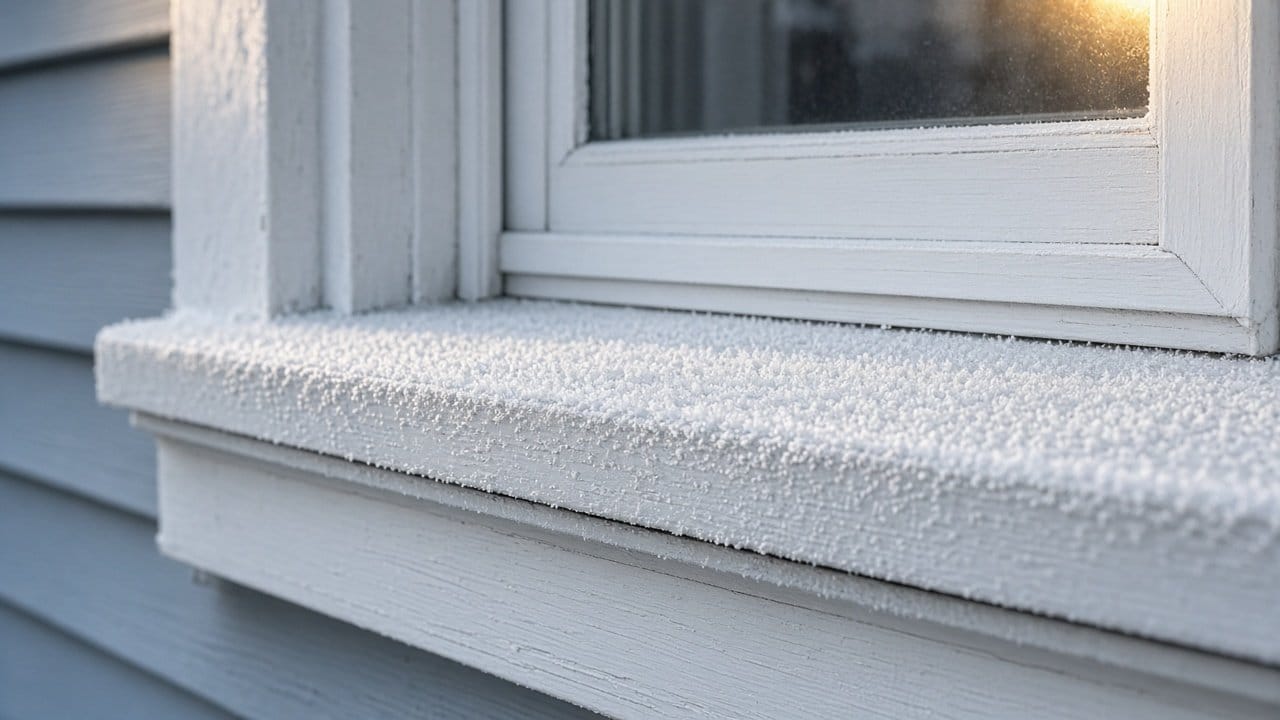
Can you caulk now and paint in the spring?
Yes. Sealing joints in late fall and painting the following spring is a sound plan, because caulk and paint have separate temperature limits and a cured bead is rated well below Massachusetts winter lows.
Seal now so water stops getting behind the trim, then paint over the cured bead when spring conditions allow. A few practical points:
- Pick the product for the date. In early fall a quality acrylic latex caulk is fine. Once daytime highs are flirting with 40°F and nights are freezing, switch to a sealant rated for cold application.
- Check the paint instructions on the sealant. OSI recommends high quality latex paint over Quad Max, and a latex primer first if the topcoat will be oil or alkyd.
- Keep the bead neat. OSI warns against smearing sealant beyond the joint onto finished surfaces, because thin smears weather badly. That matters more when the bead will sit unpainted for a winter.
If the spring job includes window sash work on an older house, glazing putty is a different material with its own rules, covered in painting wood window sashes in older Massachusetts homes.
How we run a cold-weather caulking day
Cold-weather sealing is mostly about timing within the day and keeping the material warm until it goes on. The joint has to be dry and frost free, and the forecast has to cooperate for the product you chose.
- Read the 24-hour forecast, not just the afternoon high. For latex caulk, rain or a freeze inside that window rules the day out.
- Start after the frost burns off. South and west elevations dry first. North-facing trim can stay frosted or damp until midday.
- Keep cartridges warm until use. A tube that has sat at room temperature overnight flows and tools far better than one from a cold truck bed.
- Clean out old caulk and dust, and use backer rod where the joint depth calls for it.
That sequence is part of the prep we do on every exterior job, the same prep that decides how long the paint lasts, as we explain in why prep work is 80 percent of a great paint job.
Frequently asked questions
What is the lowest temperature you can caulk outside?
It depends on the product: standard acrylic latex caulk such as DAP Alex Plus needs temperatures above 40°F, while a cold-rated polymer sealant such as OSI Quad Max can be applied down to 0°F on a frost-free surface.
What happens if latex caulk freezes before it dries?
DAP tells you not to apply Alex Plus when rain or freezing temperatures are forecast within 24 hours, so a bead that freezes before drying is outside the manufacturer's directions and is a joint we would cut out and redo.
Can you caulk in the rain or on wet trim?
No for latex caulk, which DAP says not to apply with rain forecast within 24 hours, and both data sheets ask for a clean, dry surface, with OSI also requiring that ice, snow and frost be removed first.
How long does caulk take to cure in cold weather?
Longer than the label figures, which are measured at room temperature: OSI lists full cure for Quad Max at 24 to 72 hours depending on temperature, humidity and bead depth, and DAP says cool, humid air slows drying.
Is it OK to caulk in the fall and paint in the spring?
Yes, that is a sound plan, because caulk and paint have separate temperature limits and cured sealant is rated for winter service temperatures, so the joint is protected while you wait for spring painting conditions.
The bottom line
You can caulk outside in cold weather if you choose the product for the date. Acrylic latex caulk needs more than 40°F and a dry, freeze-free 24 hours. A silane modified polymer sealant such as OSI Quad Max can go on from 0°F, as long as the cartridge is warm and the joint is clean, dry and free of frost. Seal the gaps now, and paint over them when spring conditions return.
Paint Pro New England has prepped and painted exteriors in Holliston, Medway, Hopkinton, Sherborn and the rest of our 18 towns since 2011, with Benjamin Moore and Sherwin-Williams products, full insurance and a 2-year warranty on our work. If you want a second opinion on what to seal before winter, call (774) 217-9567. For the full exterior scope in your town, see exterior painting in Holliston, exterior painting in Medway and exterior painting in Hopkinton.
Dave Griffiths
Dave Griffiths is the owner of Paint Pro New England, a professional painting company serving MetroWest Boston since 2011. With 15+ years of interior and exterior painting experience across the region, he leads every project with thorough prep, premium Benjamin Moore and Sherwin-Williams paints, and a 2-year warranty.

