



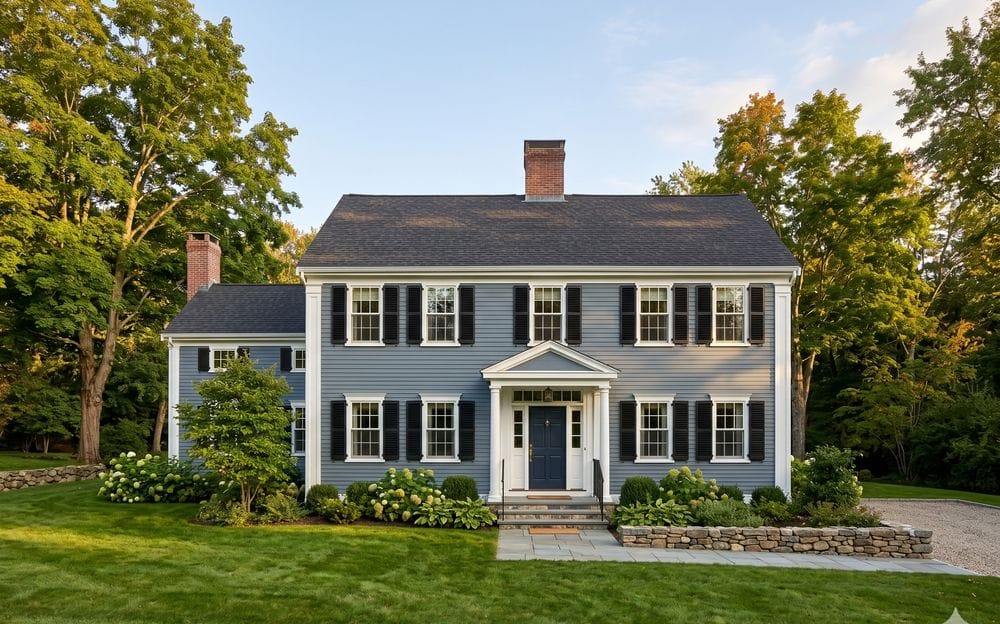
TL;DR: Painting a home in MetroWest Boston means working around historic woodwork, New England's freeze-thaw climate, and (in older homes) lead paint. A whole-home interior repaint typically runs $4,000–$12,000 and an exterior $6,500–$14,500, with prep — not paint — deciding how long the job lasts. The best results come from a licensed, insured, EPA Lead-Safe painter who gives you a written, two-coat scope. This guide walks through cost, interior and exterior work, lead-safe rules, choosing a painter, timing, and what a professional process actually looks like.
From 1700s colonials in Holliston and Sherborn to newer construction in Hopkinton and Franklin, MetroWest homes are some of the most rewarding — and most demanding — houses to paint in Massachusetts. After fifteen years painting across all eighteen of our service towns, we've learned that a great paint job is 10% color and 90% knowing how these specific homes behave. This is the complete guide we wish every homeowner had before their first quote.
What makes painting a MetroWest home different?
Three things set our region apart. First, the housing stock skews old: thousands of homes here predate 1978, which means original trim, plaster walls, and almost certainly some lead paint underneath. A federal colonial in Medfield behaves nothing like a 1990s colonial-revival in Bellingham, even though they share a silhouette. Second, the climate is brutal on finishes — freeze-thaw cycles, humid summers, and long winters expand and contract every surface, so a coating that isn't applied correctly fails fast. Third, these are high-value homes whose owners expect craftsmanship, not a spray-and-go job.
Practically, that means the painter who works on a 1990s build in Medway needs a different playbook than the one repainting an 1850 Greek Revival in Dover. Prep, primer, and product choices all change with the age and construction of the house — clapboard versus vinyl versus cedar shingle, plaster versus drywall, old-growth trim versus modern MDF. A painter who treats every home the same is the painter whose work peels first.
How much does house painting cost in MetroWest Boston?
Pricing depends on size, condition, and how much prep the surfaces need, but here are realistic 2026 ranges for our area:
- Interior, whole home: $4,000–$12,000 depending on square footage and trim detail
- Exterior, whole home: $6,500–$14,500, with larger or detailed homes running higher
- Single interior room: roughly $400–$1,000
- Trim and doors: often priced per linear foot or per door on top of wall work
- Cabinet refinishing: a fraction of replacement, usually about a week of work
The single biggest cost driver is prep — filling, sanding, caulking, and priming — followed by whether the work is brushed or sprayed and how many coats the existing color needs. Ceiling height, the amount of detailed trim, and the condition of the existing finish all move the number, too. For a full breakdown of what raises or lowers your quote, see our guide to house painting costs in Massachusetts.
The most important takeaway: a cheap bid almost always means cut prep, and cut prep is what you pay for again in two years. When you compare quotes, you're not really comparing prices — you're comparing scopes. A $5,000 bid that skips priming and does one coat is more expensive than a $7,000 bid that preps properly and does two, because you'll be repainting the first one far sooner.
What should you know about interior painting?
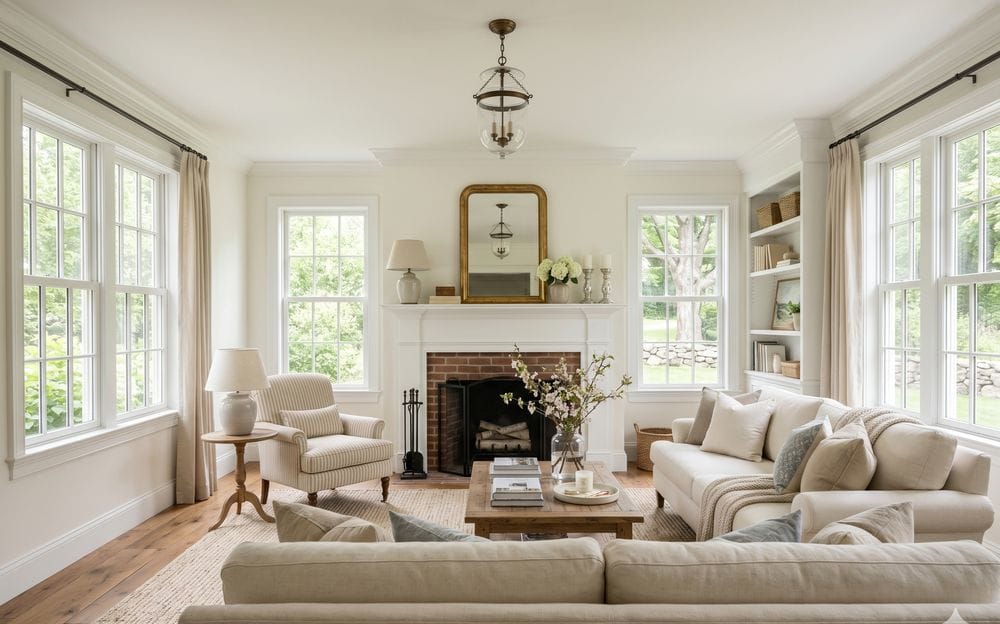
Interior work is where MetroWest homeowners spend the most, and where the details show most. The finish matters as much as the color: walls usually take a matte or eggshell, while trim, doors, and crown moulding take a satin or semi-gloss enamel that wipes clean and catches the light. Ceilings almost always get a dedicated flat ceiling paint that hides imperfections under overhead light. We break down which sheen goes where in our guide to choosing the right paint finish for every room.
Color is personal, but New England architecture rewards restraint — warm whites, soft greens, and historic-friendly palettes tend to age best in our colonial and Cape-style homes. Test colors on the actual walls and look at them in morning and evening light before committing; a color that looks perfect in the store can read completely different under your home's specific light. And the woodwork deserves its own attention: crisp, brush-mark-free trim and crown moulding is the detail that makes a room read as finished, which is why we wrote a dedicated trim and moulding guide.
One more interior note: ventilation and cure time. Modern low-VOC paints are far healthier than the products of twenty years ago, but you should still air out a freshly painted room and give it time to cure. The EPA has a clear primer on volatile organic compounds (VOCs) if you want to understand what you're breathing — and why low-VOC products are worth asking for, especially in nurseries and bedrooms.
When and how should you paint your home's exterior?
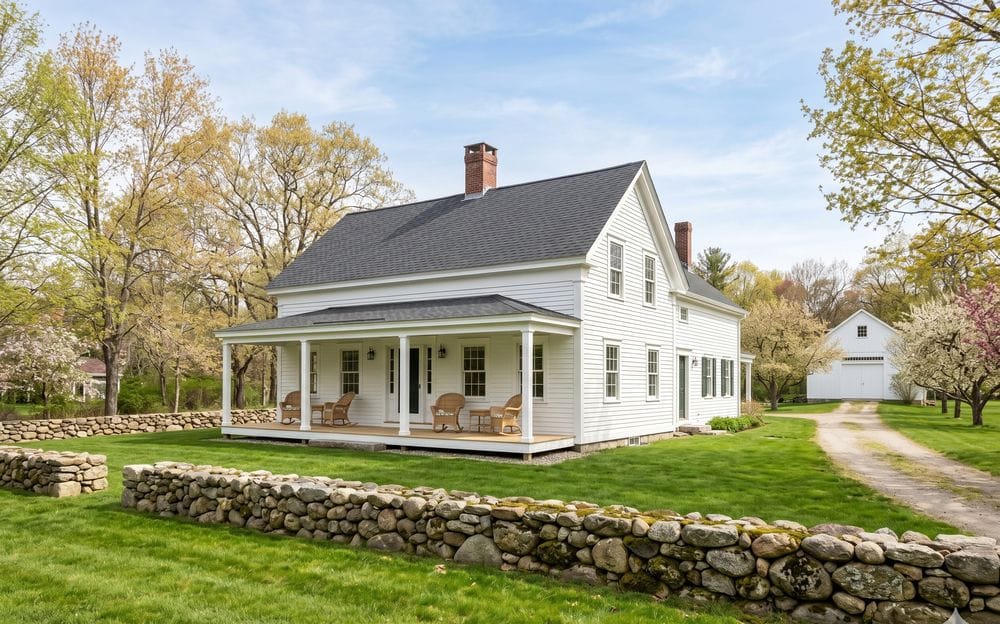
Exterior painting in Massachusetts lives and dies by the weather. The paintable window runs roughly late April through October, with the sweet spots in late spring and early fall when temperatures sit between 50 and 75°F and humidity is moderate. Paint applied too cold won't cure; applied in mid-summer heat, it can flash-dry and lose adhesion before it bonds. We cover the full calendar in our guide to the best time to paint your exterior in Massachusetts.
Prep is even more critical outside than in. That means power-washing to remove dirt and mildew, scraping failed paint, sanding, replacing rotted trim or clapboard, and spot-priming all bare wood before a drop of finish coat goes on. Different surfaces need different approaches — cedar shingles, clapboard, and previously painted vinyl each have their own rules. A quality exterior using a premium product like Benjamin Moore or Sherwin-Williams can last 12–15 years on a properly prepped MetroWest home — or peel within two on a home that was painted over dirt, old caulk, and bare wood.
What about lead paint in older homes?
This is the question that catches the most MetroWest homeowners off guard. Any home built before 1978 may contain lead-based paint, and disturbing it — sanding, scraping, even opening painted-stuck windows — releases hazardous dust. This isn't optional fine print: contractors are bound by the federal EPA Lead Renovation, Repair and Painting (RRP) Rule, and Massachusetts has its own, stricter Massachusetts Lead Law for homes where young children live.
The practical upshot: hire an EPA Lead-Safe certified painter for any pre-1978 home, and make sure they contain dust with plastic and HEPA vacuums, protect your soil and landscaping, and clean up to standard. Cutting corners here isn't just a quality issue — it's a health and legal one. We're Lead-Safe certified and handle older homes to code; there's more detail in our Massachusetts lead paint guide for homeowners.
What about cabinets, decks, and specialty work?
House painting isn't only walls and siding. Two of the highest-impact projects we do are cabinet refinishing and deck staining, and both have their own rules.
Cabinets: refinishing existing cabinets costs a fraction of replacement and, done right with a sprayed, leveled finish, looks factory-new. The decision usually comes down to the condition of the boxes — if the structure is sound, refinishing is almost always the smarter spend. We compare the two paths in our cabinet refinishing vs. replacement guide.
Decks: in our freeze-thaw climate, a penetrating wood stain almost always outlasts paint on a deck, because paint forms a film that traps moisture and peels off the walking surface. The full comparison is in our deck staining vs. painting guide. Removing old wallpaper before painting is another common MetroWest project with its own pitfalls, covered in our wallpaper removal guide.
How do you choose the right painter?
The painter you hire matters more than the paint you buy. In a region with as many contractors as MetroWest, here's how to separate the professionals from the price-cutters:
- Licensed and insured. Ask for proof of liability insurance and workers' compensation. If they're not insured and someone gets hurt on your property, that liability can land on you.
- EPA Lead-Safe certified — non-negotiable for any pre-1978 home.
- A written, itemized scope. It should specify surfaces, prep steps, number of coats, and the product. A two-coat scope and a one-coat scope are not the same job, even at the same price.
- Real local reviews. Look for a track record in your specific towns — Houzz, Google, and Angie's List reviews from named neighbors carry more weight than a bare star rating.
- A warranty. A contractor who stands behind the work with a multi-year warranty has a reason to do the prep right.
A few questions cut through a sales pitch fast: How many coats are included? What prep is in the price? What product and sheen will you use? Who is actually on my crew, and will it be the same people each day? If a bid comes in dramatically lower than the others, ask what's being left out — it's almost always the prep.
How long does a painting project take?
Timelines vary with size and scope, but rough expectations help you plan. A single interior room is usually one day; a whole-home interior runs three to seven working days depending on square footage and trim detail. A full exterior typically takes four to seven days of suitable weather, which is why exterior projects need a flexible window rather than a hard date. Cabinet refinishing is usually about a week, since each coat needs to cure before the next.
The honest variable is weather and prep. Exterior crews lose days to rain, and a home that needs extensive scraping, carpentry, or lead-safe containment takes longer than its square footage suggests. A good contractor gives you a realistic range up front and tells you when surprises push it — not a too-good-to-be-true single day that turns into a rushed, thin job.
How should you prepare your home before the crew arrives?
You can save time and money — and protect your belongings — with a little prep of your own. Inside: move small items off shelves and walls, take down pictures and pull the nails, remove switch and outlet covers if you're comfortable, and clear a path to the rooms being painted. Outside: trim back shrubs and tree limbs near the house, move patio furniture and grills away from the walls, and make sure the crew can reach hose bibs and outlets. Thirty minutes of homeowner prep keeps the crew focused on painting instead of moving your things.
What does a professional painting process look like?
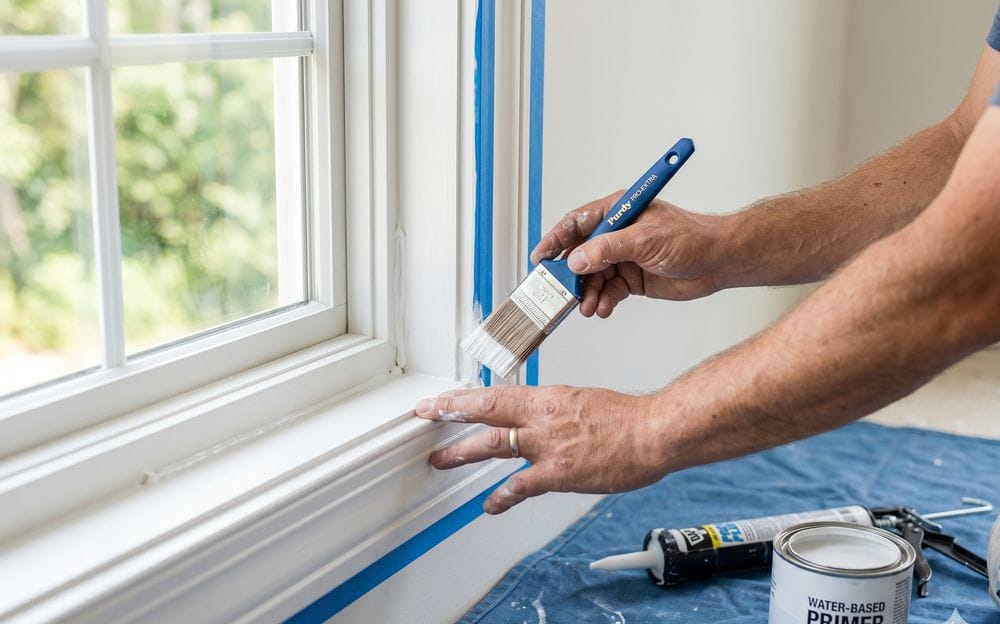
A quality job follows the same arc whether it's a single room or a whole exterior. First, protection and prep: covering floors and landscaping, then filling, sanding, caulking seams, and priming bare or repaired spots. This invisible stage is where 80% of the durability is won — we explain why in our prep work guide.
Only then comes paint: two coats of a quality product, applied with a wet edge and sanded between coats on trim for a smooth finish. The job ends with a walkthrough, touch-ups, and a clean site — a professional crew leaves your home cleaner than they found it, with paint cans labeled and stored for your future touch-ups.
Does paint quality actually matter?
Yes — more than most homeowners expect. Premium paints from Benjamin Moore and Sherwin-Williams cost more per gallon because they carry more pigment and binder, which means better coverage, smoother leveling, and a finish that holds its color and washability for years longer. On a whole-home project, the paint is a small slice of the total cost and a huge slice of the result. "Saving" money on cheap paint usually means repainting sooner, which costs far more than the difference — and on an exterior, it can mean the difference between a finish that lasts five years and one that lasts fifteen.
Why do MetroWest homeowners choose Paint Pro New England?
We're based in Holliston and have painted across MetroWest Boston for fifteen years — interior, exterior, cabinets, decks, and historic restoration. We're fully licensed and insured, EPA Lead-Safe certified, and back our work with a two-year warranty and a 5.0-star rating across 60+ reviews. Most of all, we treat your home's woodwork and walls like the investment they are.
If you're planning a painting project anywhere in our eighteen-town service area — Holliston, Medway, Hopkinton, Sherborn, Dover, Wellesley, Natick, Needham, Framingham, and beyond — we'd be glad to give you a free, itemized estimate. No pressure, just honest pricing and straight answers. Call (774) 217-9567 or reach out through our site, and let's make your home look its best.
Dave Griffiths
Dave Griffiths is the owner of Paint Pro New England, a professional painting company serving MetroWest Boston since 2011. With 15+ years of interior and exterior painting experience across the region, he leads every project with thorough prep, premium Benjamin Moore and Sherwin-Williams paints, and a 2-year warranty.

