



TL;DR: On an older Franklin home, restore original painted wood trim whenever the wood is sound or repairable. Cornices, friezes, corner boards and casings are what give the house its style: the Franklin Common National Register nomination records houses that lost their trim and were left "astylistic." Most worn original trim is a paint problem, not a wood problem. The National Park Service recommends removing paint only "to the next sound layer" and repainting every 5 to 8 years. About 13.8 percent of Franklin homes were built in 1939 or earlier (ACS 2020-2024).
Wondering whether the original trim on your older Franklin house can be saved? Call or text Dave at (774) 217-9567. We will look at it up close and tell you what we would keep.
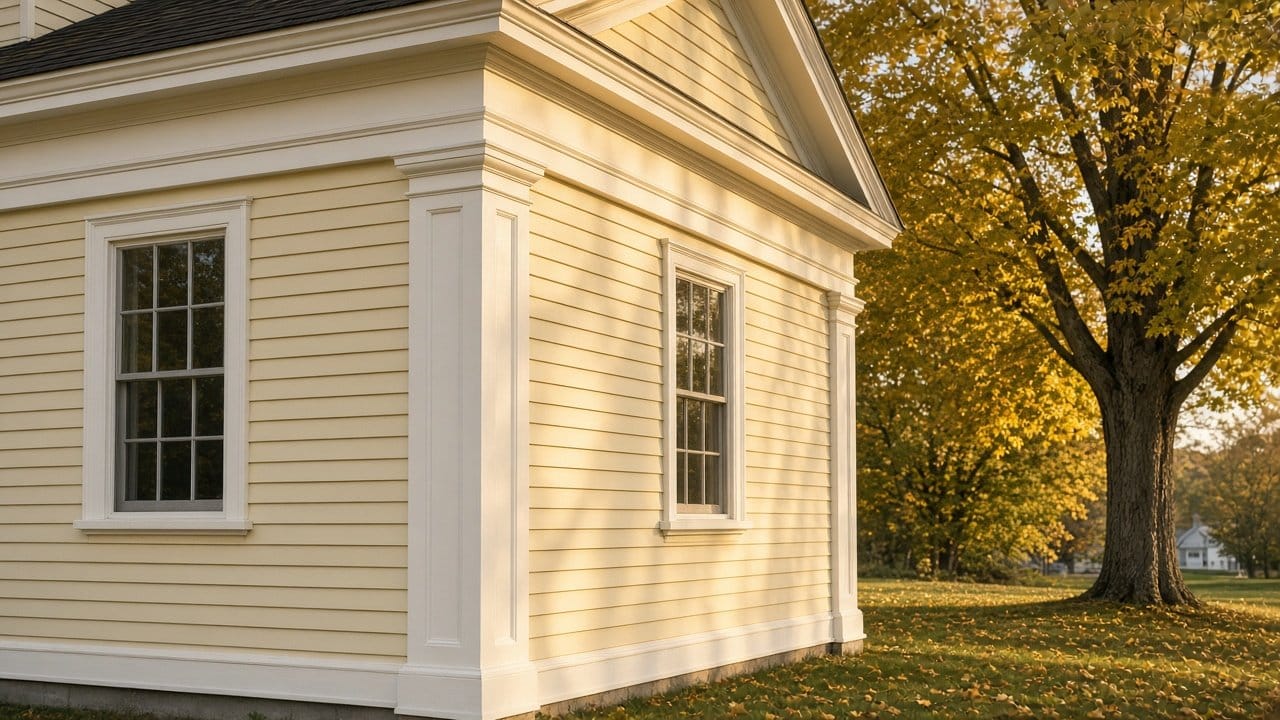
Stand across the street from an 1840s house near Franklin Common and squint. The body of the house is a plain box. What tells you it is Greek Revival, and not a 1950s cape with good proportions, is the trim: the wide frieze under the eaves, the corner boards, the casings around the windows. Take those away and the style goes with them. That is the whole case for restoring original trim, and it is why the decision deserves more thought than a lumberyard order.
What does original trim do for an older Franklin house?
Original trim carries the style. The Franklin Common Historic District nomination says residential buildings there date "from the late 18th century to 1937," mostly from the mid to late 19th century, in styles from Federal and Greek Revival through Italianate, Second Empire, Queen Anne and Craftsman. "Most houses are of frame construction, clad with clapboards." The trim it describes is specific to each era:
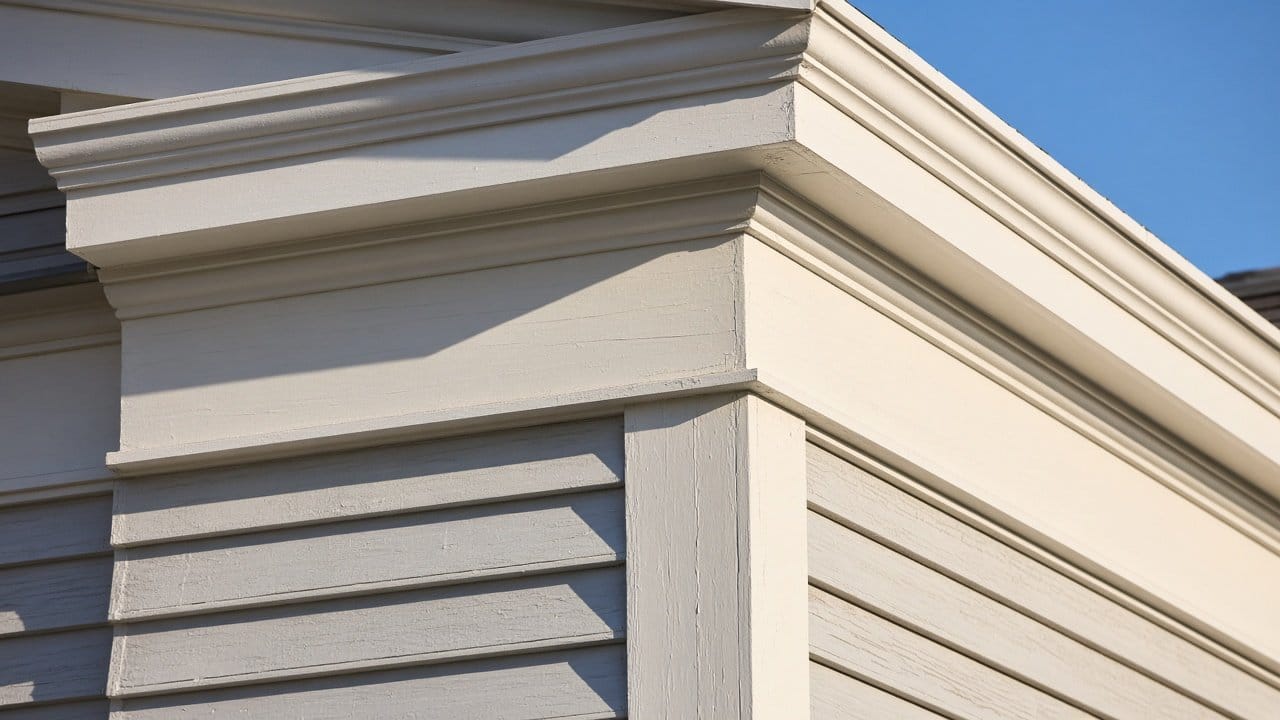
- Greek Revival: a wide frieze beneath the eaves, pedimented gable ends, molded casings, and wide corner boards. The nomination notes that corner boards rising to a pedimented entablature "were meant to evoke the Greek Temple."
- Italianate: bracketed and sometimes denticulated cornices, shelf-on-bracket window heads and wide compound friezes.
- Queen Anne: porches with turned posts, spindles and small brackets, bracketed window cornices and patterned shingle bands. One house on Main Street is singled out for "retaining character defining trim."
The nomination also records what happens when trim goes. Some houses lost much of their trim when they were re-clad, and of the early 20th century Foursquares north of Church Square it says many were re-clad, "often including removal of trim, which has left them astylistic." That is the risk with any plan that treats original trim as disposable.
Who decides what happens to original trim on a Franklin house?
You do, for now. Franklin has no local historic district. At the Town Council on October 22, 2025, a Historical Commission member said Franklin does not have one, only "a federal historic district around the Town Common," according to the Town Council minutes of that meeting. A National Register listing like Franklin Common's places no restrictions on a private owner's work, as our historic district approval guide explains.
That may change. The June 4, 2026 Economic Development Subcommittee packet lists a discussion of "Historic District Commission concepts," with the Historical Commission as lead, and a Master Plan item to "Create a historic district study committee." Nothing has been adopted, so decisions about original trim on Franklin houses are the owner's. They are also hard to reverse, which is the better reason to make them carefully.
How do you tell whether original trim can be kept?
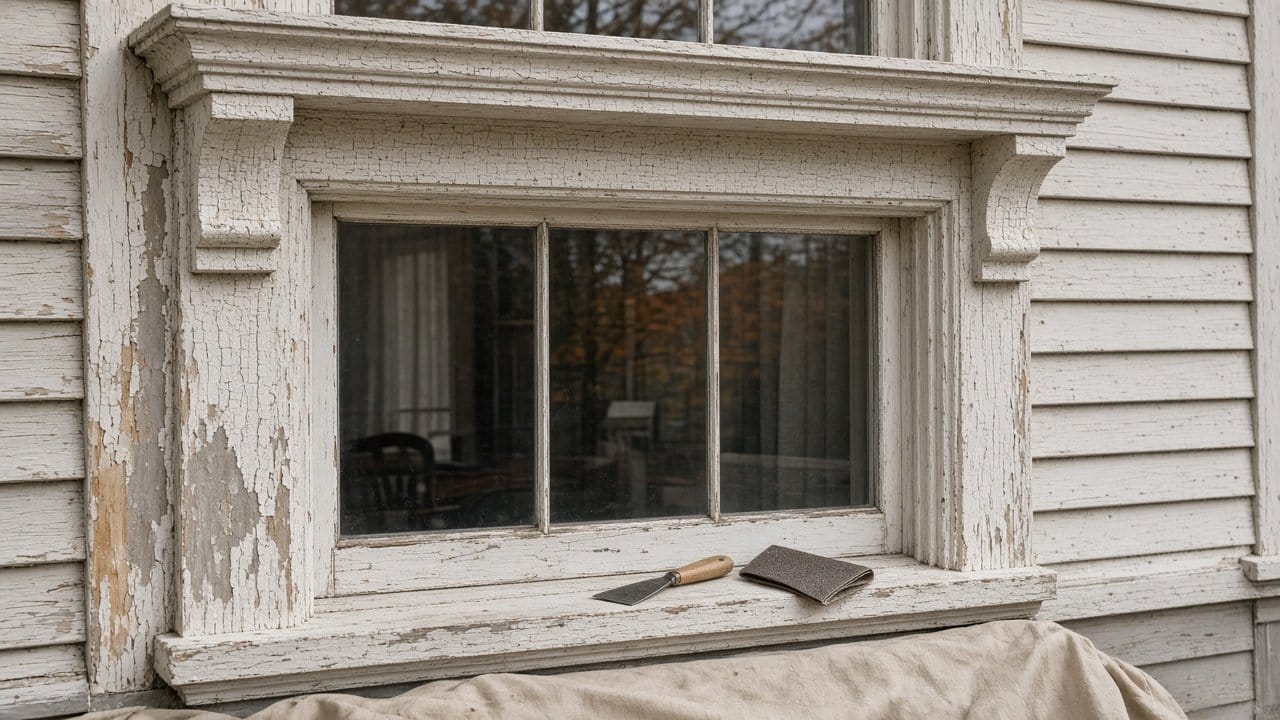
Look past the paint. Original trim that looks worn out is usually wearing a failing paint film over wood that is still sound. Peeling, cracking and alligatored paint on a cornice says the paint needs work, not that the cornice does. The wood question is a probe test: hard wood under the paint is restorable, soft wood needs a closer look, and wood that has lost its section needs replacing.
We have written that repair decision out in full, including consolidants, moisture limits and when replacement is simply better, in rotted trim: repair or replace before painting. Start there for any soft spot. What follows here is the part that page does not cover: keeping the detail of original trim intact while it gets repainted.
How do you repaint original trim without losing the detail?
Gently, and in layers. The National Park Service's Preservation Brief 10 on paint problems on historic woodwork is the reference we follow:
- Remove paint "to the next sound layer" using the gentlest means possible. Sound old paint is a good base; bare wood is not the goal.
- Mind the thickness. At about 1/16 inch, roughly 16 to 30 layers, one more coat can set off cracking and peeling, and it fails at the oldest layers next to the wood. Heavily built-up trim gets checked for that before another coat goes on.
- Buildup alone is not a reason to strip. The brief's example is an ornamental bracket: thick paint there does not "in itself justify total paint removal."
- Keep harsh tools away from profiles. Blow torches, sandblasting, rotary sanders and rotary wire strippers are on the brief's list of what scars historic woodwork.
On original trim, that means hand scrapers shaped to the molding, hand sanding into the profile, and spot priming of bare wood before any finish coat. Caulk goes in open joints, not across the reveals and shadow lines that make a casing read as a casing. Finish coats on trim are brushed, so they follow the profile instead of filling it.
Where one piece of original trim really is gone, copy it rather than simplify it. Trace or gauge the profile from a sound section before the bad piece comes off, match it, and prime the new wood on all sides before it goes up. If that new wood will sit through a winter before it is finished, read why bare wood should not sit over winter first.
Does lead change how original trim is restored?
Yes, on any house built before 1978. Original trim is where the oldest paint usually is, because it has been repainted the most. The EPA's Renovation, Repair and Painting program applies when a paid contractor disturbs painted surfaces in pre-1978 homes. Under the federal rule's definitions in 40 CFR 745.83, minor exterior work is 20 square feet or less of painted surface, and restoring the trim on even one elevation can easily run past that.
In Franklin, 34.4 percent of homes were built before 1970 and 41.2 percent before 1980, per ACS 2020-2024 estimates on Census Reporter. Older trim also tends to carry oil-based coats, which affects primer choice, as covered in painting over oil-based paint on older homes. The lead rules themselves are in our Massachusetts lead paint guide.
Frequently asked questions
Is it better to restore or replace original wood trim on an old house?
Restore it when the wood is sound or repairable, because original trim carries the house's style and cannot be put back once it is gone; replace only pieces that have lost their structure, and copy the original profile.
Does Franklin, MA have a local historic district?
No, town records through mid-2026 show Franklin has no local historic district, only the federal Franklin Common National Register district, though a June 2026 town packet lists a Master Plan item to create a historic district study committee.
Do you have to strip all the old paint off trim before repainting?
No, the National Park Service recommends removing paint only to the next sound layer by the gentlest means, and full removal only where paint shows continuous deep cracks or is peeling down to bare wood.
How often should painted wood trim be repainted?
The National Park Service describes exterior paint as a temporary shield needing re-application every 5 to 8 years, and sun-facing trim on the south and west sides usually reaches that point first.
What styles of houses are in the Franklin Common Historic District?
The Franklin Common nomination lists Federal, Greek Revival, Italianate, Second Empire, Queen Anne and Craftsman houses, built from the late 18th century to 1937 and mostly clapboard-clad wood frame buildings.
The bottom line
On an older Franklin home, original trim is worth restoring whenever the wood allows it. The trim is the style, most of its problems are paint problems, and the right prep removes paint only to the next sound layer, by hand, without flattening the profile. Replace only what has truly failed, and copy what you replace. The same thinking applies across our older town centers, as in repainting a mill village house in Millis. For everything else about painting in town, start at our Franklin painters page.
Paint Pro New England has painted older homes across Franklin, Medway, Bellingham, Norfolk, Millis and the rest of our 18 towns since 2011, with Benjamin Moore and Sherwin-Williams products, full insurance, a 2-year warranty and 5.0 stars across 62+ reviews. See exterior painting in Franklin and power washing in Franklin, or call (774) 217-9567 and we will look at your original trim with you.
Dave Griffiths
Dave Griffiths is the owner of Paint Pro New England, a professional painting company serving MetroWest Boston since 2011. With 15+ years of interior and exterior painting experience across the region, he leads every project with thorough prep, premium Benjamin Moore and Sherwin-Williams paints, and a 2-year warranty.

