



TL;DR: Repainting a late-1800s house in Millis Center changes three things: the trim, the paint layers and the lead rules. The Millis Center Historic District holds 171 contributing resources in what its National Register nomination calls a "small late 19th century industrial village," including about 60 cottages the Millis Company financed in the 1890s. On those houses the trim is what dates them, there can be more than a century of paint underneath, and anything built before 1978 falls under the EPA lead-safe painting rule.
Own one of the older houses around Millis Center? Call or text Dave at (774) 217-9567. We will look at the trim and the paint layers with you before we talk about color.
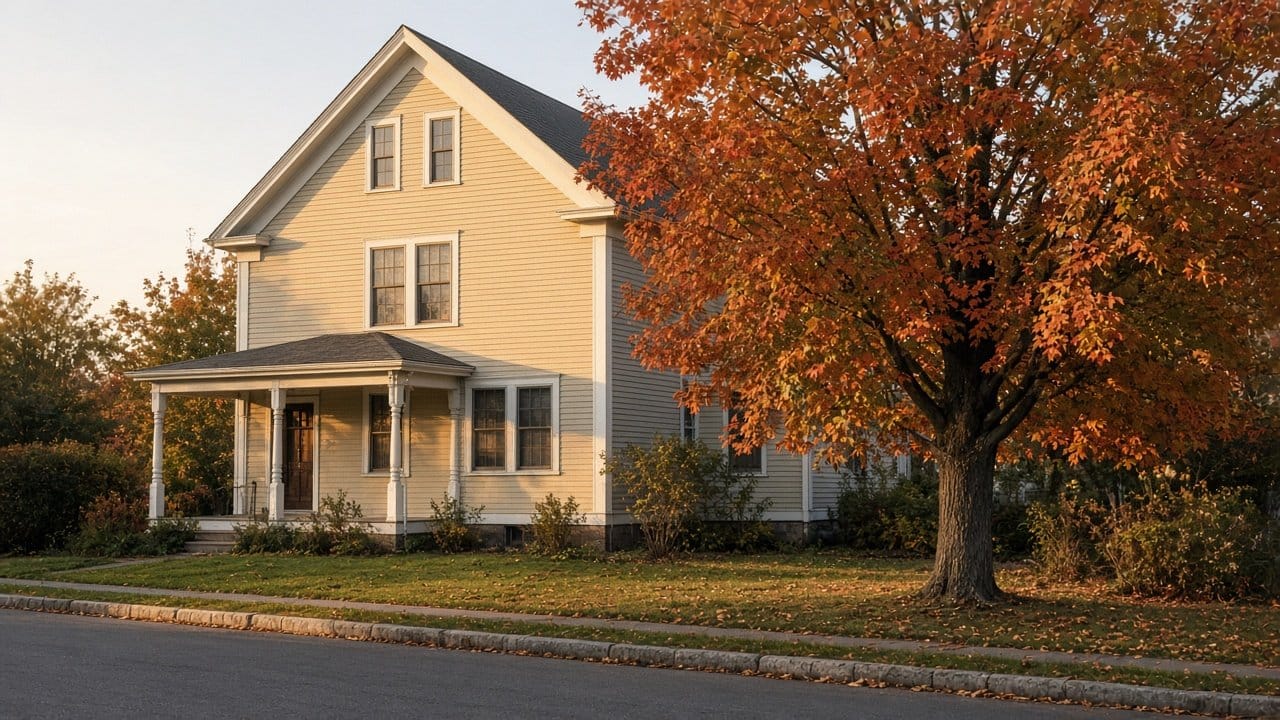
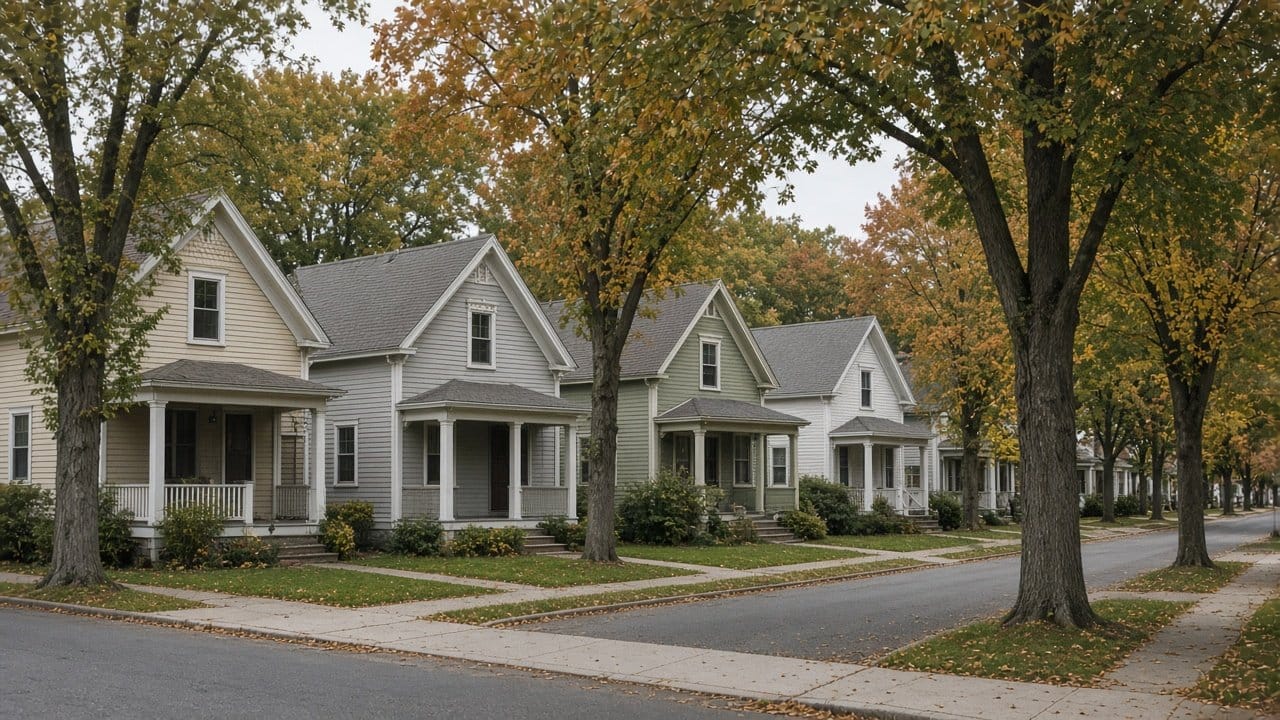
Walk up Lavender Street or the west end of Irving Street in Millis Center and you see the same house over and over: gable end to the street, side-hall entrance, two stories, a porch across the front. That repetition is the point. These were factory housing, built in a burst in the 1890s, and they have been repainted on the same schedule for well over a hundred years. Here is what that history means the next time one of them gets painted.
What is Millis Center, and how old are its houses?
It is a National Register historic district at the geographic center of town, along Main Street (Route 109). The National Register nomination describes a densely developed industrial village with factories, the railroad, worker housing and civic buildings, and counts 171 contributing resources with a period of significance from about 1750 to 1957. The district is listed as NRIS 07000944 on the National Park Service NPGallery.
From the nomination, the Millis Center houses fall into a few clear groups:
- One 18th-century survivor, the center-chimney Georgian John Richardson House on Curve Street.
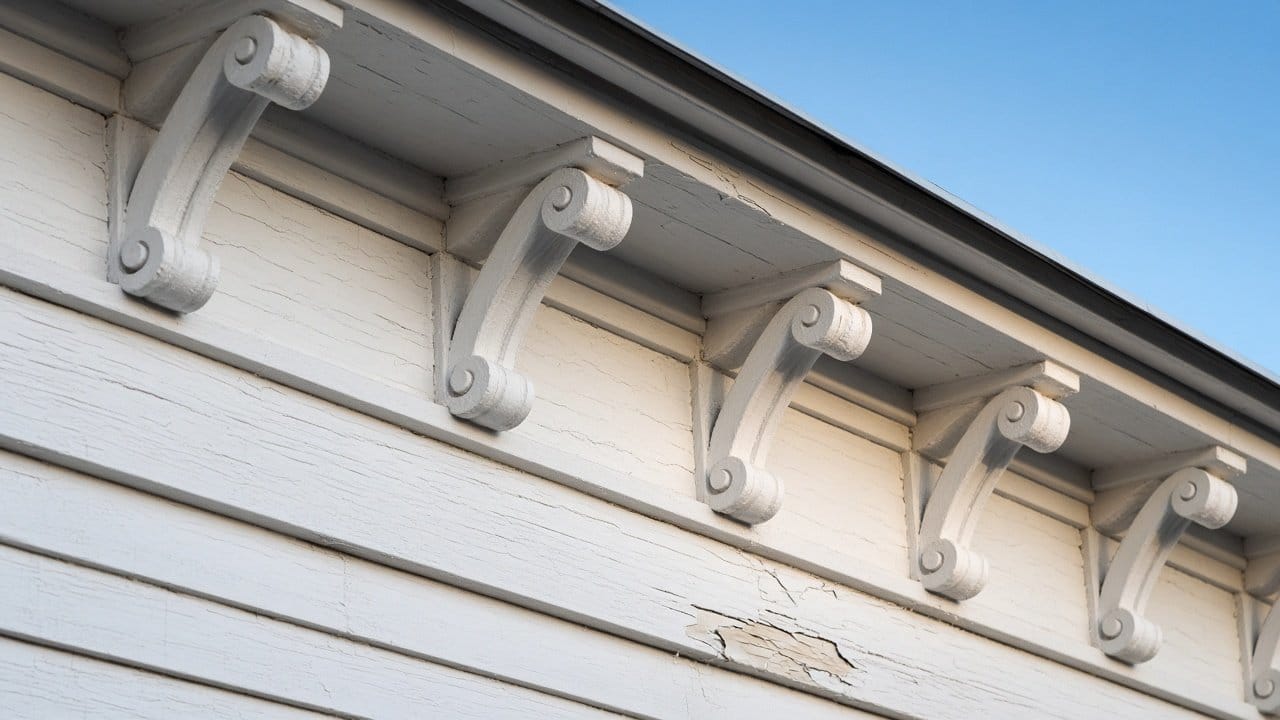
- A handful of houses from 1852 to 1876, including three Italianate examples the nomination singles out, with bracketed eaves and wide trim.
- The 1890s worker cottages: about 60 financed by the Millis Company, as new streets such as Lavender and Irving were laid out. Lavender Street has twelve gable-front houses built around 1890, and the 1891 Irving Street subdivision has nine gable-front, side-hall houses.
- Colonial Revival, Queen Anne and bungalow infill from the 1890s through the 1930s.
Townwide, Millis has a median year built of 1974, with 12.6 percent of homes built in 1939 or earlier and 44.3 percent before 1970, per ACS 2020-2024 estimates on Census Reporter. Millis Center is where most of the oldest ones sit. National Register listing places no restrictions on what a private owner paints; the details are in our historic district approval guide.
Why is the trim the part that matters most in Millis Center?
Because the trim is what tells one decade from another. The nomination says it plainly: "Basic house forms did not change as much as proportions and styles of architectural trim." It also notes that many houses were later covered with asbestos shingle or vinyl, yet "architectural trim has been retained in many instances, and it is the trim together with the dimensions and use of materials that distinguish periods of construction."
So on a Millis Center house the trim carries the style, and it is where the painting time goes:
- Italianate houses have raking eaves with wide returns, paired cornice brackets, a wide frieze board, wide corner posts and chamfered porch posts. Each bracket is several faces and edges, scraped and brushed by hand.
- Queen Anne and Victorian Eclectic cottages carry decorative shingles in the gable peaks, turned porch posts and balusters. Those details hold old paint in every recess.
- The plain 1890s cottages still have boxed eaves, gable returns on some, corner boards and window casings. Simple, but original, and worth keeping crisp.
- Porches, from bracketed entrance porches to full-width and wrap porches, run through the nomination's descriptions, many enclosed over the years. Porch ceilings and columns are their own job, covered in painting porch ceilings and beadboard.
On the Millis Center houses that have been resided, the painted work is mostly that retained trim plus doors, sash and porches. That is still a full exterior paint job, and on these houses it is the part people notice.
What does a century of paint layers mean for prep?
It means the goal is a sound surface, not bare wood. The National Park Service's Preservation Brief 10, on paint problems on historic woodwork, sets out the approach we follow on houses this age:
- Remove paint "to the next sound layer" using the gentlest means possible, then repaint. Paint adheres as well to sound old paint as to bare wood.
- Watch the thickness. Once paint builds to about 1/16 inch, roughly 16 to 30 layers, another coat can trigger cracking and peeling, and it fails at the oldest layers next to the wood.
- Buildup on a bracket alone does not justify stripping it. Paint cracked and peeling to bare wood does.
- No blow torches, rotary sanders or rotary wire strippers. The brief lists all three among the ways historic woodwork gets damaged.
The same brief calls exterior paint a temporary shield "requiring re-application every 5-8 years." On an 1890s Millis Center cottage, roughly 130 years old now, that adds up to a lot of coats, which is why the thickness check matters.
Many of these houses also carry old oil-based coats under newer latex, which affects primer choice. That question has its own page: painting over oil-based paint on older homes. Where wood has actually rotted, the repair decision comes before any paint, and it is covered in rotted trim: repair or replace.
Does lead-safe work apply to Millis Center houses?
Yes, on every house in Millis Center built before 1978, which is nearly all of them. The EPA's Renovation, Repair and Painting program covers anyone paid to disturb painted surfaces in homes built before 1978. On an 1890s cottage we assume lead is in the older layers until a test says otherwise, and we plan containment and cleanup around that. The Massachusetts Lead Law adds owner duties when a child under 6 lives in the home. Both are explained in our Massachusetts lead paint guide.
Some of the houses in Millis Center are two-family. The nomination's example is the S. A. Newhouse House on Main Street, built by the Millis Company as worker housing between 1890 and 1892 and a two-family ever since. If yours is a two-family, the scheduling and tenant side of the job is covered in painting a two-family house.
How do we sequence a Millis Center repaint?
The order matters more on an old house than a new one:
- Date the house and read the trim. The style tells us how much hand detail there is and where paint has built up.
- Test for lead and set up containment before any scraping.
- Wash to remove dirt and chalk, so new paint bonds to the old.
- Scrape and hand sand to the next sound layer, feathering edges.
- Repair wood where it is soft, then prime all bare wood.
- Caulk open joints at corner boards, casings and returns.
- Two finish coats, brushed on the trim details.
Original sash, where it survives, gets the care described in painting wood window sashes.
Frequently asked questions
How many buildings are in the Millis Center Historic District?
The National Register nomination counts 171 contributing resources in the Millis Center Historic District, including houses, two industrial complexes, civic buildings and other structures that together form the village center along Main Street.
Does the Millis Center National Register district restrict paint color?
No, National Register listing places no restrictions on what a private owner does with their property unless federal funding or permitting is involved, so owners in Millis Center choose their own paint colors.
When were the mill village houses in Millis Center built?
Most were built in the late 19th and early 20th centuries, and the Millis Company financed about 60 cottages in the 1890s as new streets such as Lavender and Irving were laid out.
Should all the old paint be stripped from a late-1800s house before repainting?
Usually not, because the National Park Service recommends removing paint only to the next sound layer by the gentlest means, and stripping to bare wood only where paint is deeply cracked or peeling to the wood.
Do older Millis homes need lead-safe painting?
Yes, any home built before 1978 falls under the EPA Renovation, Repair and Painting rule when a paid contractor disturbs paint, and 44.3 percent of Millis homes were built before 1970, according to ACS 2020-2024 estimates.
The bottom line
A late-1800s house in Millis Center is painted the same way it always has been, one sound layer over the last, but the details decide the job: the trim that dates the house, the thickness of the paint already on it, and lead-safe prep on every pre-1978 surface. Keep the trim, scrape to sound paint rather than bare wood, and the house reads as what it is. For everything else about painting in town, start at our Millis painters page.
Paint Pro New England has painted older homes across Millis, Medway, Holliston, Norfolk, Medfield and the rest of our 18 towns since 2011, with Benjamin Moore and Sherwin-Williams products, full insurance, a 2-year warranty and 5.0 stars across 62+ reviews. See exterior painting in Millis and power washing in Millis, or call (774) 217-9567 for a walk-through of your house.
Dave Griffiths
Dave Griffiths is the owner of Paint Pro New England, a professional painting company serving MetroWest Boston since 2011. With 15+ years of interior and exterior painting experience across the region, he leads every project with thorough prep, premium Benjamin Moore and Sherwin-Williams paints, and a 2-year warranty.

