



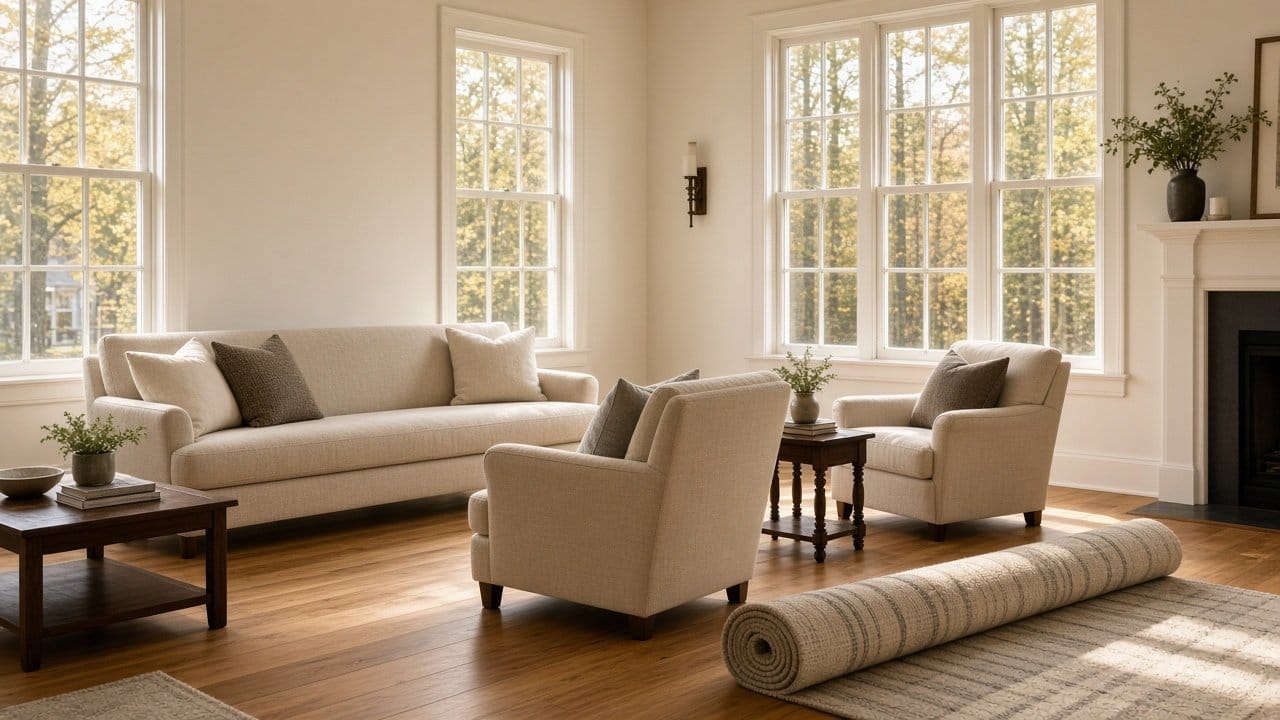
TL;DR: You can use the room again after about 24 hours. Move furniture back then, but keep it a few inches off the wall for 7 to 10 days, which is Benjamin Moore's own guidance. Hang pictures after about 7 days on latex. Wash the walls only once the paint has cured, roughly 30 days. Painted cabinets are the slowest thing in the house: dry to the touch in 2 to 4 hours, but leave them unused for 2 to 3 days. Dry and cured are two different states, and almost every ruined finish comes from confusing them.
Just had a room painted and not sure what you can touch? Call or text Dave at (774) 217-9567. We will tell you what is safe today and what wants another week.
We get this question more than any other after a job wraps, and usually in the form of "can I put the bed back tonight." The honest answer has two halves, because the paint on your wall passes through two completely separate milestones and the first one arrives long before the second.
Dry is not cured, and that is the whole answer
Dry means the solvent, which in modern waterborne paint is mostly water, has left the film. The surface is no longer wet to the touch. On a wall that happens in about one to two hours.
Cured means the film has finished forming: the binder particles have coalesced and hardened into a continuous, durable surface with its full block resistance, scrub resistance, and hardness. On latex and acrylic wall paint that takes roughly 14 to 30 days. Sherwin-Williams puts acrylic and latex at two to three weeks and oil-based at as little as five days, on a different chemistry, in their guide to paint drying.
These are not marketing words. The industry has standard test methods for exactly these stages, in ASTM D1640, the standard test methods for drying, curing, or film formation of organic coatings at room temperature. The reason it takes a standard to define them is that they genuinely are separate events.
The gap between those two dates is where damage happens. A wall that is dry will take a handprint off without a mark. A wall that is dry but not cured will accept an imprint from anything pressed against it and held there, and in the worst case will release from the surface when that thing is pulled away.
The timeline, surface by surface
- Walk on the floor, use the room lightly: about 24 hours.
- Move furniture back into the room: 24 to 48 hours.
- Push furniture against the wall: 7 to 10 days minimum, per Benjamin Moore. Longer is better.
- Hang framed pictures: about 7 days on latex.
- Hang anything heavy, or mount to the wall: closer to the full 30 days.
- Tape anything to a painted wall: not until fully cured, and then reluctantly.
- Wash or scrub the walls: after full cure, roughly 30 days.
- Use painted cabinets: 2 to 3 days, cure at about 30 days.
Why does furniture stick to a freshly painted wall?
Because an uncured film is still slightly soft, and soft films block. Blocking is the technical term for two surfaces sticking to each other under pressure, and it is exactly what happens when a sofa back, a headboard, or a dresser is pushed flat against a wall painted four days ago and left there.
The result ranges from a permanent dull imprint in the sheen to a patch of paint that lifts off with the furniture. Neither one touches up invisibly, for the reasons in why touch-up paint never matches.
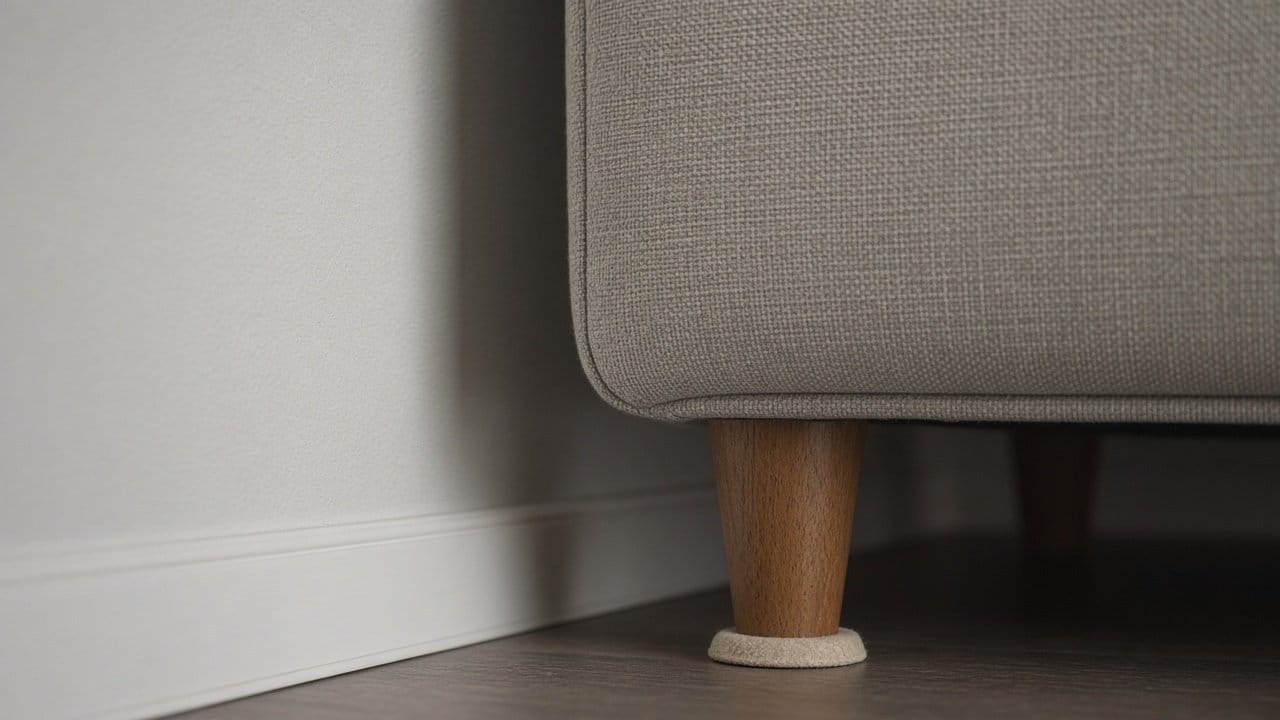
Benjamin Moore's guidance is direct: maintain normal room temperature and humidity, and avoid pushing furniture against walls for the first seven to ten days after painting. It appears in their guide to cleaning and maintaining freshly painted walls and cabinets, which is also where the advice to put felt pads under furniture legs comes from.
Higher sheens deserve more patience than flat. Satin and semi-gloss have more binder and more surface gloss to mar, so an imprint in satin shows from across the room where the same mark in a matte would disappear. That trade-off is the subject of eggshell versus satin on interior walls.
Hanging pictures and the thing nobody warns you about
Framed art can generally go back up at about a week on latex. The nail hole is not the issue. The issue is the frame itself resting flat against a wall that has not hardened, and hardware pressed into it under the weight of the piece.
Two practical habits. Use bumpers on the lower corners of the frame so the contact points are small, hard, and consistent rather than the full length of the frame edge. And if you are re-hanging into the same holes on a wall that was just patched, remember that the patched spots are the newest paint in the room, sometimes by weeks.
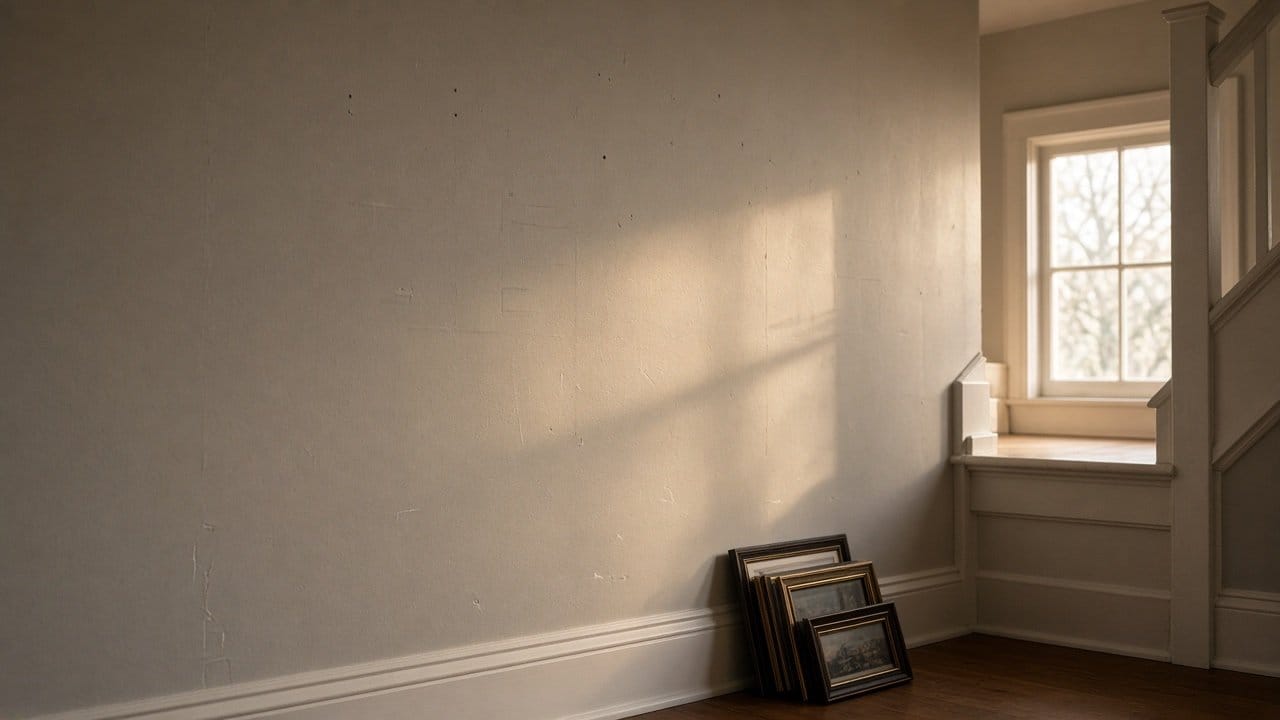
Stair and hall walls are the ones to be strictest about, because they get shoulder and hand contact every single day. What those walls need in the first place is covered in hallway and stair interior paint.
Cabinets are the slowest thing in the house
Cabinet doors are dry to the touch in about two to four hours, which fools people badly. Do not use them for two to three days, and treat them gently for the first month. Full cure is about 30 days, same as walls.
The reason cabinets punish impatience is that they are the only painted surface in a house designed to slam into another painted surface dozens of times a day. Door against frame, drawer front against rail, both under spring pressure from the hinge. A cabinet door closed onto an uncured face can bond to it and tear when opened.
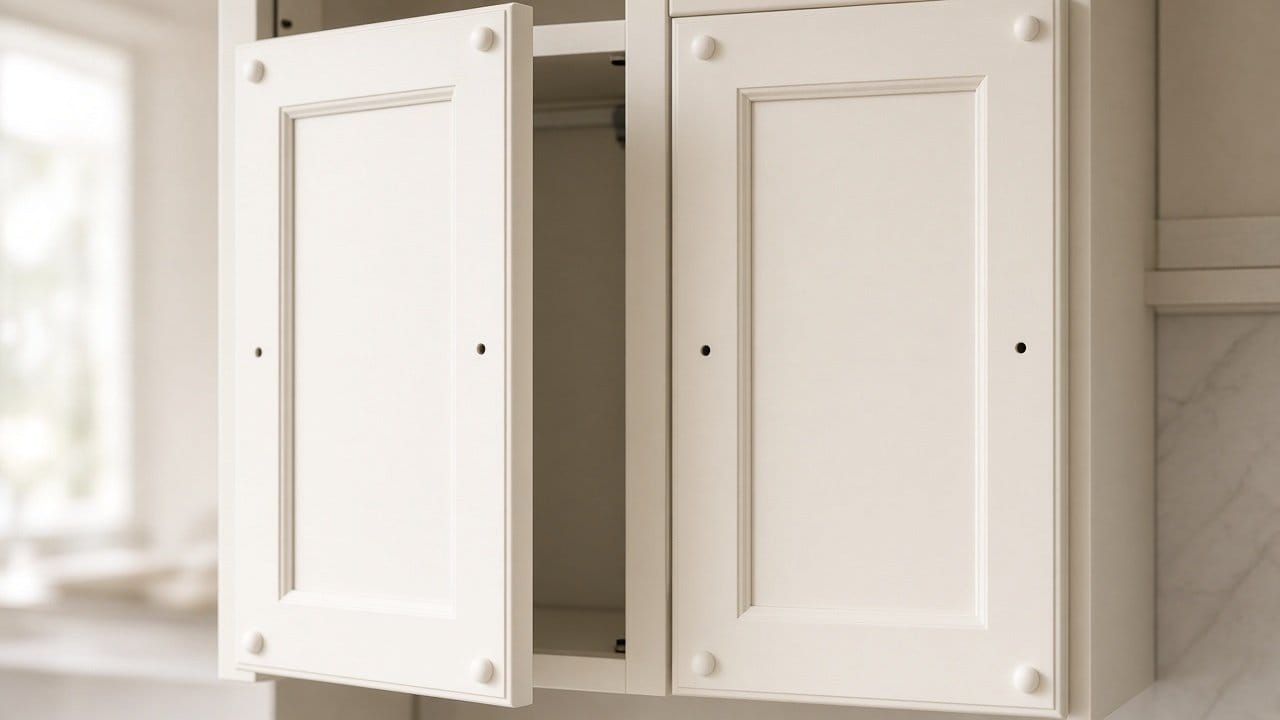
Which is why we hang doors slightly ajar, fit bumpers, and put hardware on at the end. It is also part of why a sprayed finish is worth the extra scheduling, as we cover in sprayed versus brushed cabinet finish durability.
Does the smell tell you anything?
No, and this is the most common mistake we see. A room can smell completely neutral by day three while the paint film is nowhere near hard. Off-gassing and curing are different processes on different clocks.
So a room that smells fine is not a cured room. And a room that still smells faintly is not necessarily behind schedule. If odor is the actual concern, for a nursery or someone sensitive, that is a product decision made before the job starts rather than a waiting game after it, which is the point of low-VOC paint for nurseries and allergy-sensitive homes. For clearing a room faster, see how to get paint smell out of the house.
The separate question of sleeping in a freshly painted room has its own answer, in how long after painting can you sleep in the room.
Does a heated New England house cure paint faster?
Not the way people hope. Once the heat comes on in October, indoor relative humidity in a Massachusetts house drops, sometimes sharply. Low humidity speeds the water out of the film, so the surface feels dry sooner. That is drying, not curing. The film still needs its weeks to harden.
Sherwin-Williams puts it bluntly: there is nothing that makes paint cure faster, though you can help it start drying sooner. What does matter is holding the room at normal, stable conditions rather than swinging it. Benjamin Moore's own instruction is to maintain normal room temperature and humidity during that first stretch. A room that is freezing overnight and blasted with forced hot air in the morning is not normal conditions, and a cold room slows everything down.
Practical version for a fall or winter interior job: keep the heat on at a normal setting, do not close the room off and let it go cold, and resist the temptation to read a fast surface dry as permission to push the bookcase back. The broader case for painting in the off season is in winter interior painting and its off-season benefits.
When can you actually wash a painted wall?
After full cure, roughly 30 days, and then gently. Mild soap, soft cloth, no abrasive pads, no solvent, and test an inconspicuous spot first. Scrub resistance is one of the properties that only exists once the film has hardened, so washing a three-week-old wall can burnish or thin it in a way that shows permanently in side light.
If something needs to come off a wall before the month is up, blot it rather than scrub it, and accept that a proper clean waits.
Frequently asked questions
How long after painting can you put furniture back against the wall?
Move furniture back into the room after 24 to 48 hours, but keep it a few inches off the wall for 7 to 10 days. That is Benjamin Moore's published guidance and it prevents imprints.
How long should you wait to hang pictures on a freshly painted wall?
About 7 days for latex paint. Use bumpers on the lower corners so the frame contacts the wall at small hard points rather than along its whole edge.
Can you wash a freshly painted wall?
Not for about 30 days. Scrub resistance only develops once the film has fully cured, so early washing can burnish or thin the paint permanently.
How long do painted kitchen cabinets need to cure before you use them?
Leave them unused for 2 to 3 days and treat them gently for the first month. They are dry to the touch in 2 to 4 hours, which is misleading, and fully cured at about 30 days.
Does paint cure faster in a heated house in winter?
No. Heating lowers indoor humidity so the surface dries faster, but curing still takes its full time. Hold the room at normal steady conditions rather than letting it swing cold.
The bottom line
Back in the room at a day, off the wall for a week to ten days, pictures at a week, washing at a month. Paint Pro New England has finished interiors across Holliston, Needham, Natick and the rest of our 18 towns since 2011, Benjamin Moore and Sherwin-Williams, fully insured, with a 2-year warranty on our work. Call (774) 217-9567 and we will leave you a plain list of what is safe to touch and when. If the room is also getting new floors, read whether to paint before or after new flooring first.
Dave Griffiths
Dave Griffiths is the owner of Paint Pro New England, a professional painting company serving MetroWest Boston since 2011. With 15+ years of interior and exterior painting experience across the region, he leads every project with thorough prep, premium Benjamin Moore and Sherwin-Williams paints, and a 2-year warranty.

