



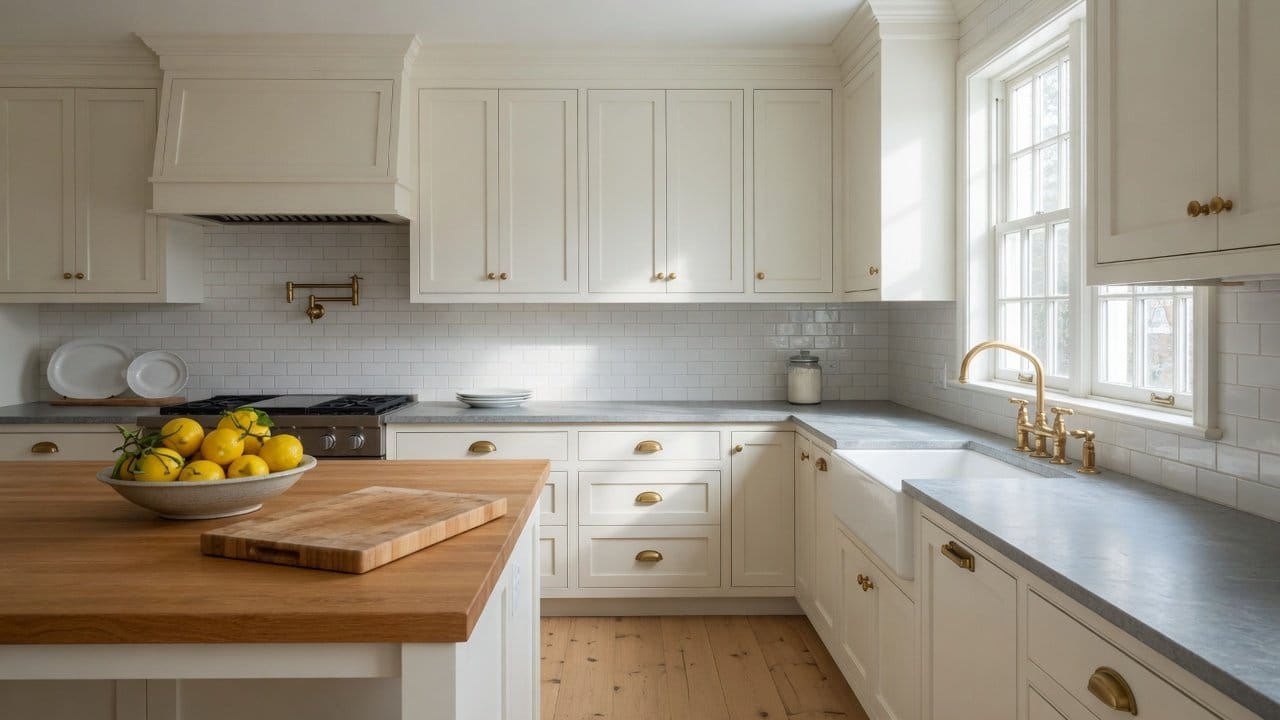
TL;DR: Sprayed and brushed cabinet finishes can both be durable, but they cure differently and that is what decides whether yours chips. A sprayed coat lands at roughly 2 to 3 mils per pass and reaches full hardness in about 2 weeks. The same product brushed lands at 4 to 6 mils and can take 3 to 4 weeks, because the outer skin hardens while the layer underneath is still soft. Most cabinet paint failures are not caused by the wrong method, they are caused by reinstalling and using doors before the film has cured through. Spray suits flat slab doors and full kitchens, brush suits detailed raised-panel and vintage doors, and prep outranks both.
Planning a cabinet project? Call or text Dave at (774) 217-9567. We will tell you which method fits your doors and, more importantly, how long to stay off them afterward.
The spray versus brush argument gets treated like a quality question. It is really a physics question, and most of the kitchens I get called back to look at failed for a reason that has nothing to do with which tool touched the door.
Why does film thickness decide durability?
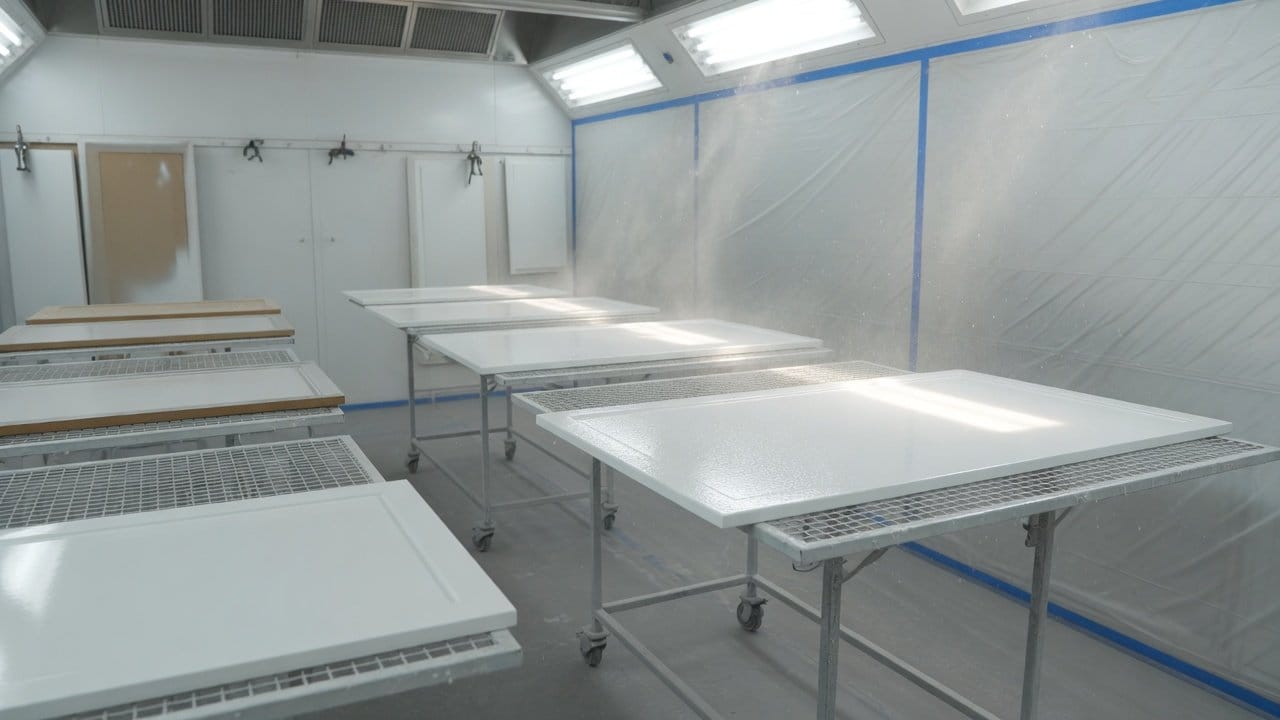
A coating has to cure all the way through, not just on top. Paint hardens from the surface inward as solvent leaves the film, so the thicker the layer, the longer the interior takes to reach hardness.
The measured difference is significant. Sprayed coats land at roughly 2 to 3 mils per pass. Brushed coats land at 4 to 6 mils, close to double. A sprayed coat of quality waterborne enamel reaches full hardness in about 2 weeks. The same product brushed at twice the thickness can take 3 to 4 weeks.
Here is the failure mechanism that follows. The skin cures fast and feels hard. The layer underneath has not. Doors get rehung, hardware gets installed, a family starts opening drawers, and every press of a thumb near the pull compresses a soft under-layer beneath a hard skin. Weeks later that shows up as edge chipping, print marks and a finish that seems to have failed for no reason. It did not fail, it was used too early.
Which one actually lasts longer?
Spray has a real but narrower advantage than the marketing suggests.
The advantage is uniformity. Spray lays down thin, even layers that bond consistently, so there are fewer thin spots at the places that take the most wear: door edges, drawer faces and the area around every pull. A brush deposits variable thickness by nature, and the corners, profile edges and moulding details are exactly where it tends to go thin. Those thin spots wear through first.
That said, a well-brushed finish by someone who knows what they are doing typically holds up 7 to 10 years before it wants attention, and both methods produce genuinely durable results when the prep and product are right. The honest summary is that spray has a marginal edge in coating uniformity, not a categorical one in quality.
Factory finishing is a separate tier and worth naming. Catalyzed two-part coatings such as conversion varnish, post-catalyzed lacquer and UV-cured acrylic resist grease and steam in ways any site-applied product cannot, and a properly factory-finished door holds color and surface integrity for 15 to 20 years. That is part of the calculus in cabinet refinishing versus replacement.
Which method should your kitchen get?
Match the method to the door, not to a preference:
- Flat slab and shaker doors: spray. Large uninterrupted faces are where uniform atomized coverage pays off most, and a full kitchen of them justifies the setup.
- Raised-panel, detailed and vintage doors: brush, or a hybrid. A brush reaches into recesses and carved profiles that spray can bridge or starve, and older MetroWest kitchens are full of exactly this kind of door.
- Small projects, an island, or a single vanity: brush. Spray carries setup, masking and containment overhead that does not amortize across a small piece.
- Touch-ups later: brush wins outright. A brushed finish blends on repair, a sprayed one is much harder to spot-match.
A note for anyone pricing a DIY spray job: professional-grade spray equipment starts around $2,000, which makes buying a rig for one kitchen a poor trade. That, plus containment, is a real part of why the honest DIY versus hiring a pro comparison lands where it does on cabinets specifically.
What actually decides whether cabinet paint lasts?
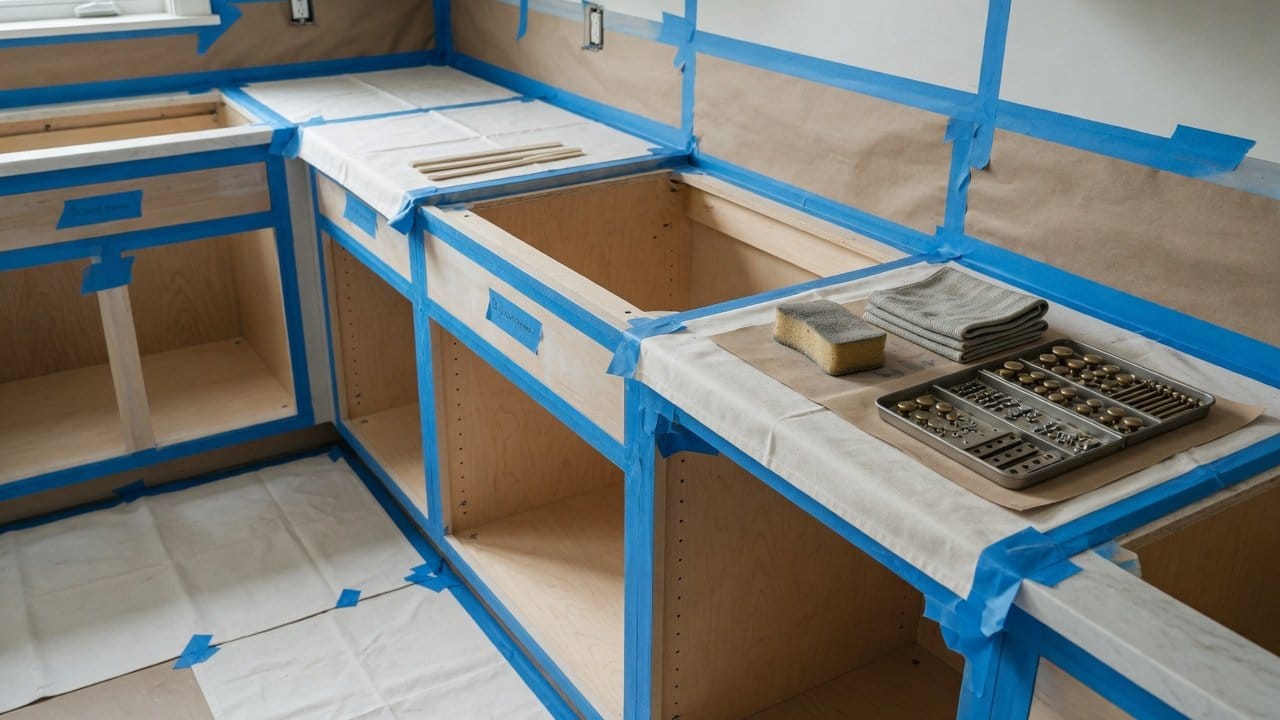
Regardless of method, prep is the single biggest factor in quality and longevity, and on cabinets it means four things:
- Degreasing. Kitchen cabinets, especially around the range and the most-used drawers, carry a film of aerosolized cooking oil. Paint over it and nothing else you do matters.
- Scuff sanding. Factory finishes are hard and slick. Without breaking that sheen, the primer has nothing to bite.
- The right primer. Older MetroWest cabinets are frequently oil-based, and water-based product over uncured oil without a bonding primer will let go. Test before you assume, using the method in our guide to painting over oil-based paint in older homes.
- The cure schedule. Say it out loud to the homeowner and put it in writing. Doors go back on when the film can take it, and normal kitchen use waits longer still.
The bottom line
Spray is thinner, more uniform and cures faster, which is why it is the default on slab doors and full kitchens. Brush is better in detail work and unbeatable for touch-ups, and a good brushed finish will serve you 7 to 10 years. Neither one saves a kitchen that was not degreased, and neither one survives a family that starts using the doors at week one. If a contractor talks only about their sprayer and never about cure time, they are selling you the wrong half of the answer.
Paint Pro New England has refinished MetroWest kitchens for 15 years, serving Holliston, Medway, Hopkinton, Sherborn, Dover, Wellesley, Natick and the surrounding towns, with a 2 year warranty and 5.0 stars across 60+ reviews. For a free cabinet estimate, call (774) 217-9567.
Dave Griffiths
Dave Griffiths is the owner of Paint Pro New England, a professional painting company serving MetroWest Boston since 2011. With 15+ years of interior and exterior painting experience across the region, he leads every project with thorough prep, premium Benjamin Moore and Sherwin-Williams paints, and a 2-year warranty.

