



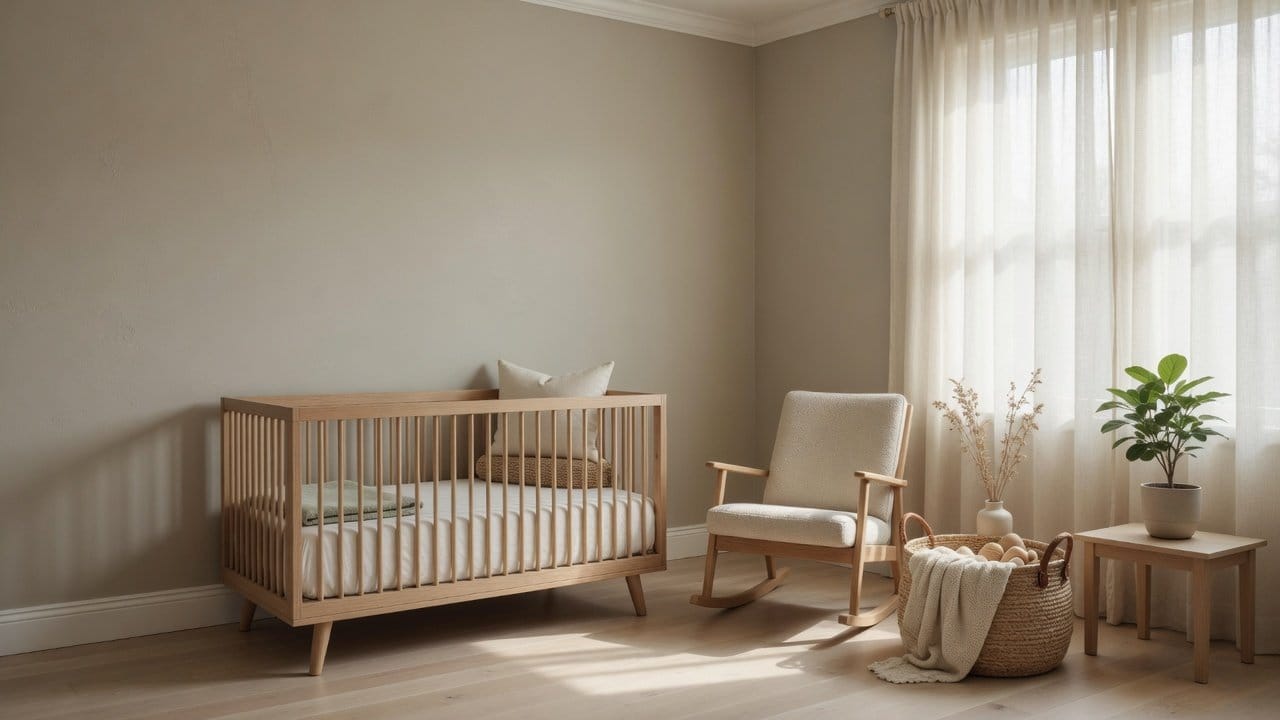
TL;DR: For a nursery or an allergy-sensitive household, the label alone is not enough. Low-VOC means under 50 grams per liter; zero-VOC is a regulatory term that permits up to 5 g/L, not literally none. The catch almost nobody mentions: conventional colorants add VOCs after tinting, so a zero-VOC base tinted to a deep color can finish at 10 to 20 g/L. Ask whether the colorant system is zero-VOC too, and look for GREENGUARD Gold, which tests actual emissions of more than 360 compounds against a standard written for schools and healthcare. Even with zero-VOC product, ventilate 24 to 48 hours, and remember paint keeps curing for about 30 days.
Painting a nursery or a room for someone with asthma? Call or text Dave at (774) 217-9567. We will spec the base and the colorant, and schedule the work so the room has time to air out before it is occupied.
Expectant parents ask me about paint safety more than any other group of clients, and they usually arrive having read the front of a can. The front of the can is marketing. The number that matters is on the technical data sheet, and the question that actually protects the room is one almost nobody thinks to ask.
What do low-VOC and zero-VOC actually mean?
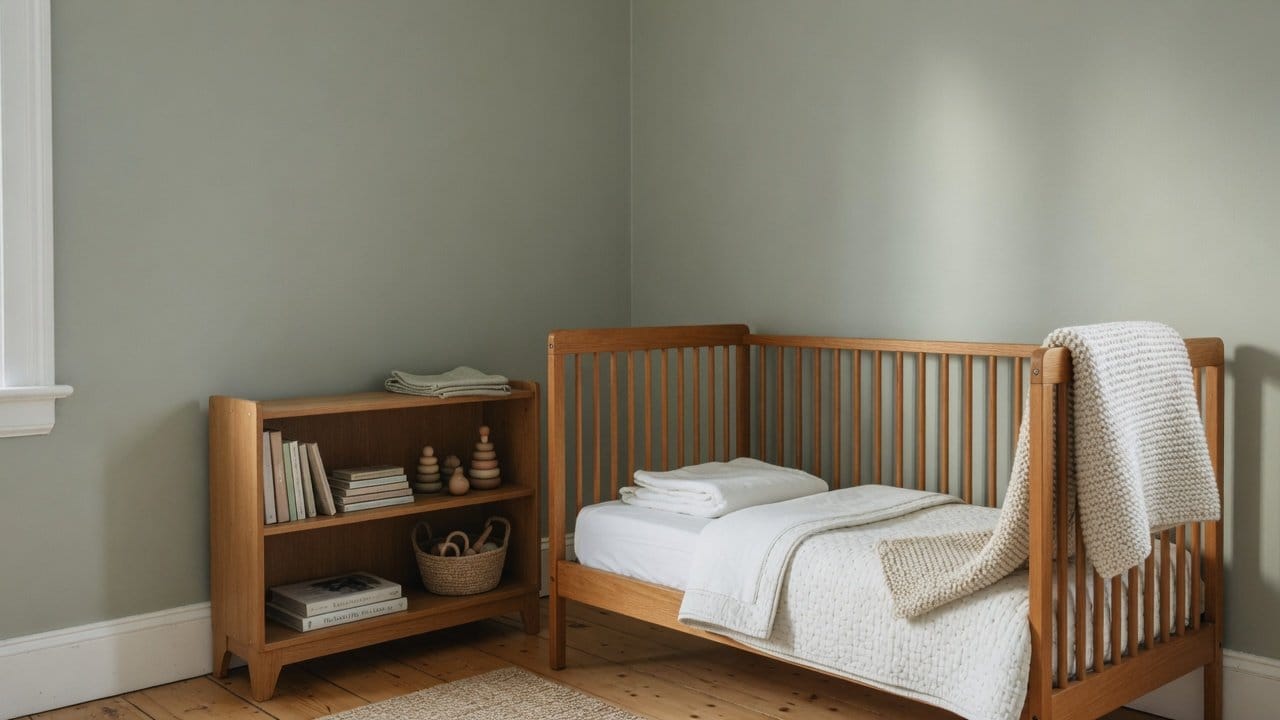
VOCs are volatile organic compounds, the solvents that evaporate out of paint as it dries and cures. They are what you smell, and they are the irritants that matter for asthma, chemical sensitivity and small lungs.
- Low-VOC: under 50 g/L. A meaningful improvement over conventional paint but not the top tier.
- Zero-VOC: a regulatory allowance, not a literal zero. Paint may be labeled zero-VOC at up to 5 g/L, and most sit between 0.5 and 5 g/L in base form. Negligible, but not nothing.
For a nursery, a true zero-VOC product under 5 g/L is the right target. For a household managing asthma or chemical sensitivity, same answer.
The tinting catch nobody mentions at the paint counter
This is the most useful thing on this page.
Paint is sold as a base and tinted at the store. Conventional colorants contain VOCs. So a genuinely zero-VOC base tinted into a deep, saturated color can leave the counter at 10 to 20 g/L, well outside the zero-VOC claim on the label you just read. The base was honest. The finished gallon in your hand is a different product.
The deeper the color, the more colorant, the bigger the gap. Which means the soft sage or dusty blue you chose for the nursery can quietly undo the reason you paid extra for the paint.
The fix is one question at the counter: is the colorant system zero-VOC? Several manufacturers offer zero-VOC colorant systems that keep tinted paint at or near 0 g/L across the palette. Certification fine print is worth knowing too: under some standards a colorant is permitted to push the final product meaningfully above the category limit, so you want a product where both base and colorant are certified, not just the base.
Which certification should you actually look for?
VOC content and VOC emissions are different measurements, and the second is the one you breathe.
GREENGUARD Gold is the one to look for. It tests what the product actually emits into indoor air after application, screening more than 360 individual VOCs, and it complies with California Section 01350, a standard originally written for schools and healthcare facilities. That makes it the most relevant certification for a nursery, a child's room, or a home where someone has respiratory sensitivity.
Useful secondary signals: certification of the full tinted product rather than the base alone, and low-odor formulations, though low odor and low VOC are not the same claim and should not be treated as interchangeable.
How long before a baby can sleep in the room?
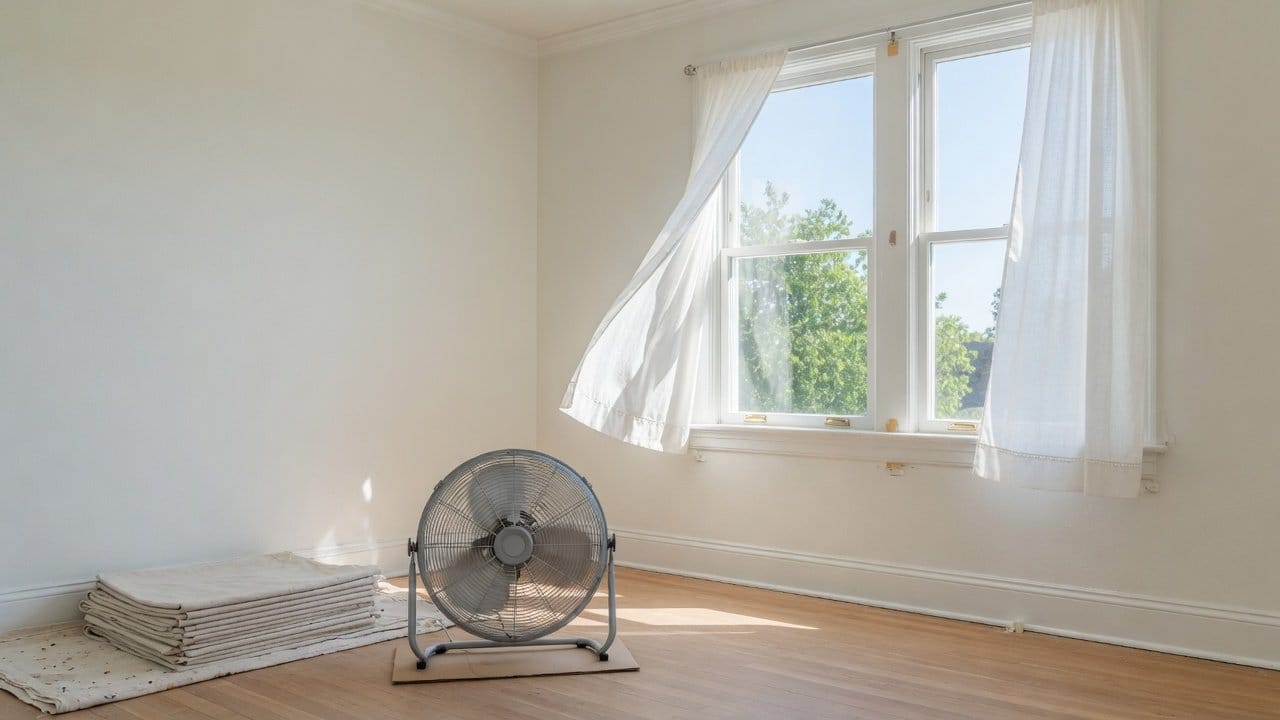
With a true zero-VOC paint, odor is minimal from the start and typically undetectable within 24 to 48 hours. That is the practical ventilation window: windows open, air moving, before the room goes back into use.
But dry is not cured. Paint continues curing for roughly 30 days, though with a zero-VOC product emissions during that period are extremely low. That is why we recommend painting a nursery several weeks before the due date rather than the week of. It costs nothing to schedule early, and it removes the question entirely.
Two practical additions. Ventilate mechanically, not just passively: a window open at each end of the house with a fan moving air through beats one cracked window. And keep the room warm enough to cure properly, which in a New England winter means not simply throwing the windows open and letting the room drop to 45 degrees. Our guide to how long after painting you can sleep in a room covers the timing question in more depth, and how to get paint smell out of the house fast covers what to do if you are already living with it.
What else affects air quality in the room?
The paint is one input. In an older MetroWest home there are usually two others that matter more:
- Lead. In a pre-1978 home, sanding old paint is the highest-risk activity in the whole project, and it puts lead dust into the air of the room you are preparing for a baby. Lead-safe practice is not optional here. See our Massachusetts lead paint homeowner's guide.
- Mold and moisture. Coating over a mold problem does not solve it, and for an allergy-sensitive household the mold is the actual issue. Remediate first, as we lay out in painting over mold and mildew.
Also worth specifying: the primer. Homeowners choose a premium zero-VOC topcoat and then let a conventional high-VOC primer go on underneath it. The primer is a coat of paint too, and it should meet the same standard.
The bottom line
Low-VOC is under 50 g/L, zero-VOC is allowed up to 5 g/L, and tinting can push a zero-VOC base to 10 to 20 g/L unless the colorant system is zero-VOC as well. That single question at the paint counter does more than any label. Look for GREENGUARD Gold on the finished tinted product, spec the primer to the same standard, ventilate for 24 to 48 hours, and schedule a nursery a few weeks ahead of when the room is needed. In an older home, deal with lead and moisture first, because those matter more than the number on the can.
Paint Pro New England is EPA Lead-Safe certified and has painted MetroWest homes for 15 years, serving Holliston, Medway, Hopkinton, Sherborn, Dover, Wellesley, Natick and the surrounding towns, with a 2 year warranty and 5.0 stars across 60+ reviews. For a free estimate on a nursery or a low-VOC interior, call (774) 217-9567.
Dave Griffiths
Dave Griffiths is the owner of Paint Pro New England, a professional painting company serving MetroWest Boston since 2011. With 15+ years of interior and exterior painting experience across the region, he leads every project with thorough prep, premium Benjamin Moore and Sherwin-Williams paints, and a 2-year warranty.

