



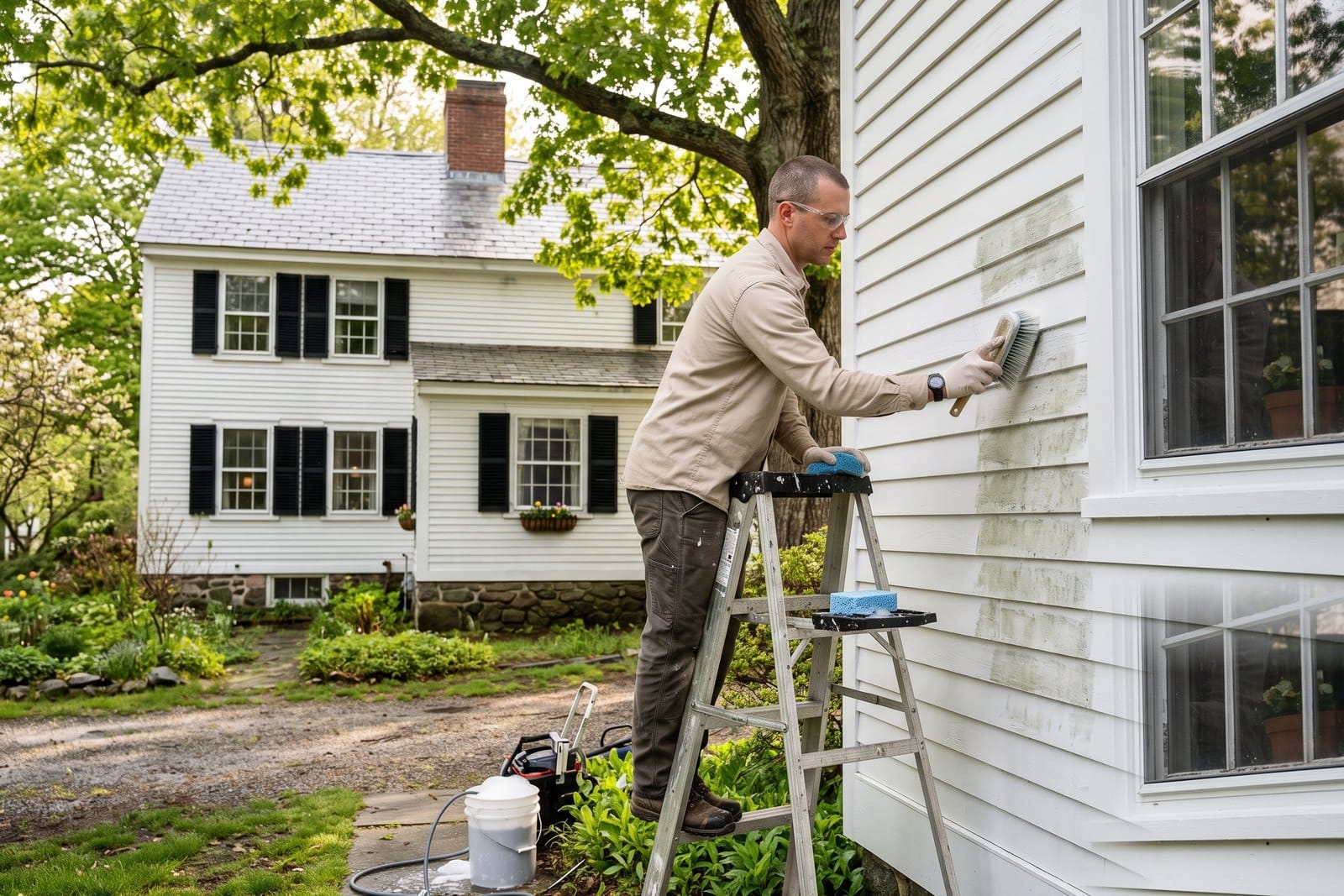
TL;DR: No — painting over mold does not kill it, and it almost always comes back through the fresh paint within months as bubbling, staining, or peeling. Mold and mildew are a moisture problem, not a color problem, so the fix is to find and stop the moisture, clean or remediate the affected area, let it dry fully, then prime and paint. In Massachusetts, mold shows up most on north-facing walls, shaded soffits and fascia, bathrooms, and basements. Expect roughly $150–$600 for surface cleaning and mildew-resistant repainting of a typical room or exterior section; larger remediation is a specialist job. The one rule that never changes: never bury mold under a coat of paint.
Seeing dark spots, musty smells, or paint bubbling in one area? Call or text Dave for a free look before you paint over it — (774) 217-9567. We'll tell you honestly whether it's a quick clean-and-coat or a moisture issue to fix first.
It's one of the most common questions we get in MetroWest Boston, especially after a damp spring: “There's some mold on the wall — can you just paint over it?” We understand the appeal. It looks like a cosmetic problem, so a coat of paint feels like the obvious cosmetic fix. After fifteen years painting homes in this climate, here's the honest answer, and what actually works instead.
Does painting over mold kill it?
No. Paint is not a mold treatment. Mold is a living organism with roots (called hyphae) that sit in and below the surface, and standard house paint does nothing to kill or remove them. When you paint over active mold, you trap it against the wall with a fresh food source — the paint itself — and a little sealed-in moisture. Within a few weeks to a few months it grows right back through, and you'll see it as dark speckling bleeding through the color, bubbling, or paint that peels away in sheets.
Even “mold-killing” and mildewcide-added paints are not a cure for an existing colony. Those products help resist new growth on a clean, dry, properly prepared surface. They are a prevention tool for after the problem is solved, not a way to skip solving it.
Why does mold grow on Massachusetts homes in the first place?
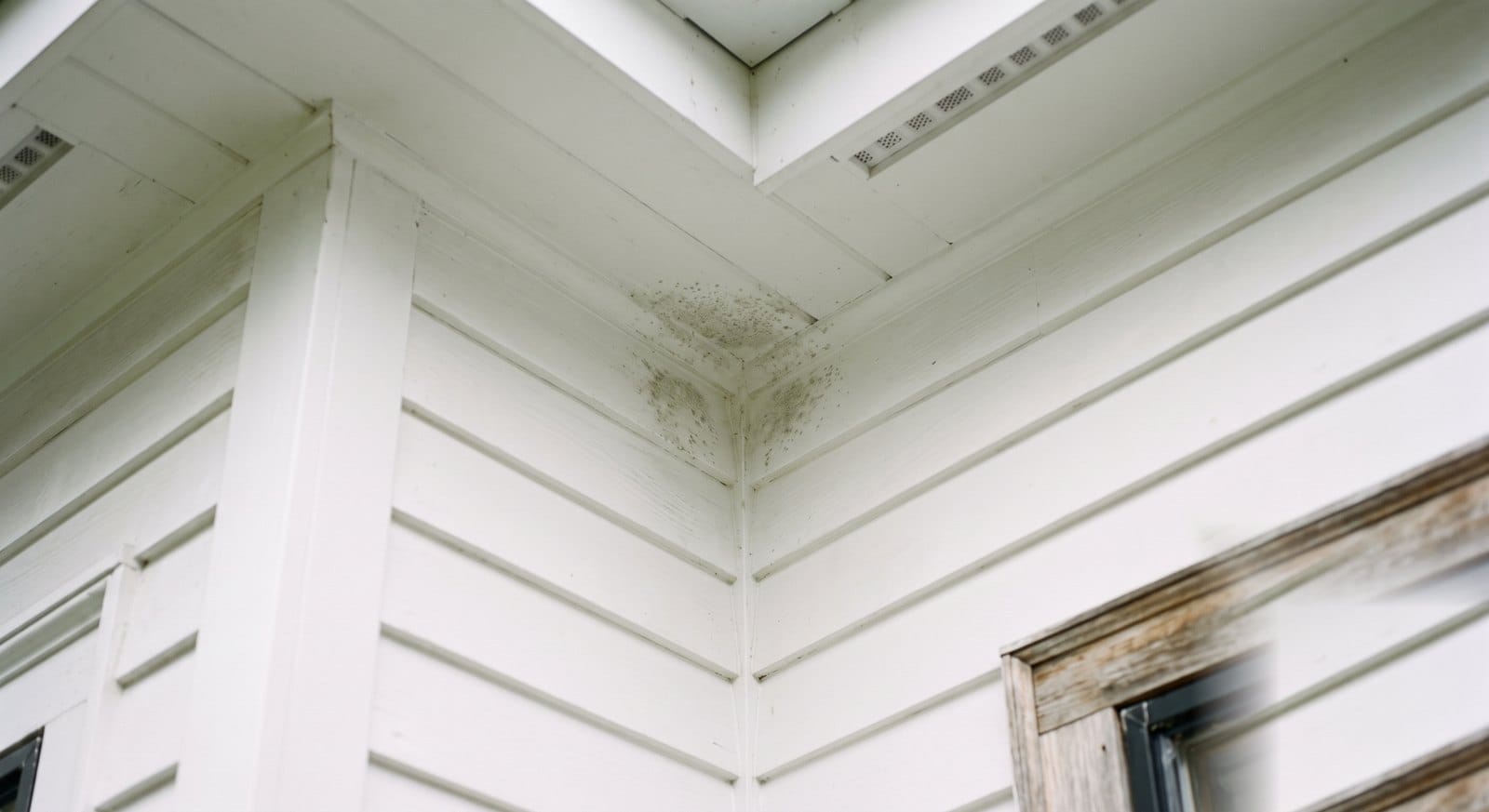
Mold and mildew need three things: moisture, a food source, and time. New England hands them all three. Our damp springs, humid summers, and long stretches where the outside of the house stays cooler than the inside keep surfaces damp, and shaded areas never get the sun that would dry them out. The most common spots we see:
- North-facing walls and anywhere shaded by trees, which stay wet longest after rain.
- Soffits and fascia, where black or green mildew often signals poor attic ventilation.
- Bathrooms and laundry rooms, from steam and humidity with too little exhaust.
- Basements, where cool masonry, humidity, and poor airflow meet.
- Behind furniture on exterior walls, where warm interior air meets a cold surface and condenses.
That's why we treat mold as a symptom. If the moisture source is still there, no amount of cleaning or painting will keep it gone. Sometimes it's an easy fix — a downspout dumping against the foundation, a missing bathroom fan, gutters overflowing onto the fascia. Related peeling and blistering often trace back to the same moisture story we cover in why house paint peels and when to call a pro.
How do you properly treat mold before painting?
For surface-level mold and mildew on a sound, painted surface, the process is straightforward:
- Find and fix the moisture — the leak, the ventilation gap, the grading or gutter issue. This step is non-negotiable.
- Clean the surface with an appropriate mold cleaner or a diluted detergent solution, working outward from the stain, and rinse. On exteriors, professional soft-washing removes mildew, chalk, and spores without blasting water behind the siding.
- Let it dry completely. Painting a still-damp surface just starts the cycle over. We check with a moisture meter when there's any doubt.
- Prime with a stain-blocking primer so old mildew stains don't ghost through the finish coat.
- Repaint with a quality coating, adding a mildewcide additive for shaded or high-humidity areas so new growth is far slower to return.
Thorough prep is the whole game here, which is exactly why we say prep work is 80% of a great paint job. Skipping it on a mold-prone wall is the fastest way to a callback.
When is it more than a paint problem?
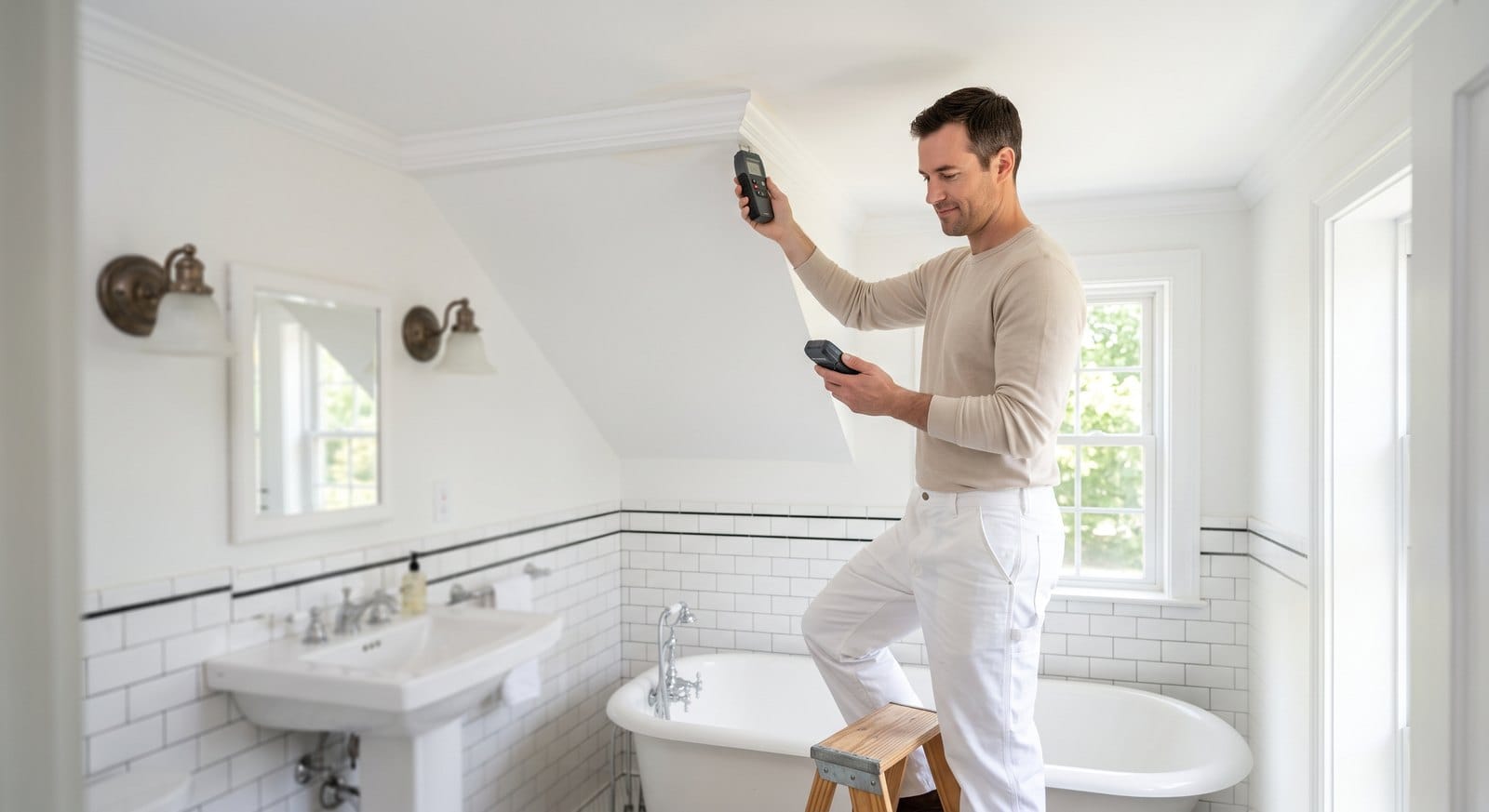
Surface mildew on siding, trim, or a bathroom wall is usually a clean-and-coat job. But some situations call for a moisture or remediation specialist before a painter touches it:
- Mold covering a large area (a common guideline is more than about 10 square feet).
- Drywall or trim that's soft, crumbling, or water-stained — the material itself may need to come out.
- A persistent musty smell with no visible source, which can mean growth inside the wall or ceiling.
- Any suspected sewage or contaminated-water involvement.
We'll always tell you honestly which category you're in. Painting over a problem that needed remediation doesn't just waste the paint — it hides an issue that keeps doing damage behind the wall. This is the same reason we sometimes say we won't paint your house today: doing it right sometimes means not doing it yet.
How much does mold-safe repainting cost in MetroWest?
For ordinary surface mildew handled as part of a repaint, the added cost is modest — often $150–$600 for cleaning, stain-blocking primer, and mildew-resistant paint on a typical room or exterior section, folded into the larger project. What moves the number is the underlying fix: adding a bathroom exhaust fan, correcting gutters and grading, or bringing in a remediation contractor for widespread growth. Humidity itself is a factor in how paint goes on and cures, which we get into in painting in humid weather in Massachusetts.
The bottom line
Painting over mold is the classic short-term fix that creates a bigger, more expensive problem. Mold is a moisture story, so the durable answer is always the same: stop the water, clean and dry the surface, prime, then repaint with a mildew-resistant coating. Do that and the wall stays clean for years; skip it and the stain is back before the season turns. If you're not sure which situation you have, that's exactly what a free walkthrough is for.
Paint Pro New England has cleaned, primed, and repainted mold-prone interiors and exteriors — north walls, soffits, bathrooms, and basements — across Holliston, Medway, Hopkinton, Sherborn, Dover, Wellesley, Natick, and the rest of MetroWest Boston for 15 years. EPA Lead-Safe certified, fully insured, 2-year warranty, 5.0 stars across 60+ reviews. For a free inspection and honest estimate, call (774) 217-9567.
Dave Griffiths
Dave Griffiths is the owner of Paint Pro New England, a professional painting company serving MetroWest Boston since 2011. With 15+ years of interior and exterior painting experience across the region, he leads every project with thorough prep, premium Benjamin Moore and Sherwin-Williams paints, and a 2-year warranty.

