



TL;DR: Touch-up paint fails to match because wall paint fades, oxidizes, and changes sheen within months of application. Even the same can of paint will look different on a wall that's had six months of sunlight and cleaning. For small marks on flat or matte walls painted within the last few months, a careful touch-up can work. For anything older, glossier, or larger than a quarter, repainting corner-to-corner is the only way to get a clean result.
You found the leftover can in the basement, shook it up, dabbed it on the scuff mark — and now there's a spot on your wall that looks worse than the scuff did. The color is close, but not close enough. You can see it every time you walk past.
You're not imagining it. Touch-up paint almost never matches perfectly, and it has nothing to do with buying the wrong color. The problem is science — and once you understand what's happening, you'll know exactly when a touch-up will work and when you're better off repainting the whole wall.
Paint Changes the Moment It Hits Your Wall
Every paint color begins shifting as soon as it dries. Ultraviolet light from windows breaks down pigment molecules gradually — dark colors lighten, certain whites drift toward yellow, and the overall tone warms or cools depending on your room's light exposure. According to Headwaters Painting, photochemical reactions from UV radiation cause measurable changes in both color and gloss within months. You don't notice the shift day-to-day because it happens uniformly across the whole wall. The moment you dab fresh paint next to it, the contrast reveals how far the original has drifted.
In MetroWest Boston homes, south-facing rooms fade fastest — especially in rooms with large windows that get direct afternoon sun through Holliston and Natick's typical colonial layouts. North-facing rooms hold color longer, but even they shift over a full year.
Sheen Changes More Than Color
Even when the color is close, sheen mismatch gives touch-ups away. Paint sheen dulls over time from cleaning, contact, and normal wear. A fresh dab of eggshell on a wall that's been wiped down for two years will reflect light differently — shinier in the touched-up spot, flatter everywhere else. According to Sherwin-Williams, even flat paints vary in "flatness" between manufacturers, and that gloss inconsistency makes touch-ups visible regardless of color accuracy.
The trick to spotting sheen problems: look at the wall from the side, not straight on. If the color looks fine from the front but the touched-up area pops out at an angle, you've got a sheen mismatch — and no amount of additional coats will fix it.
Your Application Method Matters More Than You Think
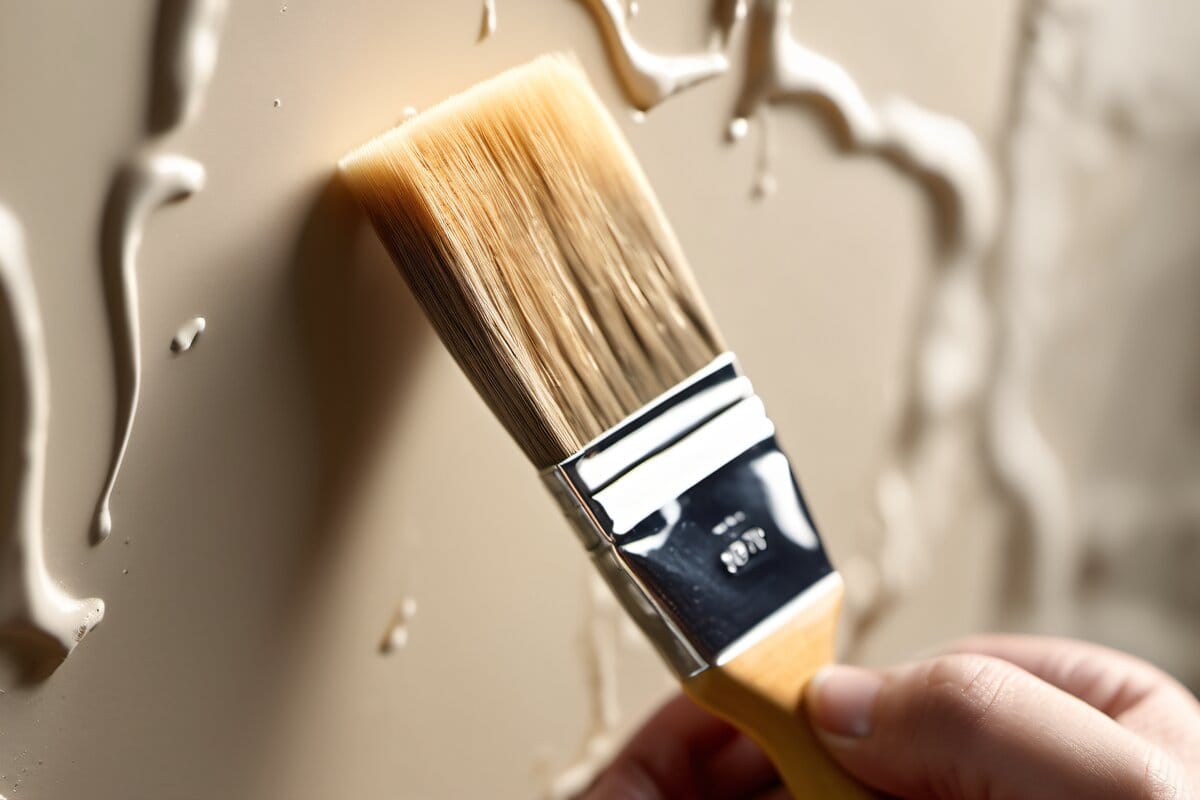
The original wall was rolled. Your touch-up was brushed. That alone creates a texture difference that catches light differently. Rollers leave a subtle stipple pattern. Brushes lay paint down smoother. Even using the same can, a brushed touch-up on a rolled wall will be visible.
If you're going to attempt a touch-up, match the original tool. Use a small high-density foam roller for walls that were rolled. Use a brush only on trim and cut-in areas. And dab — don't brush — on spots smaller than a few inches. Start in the center of the damaged area and feather outward until you slightly overlap the existing paint.
When Touch-Ups Actually Work
Touch-ups can blend well under specific conditions:
- The wall was painted within the last 2-3 months. Less fading means less contrast.
- The finish is flat or matte. Low-sheen paints are far more forgiving — there's less light reflection to reveal differences. In 15 years of painting MetroWest homes, we've found that flat ceilings and matte accent walls touch up best.
- You're using the same can of paint. Not just the same color code — the same physical can, shaken thoroughly. Benjamin Moore recommends stirring leftover paint for several minutes before use, since pigments settle and separate over time.
- The damaged area is small — a nail hole, a small scuff, not a full handprint or furniture scrape.
- You prime any patched spots first. Spackled or patched drywall absorbs paint differently than the surrounding wall. Without primer, the repair will "flash" — appearing glossier or flatter than the rest of the surface.
If any of those conditions aren't met, you're better off repainting corner-to-corner.
Corner-to-Corner: The Professional Fix
When touch-ups won't cut it, the standard professional approach is to repaint the entire wall from corner to corner. Corners create natural visual breaks — your eye expects a slight color shift where two walls meet. A freshly painted wall next to an older adjacent wall blends far better than a touch-up spot in the middle of one wall.
This is one reason we always recommend keeping a record of your exact paint colors, sheens, and the date painted. When we finish a project, we leave homeowners with this information so that future work — whether a touch-up or a full repaint — starts from the right baseline. It's the same attention to detail we bring to every prep step of a paint job.
How to Store Leftover Paint So It's Actually Usable
Most touch-up failures start in the basement or garage where leftover paint slowly goes bad. Here's how to store it right:
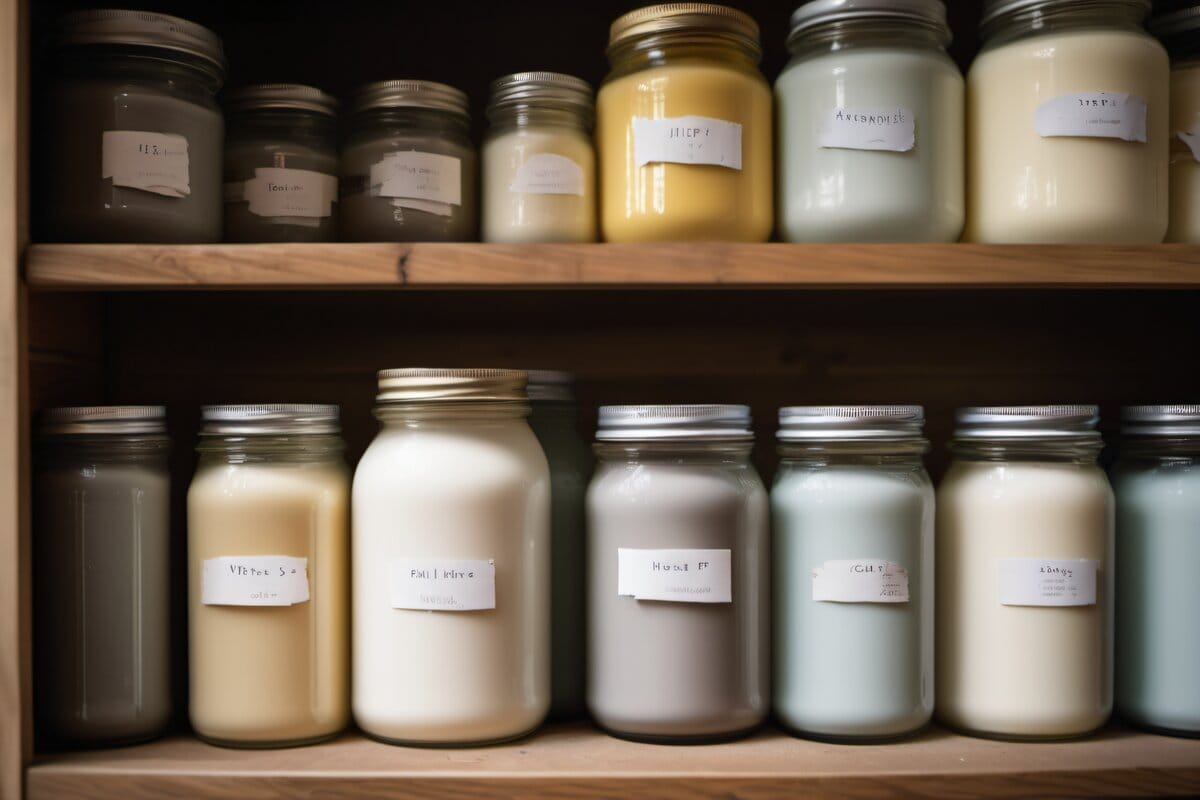
- Transfer to a smaller container. A half-empty gallon can is half-full of air. That air dries out the paint. Pour leftovers into a clean glass jar or a quart can that matches the volume — less air means longer life.
- Seal it completely. Wipe the rim clean before closing. Place plastic wrap over the opening before pressing the lid on. One gap in the seal and the paint skins over in weeks.
- Store in a cool, dry, temperature-stable spot. Not the garage — New England temperature swings from freezing to 90°F will ruin latex paint. A basement shelf or interior closet is ideal.
- Label everything. Brand, color name, color code, sheen, room, and date. Two years from now you won't remember which beige went where.
Properly sealed, most interior latex paints stay usable for 2-5 years. But usable doesn't mean matchable — the paint on your wall has been fading the whole time the can's been in storage.
What About Color Matching at the Store?
Paint stores have spectrophotometers that can scan a sample and mix a match. But there's a catch: you need to match the current faded wall color, not the original. If you bring in the old paint can lid, the store will mix the original formula — which won't match your faded wall.
Instead, carefully remove a small chip from an inconspicuous area — behind a switch plate or outlet cover works well. Bring that chip to the store. The computerized match will get you closer to the color your wall is now, not the color it was two years ago. Even then, you'll likely need to repaint the full wall for a seamless result, since sheen and finish still won't be identical.
A Note on Exterior Touch-Ups
Everything above applies double for exteriors. Massachusetts weather — freeze-thaw cycles, summer UV, coastal humidity, spring pollen — ages exterior paint faster than any interior wall. A touched-up spot on your clapboard siding in Framingham or Ashland will stand out within weeks as the surrounding paint continues to weather.
For exterior touch-ups to work at all, you need to catch damage within the same season it was painted — and even then, small spot repairs on siding rarely blend. Most exterior touch-up situations call for repainting the full side of the house, from corner to corner. It's a bigger job, but the result lasts. After painting hundreds of homes across MetroWest, we've learned that cutting corners on exterior repairs always costs more in the long run.
FAQ
Why does my touch-up paint look lighter than the rest of the wall?
Wall paint fades from UV exposure and cleaning within months of application, so the original color has shifted darker or warmer while your fresh paint matches the original formula. The paint itself is correct — your wall has changed around it.
Can I touch up paint that's more than a year old?
Paint older than six months rarely touches up invisibly, even with the same can. After a full year of fading and sheen wear, repainting the entire wall from corner to corner produces a far cleaner result than spot touch-ups.
Does paint sheen affect how well touch-ups blend?
Flat and matte finishes hide touch-ups best because they reflect minimal light, making color and texture differences less obvious. Eggshell, satin, and semi-gloss show touch-up edges more clearly because the sheen difference catches light at angles.
Should I use a brush or roller for touch-ups?
Match whatever tool was used for the original paint job — a roller on a rolled wall, a brush on brushed trim. Using a different application method creates a texture mismatch that's visible even when the color and sheen are correct.
How long does leftover paint last in the can?
Properly sealed latex paint stays usable for two to five years in a cool, temperature-stable location. However, even usable leftover paint won't match your wall perfectly because the wall color has faded while the stored paint hasn't.
If you've got a wall that needs more than a quick dab — or you're not sure whether a touch-up will cut it — give us a call at (774) 217-9567. We're happy to take a look and give you an honest answer.
Related Reading
Dave Griffiths
Dave Griffiths is the owner of Paint Pro New England, a professional painting company serving MetroWest Boston since 2011. With 15+ years of interior and exterior painting experience across the region, he leads every project with thorough prep, premium Benjamin Moore and Sherwin-Williams paints, and a 2-year warranty.

