



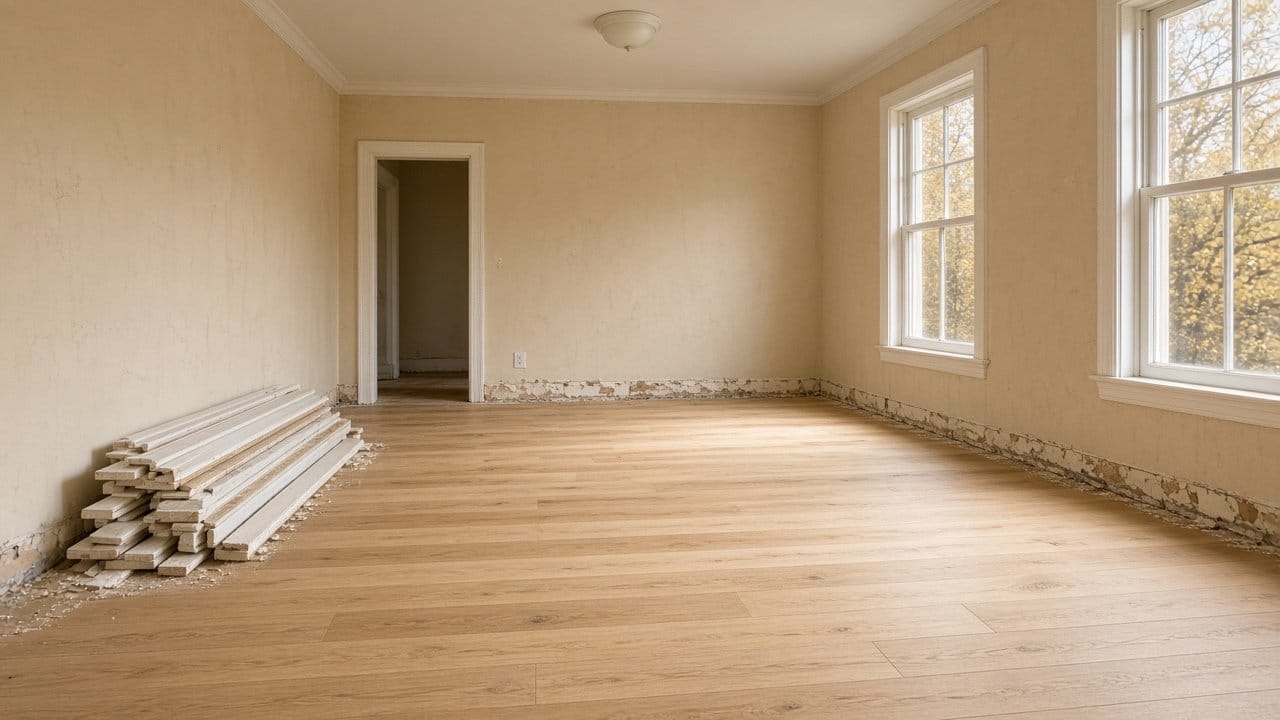
TL;DR: Install hard flooring first, then paint the walls and trim. Carpet is the reverse, paint before it goes down. Ceilings and all the messy wall prep come before any floor is touched, while the old floor is still there to catch the drips. The National Wood Flooring Association is explicit that wet work finishes before wood flooring goes in and that the floor should be one of the last items installed, with the jobsite held at 60 to 80 degrees and 30 to 50 percent relative humidity, HVAC running at least 48 hours first.
Planning a floor and a repaint in the same project? Call or text Dave at (774) 217-9567. Getting the order right costs nothing. Getting it wrong costs a second coat of trim.
This question comes up on almost every whole-room project in MetroWest, and the instinct is usually backwards. Most homeowners want to paint first so nothing drips on a brand new floor. The trades do it the other way, and there are concrete reasons why.
Should you paint before or after new flooring?
By material:
- Hardwood, engineered, laminate, LVP, tile: flooring first, paint last.
- Carpet: paint first, carpet last.
- Ceilings, in every case: first, before anything else happens.
The split is not about tidiness. It is about which trade disturbs the other one's finished work, and hard flooring disturbs paint far more than paint disturbs hard flooring. It is also not a minority view among painters. CertaPro reaches the same conclusion, and A.G. Williams advises always finishing flooring before painting for the same reasons.
Why hard flooring goes in first
Flooring installation is not a delicate trade. It involves heavy material stacked in the room, saws, nail guns, adhesives, trowels, and a crew moving long boards through doorways for days. Every one of those things meets the wall at some point. A freshly painted wall in that environment picks up scuffs, dents, and adhesive marks, and the base of the wall takes the worst of it.
Then there is the trim. On most hard-flooring installations the baseboards come off, because the new floor has to run under them and because pulling them is how you get a clean expansion gap. They go back on afterward, which means new nail holes, new caulk lines, and fresh filler. All of that has to be painted regardless. Painting the baseboards before they come off means paying to paint them twice.
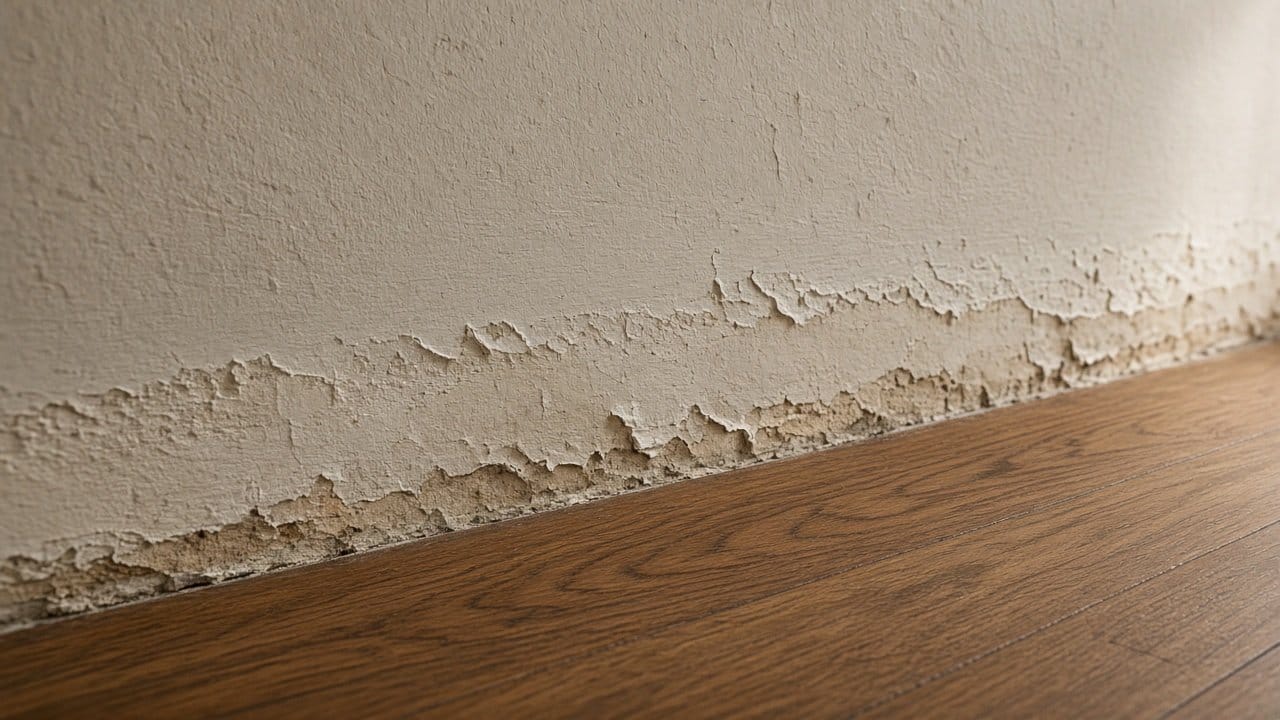
Height is the argument that settles it. If the new floor is thinner than what came out, and it often is when a thick old carpet and pad give way to engineered wood, the baseboards no longer sit where they used to. They come down to meet the new floor, which reveals a strip of wall that has never been painted. There is no way to pre-paint your way out of that, because nobody knows exactly where the line will land until the floor is in.
Why carpet is the exception
Carpet reverses everything. It is installed last, right before furniture comes back. The installers work off the tack strip at the perimeter and they do not remove the baseboard, they tuck to it. Nothing about carpet installation requires trim to come off, so there are no new nail holes to fill and no new caulk line to cut in.
That makes painting first the sensible order. It also spares the new carpet from drop cloths, tape, and the inevitable roller spatter along the base. Flooring retailers give the same advice from their own side of the job, which is worth reading at Koeber's on painting before or after new flooring.
The one condition is that the walls and trim need to be genuinely finished before the carpet crew arrives. A touch-up visit after carpet means working over new pile, which nobody enjoys.
What the flooring standard actually says about wet work
This is the part most sequencing advice leaves out. The National Wood Flooring Association's installation guidelines state that all work involving water or moisture should be completed before wood flooring is installed, and that in new construction the wood floor should be one of the last items installed.
That has two consequences for a paint schedule. Drywall mud, plaster repair, skim coats, and wallpaper stripping are wet work and they belong before the floor. Finish coats of modern waterborne wall paint are a different scale of moisture entirely, applied thin and dry within hours, and they are not what that clause is aimed at. So the honest reading is: heavy wet prep before the floor, finish painting after it.
The guidelines also set the environment the floor needs. Hold the jobsite between 60 and 80 degrees Fahrenheit at 30 to 50 percent relative humidity, with the HVAC running a minimum of 48 hours before acclimation counts, and record conditions before and at delivery. Manufacturer specifications govern where they differ. The current document is at the NWFA Wood Flooring Installation Guidelines.
Those numbers happen to be a comfortable range for interior paint as well, which is convenient. It is also why an unheated fall project in a Massachusetts house is a problem for both trades at once, something we get into in winter interior painting and the off-season.
The order that works every time
This is the sequence we run when a room is getting both:
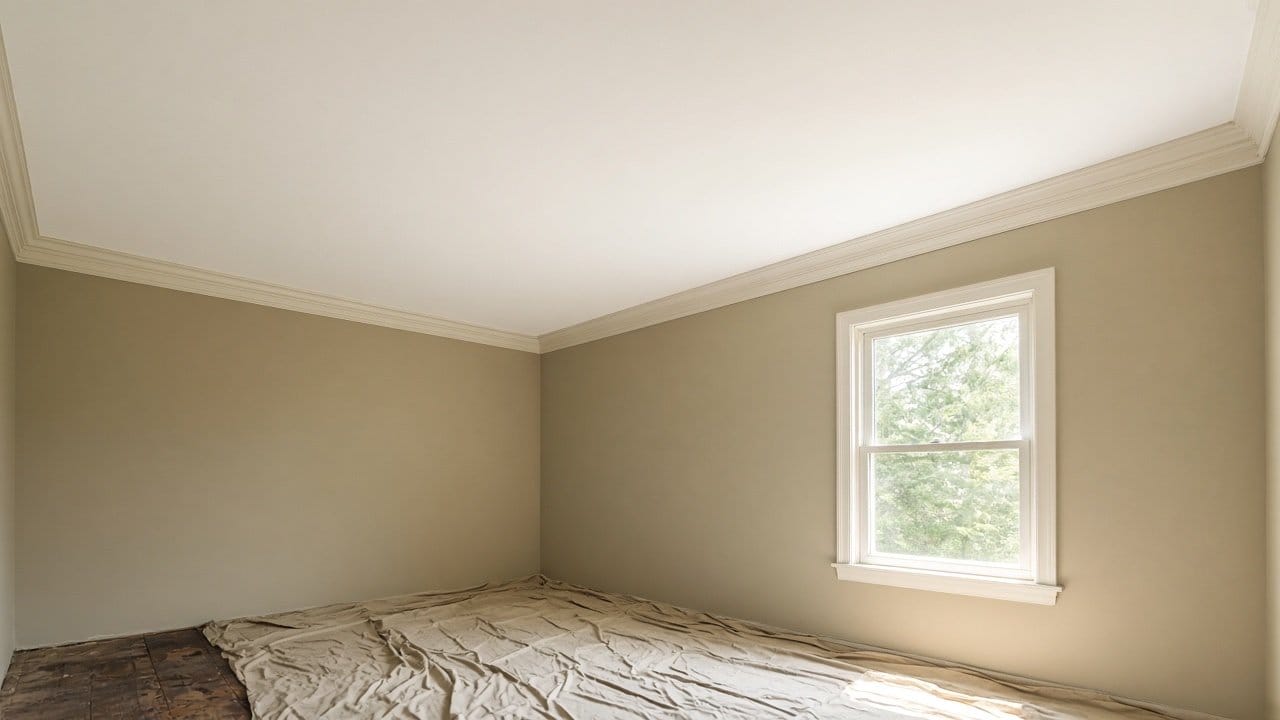
- Paint the ceiling. The old floor is still down, drips do not matter, and ceilings are where drips happen.
- Do the messy wall prep. Patching, skim coating, sanding, wallpaper removal. All of it creates dust and water, and all of it belongs before a new floor exists.
- Prime the walls if they need it. Priming over fresh patch work now means the finish coats later are quick and clean.
- Pull the old flooring, then pull the baseboards. In that order, so the trim comes off without the old floor fighting it.
- Install the new flooring. The room is empty, the walls are protected by nothing more precious than primer, and the crew can work.
- Reinstall trim and add quarter round if it is in the plan. Fill nail holes, caulk the top edge.
- Paint walls and trim last, with the floor masked and the masking taped to the trim rather than to the new finish.
Two rooms, two crews, one week. The order is what keeps it from becoming three weeks. For what the painting portion involves on its own, see how long it takes to paint a house interior.
What changes if your trim is staying put?
There is a legitimate case for painting first, and it is narrower than people hope. If all of the following are true, paint first and be done:
- No baseboard or casing is coming off.
- The new floor is the same thickness as the old, so nothing moves.
- No quarter round or shoe molding is being added.
- The flooring crew is willing and able to protect finished walls.
That is most often a like-for-like tile replacement or a floating floor going over an existing subfloor at matched height. It is rarely a hardwood job in a 1930s Natick colonial, where the trim is original, the floor heights never match, and the baseboard is coming off whether anyone planned for it or not.
Quarter round decides the whole question
If quarter round or shoe molding is going in, paint after. Full stop. Quarter round is nailed through its face, so it has holes that need filling. It meets the baseboard along a long visible line that needs caulk. Caulk and filler both need paint over them or they read as a pale stripe along the floor forever.
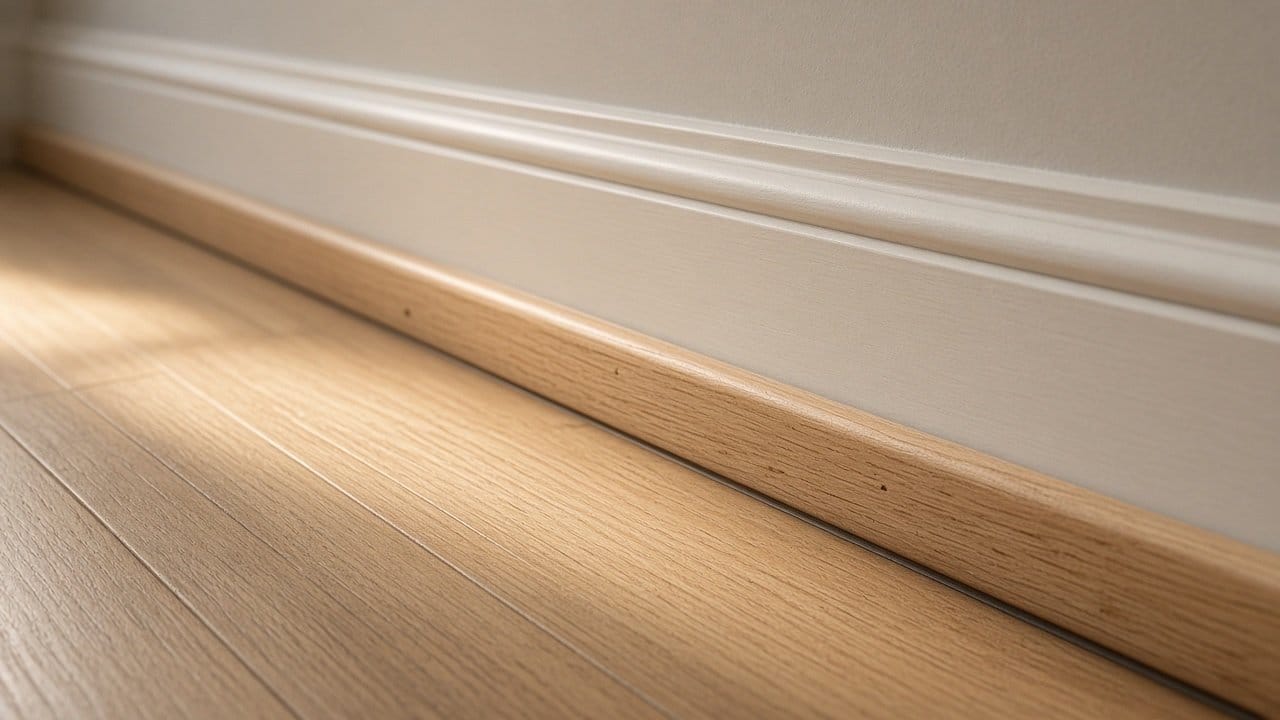
Pre-painted quarter round installed and then touched up never matches cleanly, because the touch-up sits at a different sheen than the factory or shop coat next to it. The same problem shows up in ordinary touch-ups, which we explain in why touch-up paint never matches. Paint the run once, in place, after it is fastened and caulked.
How a floor gets protected when paint goes last
The reasonable objection to painting last is the new floor sitting there taking risk. It is a fair worry and it is a solvable one. Rosin paper or breathable floor protection across the field, taped seam to seam. Masking run up to the trim and taped to the trim, never to the floor finish, because tape on a fresh floor finish can lift it. Cut buckets off the floor. No solvent anywhere near a site-finished floor.
If a site-finished hardwood floor was just sanded and coated, ask the flooring contractor how long before anything can be laid on it. That cure window belongs to them and it can push a paint start by days. Planning around it beats discovering it.
Frequently asked questions
Should I paint before or after installing hardwood floors?
After. Hardwood installation usually requires baseboards to come off and can change the height they sit at, so anything painted beforehand gets damaged or needs repainting.
Do painters remove baseboards before new flooring goes in?
The flooring crew normally pulls them so the floor can run underneath with a proper expansion gap. They go back on after, and get painted after that.
Is it better to paint before or after new carpet?
Before. Carpet is installed last, the installers tuck to the existing baseboard rather than removing it, so there is no new filler or caulk to cover.
Can you paint the ceiling after new floors are installed?
You can, but it is the wrong order. Ceilings drip more than any other surface, so paint them while the old floor is still down and a spill costs nothing.
Should quarter round be painted before or after it is installed?
After. It is face-nailed and caulked to the baseboard, so the holes and the caulk line both need a finish coat once it is fastened in place.
The bottom line
Ceilings and messy prep first, hard flooring second, walls and trim last. Carpet flips the last two. Paint Pro New England has coordinated with flooring crews across Holliston, Natick, Wellesley and the rest of our 18 towns since 2011, fully insured, with a 2-year warranty on our work. Call (774) 217-9567 and we will sequence the job with your flooring contractor before either crew shows up. If the project is aimed at a sale, start with what to paint before selling your home, and if you want the prep list, read how to prepare your home for painters.
Dave Griffiths
Dave Griffiths is the owner of Paint Pro New England, a professional painting company serving MetroWest Boston since 2011. With 15+ years of interior and exterior painting experience across the region, he leads every project with thorough prep, premium Benjamin Moore and Sherwin-Williams paints, and a 2-year warranty.

