



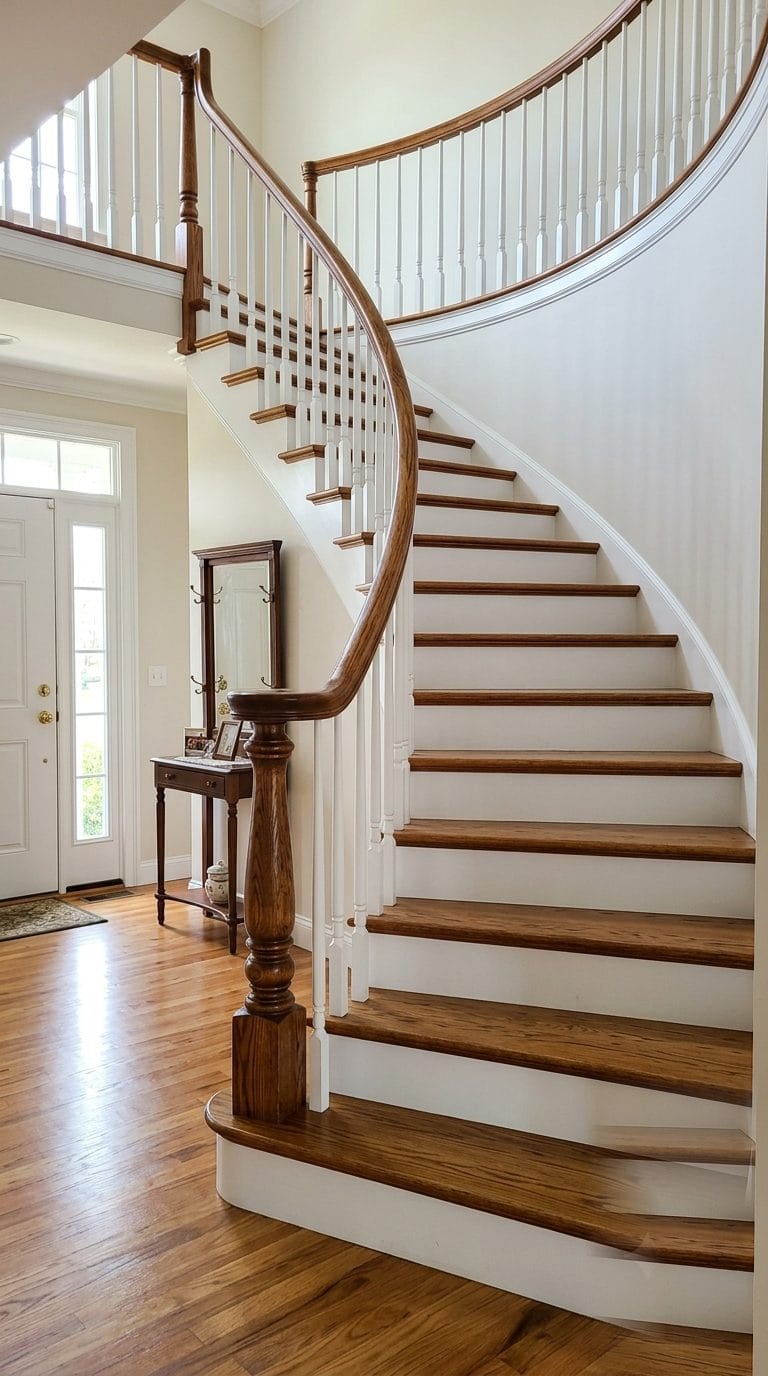
TL;DR: Refinishing a staircase is one of the highest-impact projects you can do in an older home, and it's really several jobs in one: the treads you walk on, the risers, the balusters (spindles), the newel posts, and the handrail. The look almost everyone wants right now is two-tone — stained treads and a stained handrail paired with crisp white risers and balusters. Treads get stained and sealed with a hard, floor-grade finish because stain outlasts paint underfoot; the rest is painted in a durable enamel. In a pre-1978 MetroWest home, lead paint makes safe, contained sanding essential. Expect roughly $800–$2,500 for a paint refresh and $1,500–$4,000+ for a full strip-and-stain refinish.
Got a tired staircase you walk past every day? Call or text Dave for a free, no-pressure estimate — (774) 217-9567. We'll look at your treads, balusters, and rail and tell you honestly what's worth refinishing and what isn't.
Your staircase is the first thing you see when you walk in the door and the centerpiece of most entryways — and in a lot of MetroWest Boston homes, it's also the most tired-looking surface in the house. Scuffed treads, yellowed white spindles, a handrail worn pale where every hand has gripped it for forty years. After fifteen years refinishing staircases across this area, we can tell you it's the single project that most often makes a homeowner stop and say I can't believe it's the same house.
What does it actually mean to refinish a staircase?
A staircase has more named parts than people expect, and a good refinish addresses each one:
- Treads — the horizontal boards you step on; the highest-wear surface in the whole house.
- Risers — the vertical faces between treads.
- Stringers — the angled boards running up each side.
- Balusters (spindles) — the vertical posts that fill the railing; there can be dozens, and each is finished by hand.
- Newel posts — the larger anchor posts at the bottom and turns of the rail. (Here's the architectural definition.)
- Handrail — the rail itself, worn smooth and pale from years of hands.
Each part can be painted or stained, and the magic is in choosing which gets which.
Should you paint or stain your stairs?
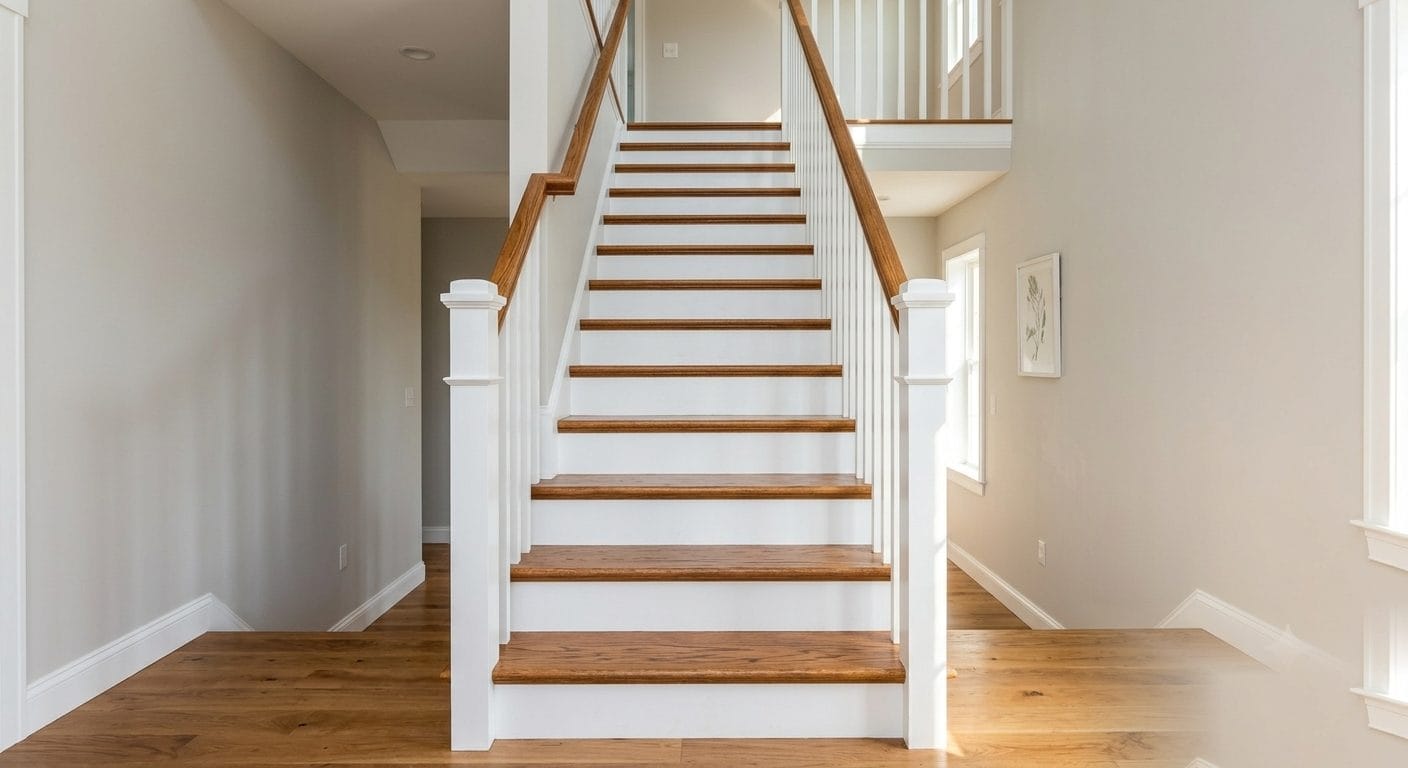
For most staircases, the answer is both — and the split is driven by wear:
- Treads get stained and sealed. Stain soaks into the wood and a hard, floor-grade clear finish on top stands up to foot traffic far better than paint, which scuffs and chips on a stepped surface. Natural or richly stained treads also hide everyday wear.
- Risers, balusters, and stringers get painted, usually a clean white, in a tough enamel. These surfaces don't take direct foot traffic, so paint holds up beautifully and gives that crisp, classic contrast.
- Handrail and newel posts get stained to match the treads, tying the whole staircase together.
That combination is what produces the look below — and it's no accident that it's everywhere right now.
What's the most popular staircase look right now?
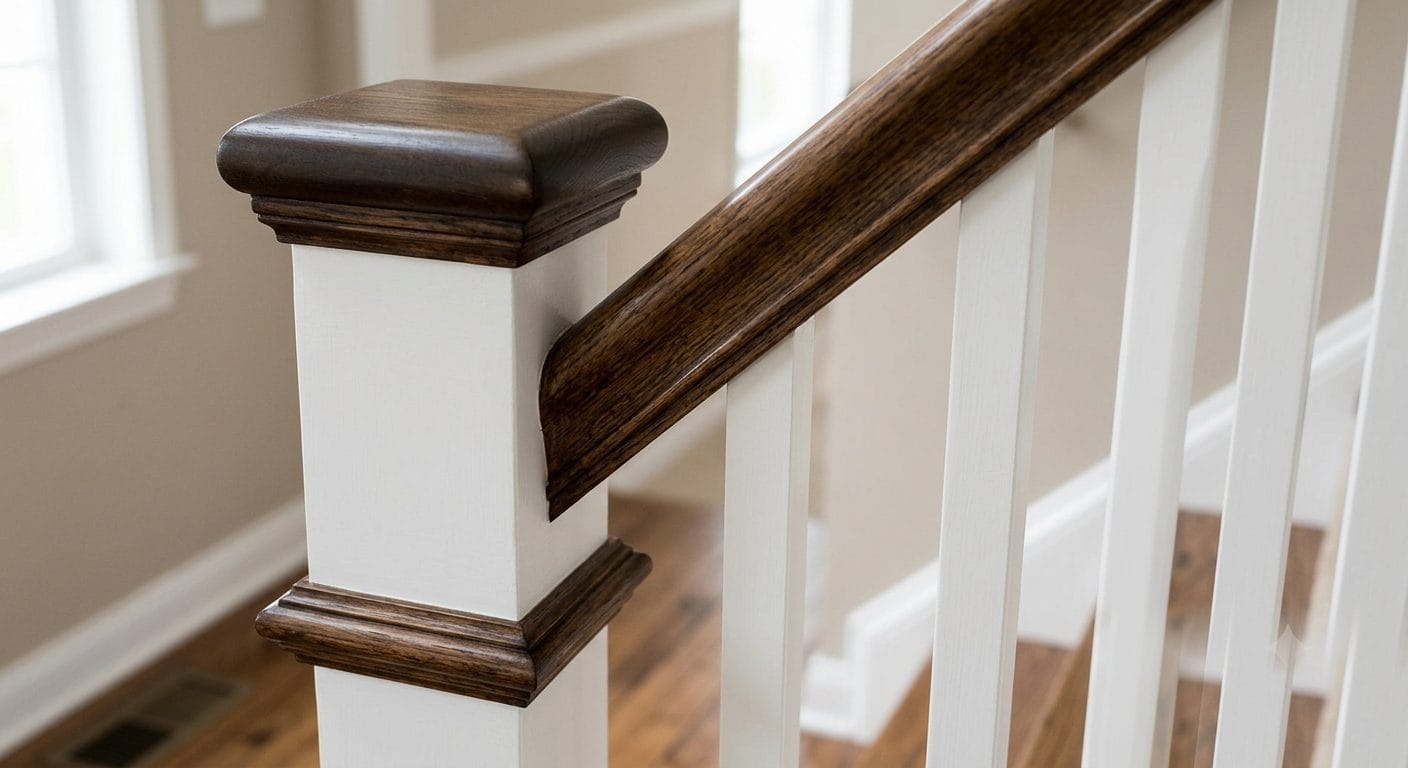
The runaway favorite is the two-tone staircase: warm stained treads and a stained handrail against bright white risers and balusters. It's the look that's replaced wall-to-wall carpeted stairs in countless MetroWest renovations, and it works in nearly every style of home here — Colonial, Victorian, farmhouse, or a 1990s Colonial revival. The stained wood brings warmth and the white brings the crispness, and together they make the staircase read as intentional architecture rather than a leftover. It pairs naturally with painted trim and crown moulding elsewhere in the home and with classic New England Colonial color schemes.
That said, an all-painted staircase (everything white, or white with a soft colored riser accent) is a clean, budget-friendlier choice, and a fully stained natural-wood staircase suits homes going for a warmer, more traditional feel. We'll talk through which fits your home and your traffic.
Why is a staircase one of the trickiest things to refinish?
It looks straightforward and it isn't. A staircase combines almost every challenge in finishing work at once:
- It's the highest-traffic surface in the house, so the finish has to be genuinely durable, not just pretty — this is where prep and product choice earn their keep.
- It's all detail. Dozens of balusters, tight corners, and turned newel posts mean most of the work is slow, hand-brushed, and impossible to rush.
- You still need to use it. Unlike a spare bedroom, you can't just close the door on your only staircase for a week.
- Dust and old paint. Sanding treads and spindles makes a lot of fine dust — and in an older home, that dust may contain lead.
Can you refinish stairs in an older MetroWest home safely?
Yes — with the right precautions. Many MetroWest homes predate 1978, which means the existing staircase paint may contain lead, and sanding it without containment releases lead dust into the home. This is not a DIY job in an old house. An EPA Lead-Safe certified painter tests first, contains the work area, uses safe methods, and cleans to standard so your family isn't exposed. The EPA's lead-safe guidance explains why, and our Massachusetts lead paint homeowner's guide covers what it means for your home specifically. Paint Pro New England is EPA Lead-Safe certified, so older staircases are squarely in our wheelhouse.
How long does it take, and can we still use the stairs?
It depends on the scope. A paint refresh of the balusters, risers, and handrail can often be done with the stairs still usable, carefully, between coats. A full refinish that strips and re-stains the treads is more involved: the treads typically need to be off-limits for a day or more while the stain and floor-grade sealer cure hard enough to walk on. If your home has a second stairway, great; if not, we plan the tread work around a window when the household can avoid that staircase — often easiest in summer when people are coming and going outdoors anyway.
How much does staircase refinishing cost in MetroWest?
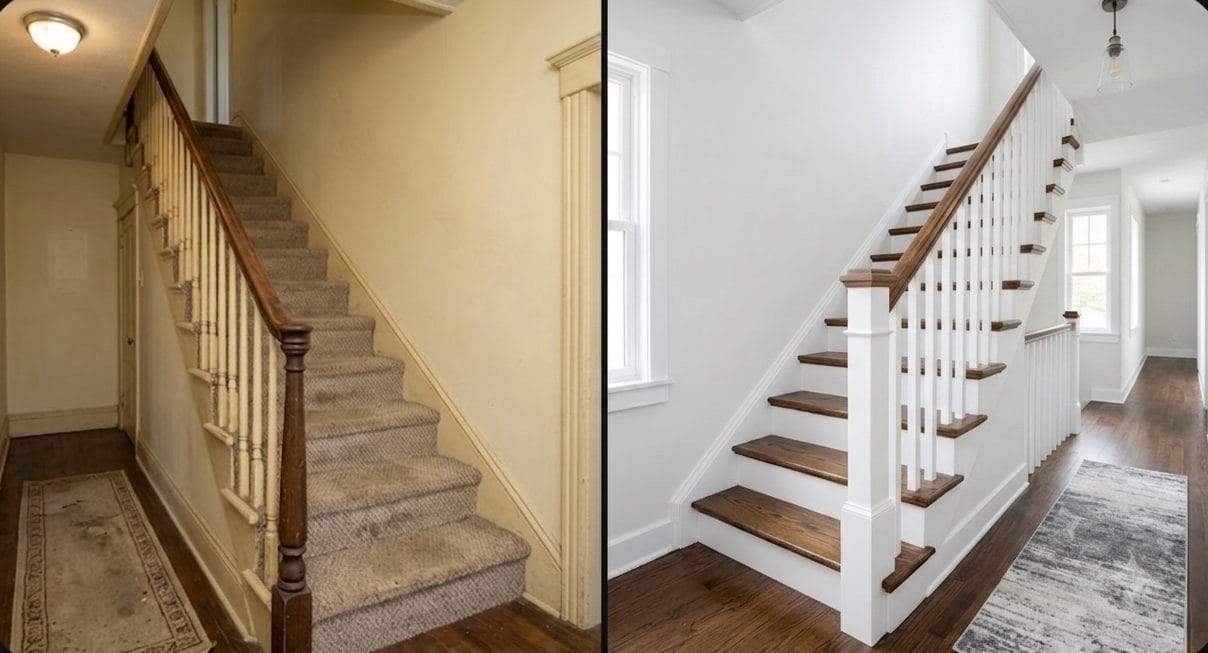
Staircase pricing is driven by the number of balusters, the size of the staircase, and whether you're painting only or also stripping and re-staining treads. Realistic MetroWest ranges:
- Paint refresh of balusters, risers, and handrail (no tread stripping): typically $800–$2,500.
- Full refinish — strip and re-stain treads and rail, paint risers and balusters: roughly $1,500–$4,000+.
- Heavily turned, ornate, or large staircases with many spindles and detailed newel posts run toward the top, because every spindle is finished by hand.
- Lead-safe containment in a pre-1978 home adds some cost, and it's not optional — it's what keeps the work safe.
A written, itemized estimate that spells out which parts are painted, which are stained, the products used, and the prep involved is the only fair way to compare. For where a staircase fits in a larger project, see our complete guide to house painting in MetroWest Boston.
The bottom line
No other project changes the feel of a home's entry the way a refinished staircase does. Stained treads, a rich handrail, and crisp white spindles turn a dated or worn stairway into the architectural centerpiece it was meant to be — and because it's all detail and high-traffic durability, it's exactly the kind of work that rewards a careful, lead-safe pro over a weekend DIY. The interior wood rail is not the same job as an exterior metal one; rusted porch iron is covered in wrought-iron railing repaint for New England winters. If your staircase is the thing you've been meaning to deal with for years, it's more achievable than you think.
Paint Pro New England has refinished staircases, banisters, and newel posts — along with trim, cabinets, and full interiors — across Holliston, Medway, Hopkinton, Sherborn, Dover, Wellesley, and the rest of MetroWest Boston for 15 years. EPA Lead-Safe certified, fully insured, 2-year warranty, 5.0 stars across 60+ reviews. For a free, itemized estimate, call (774) 217-9567.
Dave Griffiths
Dave Griffiths is the owner of Paint Pro New England, a professional painting company serving MetroWest Boston since 2011. With 15+ years of interior and exterior painting experience across the region, he leads every project with thorough prep, premium Benjamin Moore and Sherwin-Williams paints, and a 2-year warranty.

