



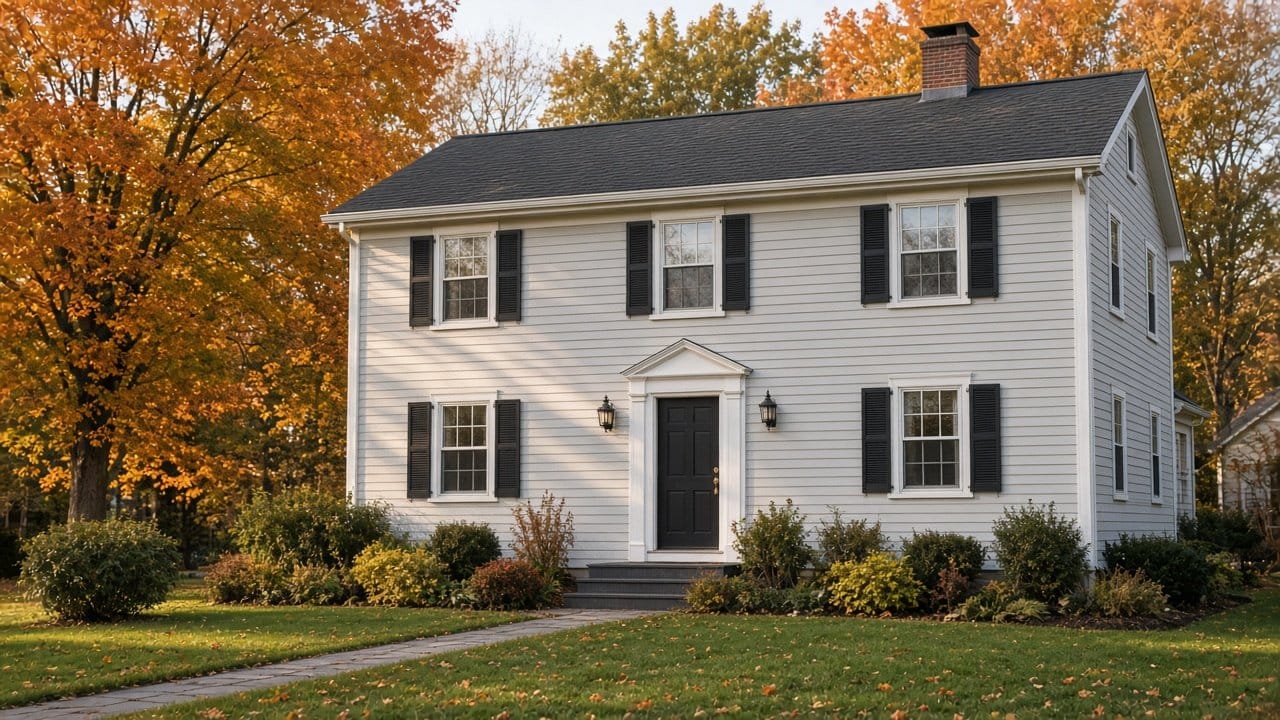
TL;DR: For resale in the Boston area, the colors that return the most are the ones a buyer does not notice: warm whites, soft grays, greige, and muted blue-grays, with crisp white trim. Siding work itself is one of the strongest exterior returns in the 2025 Cost vs Value data, with fiber cement replacement recouping roughly 114 percent of cost and vinyl roughly 97 percent. If you are painting rather than replacing, the constraint that decides your palette is light reflectance: stay at LRV 55 or above on vinyl unless you use a vinyl-safe line.
Selling in the next year and unsure about color? Call or text Dave at (774) 217-9567. We will look at the street, not just the chip.
Resale color is a different question from favorite color, and homeowners often ask the second one when they mean the first. A color you love can still cost you a buyer. This page is about the colors that hold value in New England housing stock specifically.
Which siding colors actually help resale in Boston?
The pattern across New England is consistent, and it is conservative:
- Warm white and off-white. The default on colonial and Cape stock for two centuries. Nobody objects to it, which is the entire point at resale.
- Soft gray and greige. The safest modern choice. Reads current without dating the house to a specific year.
- Muted blue-gray and slate. Strong regional fit, particularly on gambrels and shingle-style homes.
- Deep navy or charcoal, used sparingly. High appeal in listing photos, but it is a commitment and it carries a heat constraint on vinyl that we cover below.
- Sage and muted greens. Rising, and they suit wooded MetroWest lots, but narrower in buyer appeal than gray.
What consistently underperforms: strong beige and tan, which date a house to the 1990s, and any saturated color that makes the house the loudest thing on the street. A buyer walking up is not evaluating your taste, they are quietly estimating what they will have to change.
What the return numbers actually say
Exterior work is where remodeling returns concentrate, and siding sits near the top. In the 2025 Cost vs Value data, fiber cement siding replacement recoups roughly 114 percent of its cost nationally and vinyl siding replacement roughly 97 percent. Regional New England project averages run about $17,590 for vinyl and $20,678 for fiber cement.
Read those carefully. They describe replacement, not repainting, and they are 2025 figures rather than a 2026 edition. For current Boston-area project costs, This Old House keeps a siding replacement cost guide.
The reason this matters to a color decision is leverage. Repainting sound siding costs a fraction of replacing it and captures much of the same visual gain. If the siding is structurally fine and only the color is wrong, painting is the high-return move, and the comparison is laid out in paint or replace your vinyl siding. If the siding is failing rather than merely dated, read repair versus replace vinyl siding first, because no color rescues a failing wall.
The constraint nobody mentions until it is too late
If your siding is vinyl, your color choice is not free. Dark colors absorb more solar energy, vinyl has a low heat distortion temperature, and the result is warping and buckling that costs more to fix than the paint job cost in the first place.
Both major manufacturers put a hard number on it. Benjamin Moore's exterior technical data sheets state plainly that you should not paint vinyl with any color darker than the original or with a Light Reflectance Value below 55, unless it is in their approved Colors for Vinyl palette and complies with the siding manufacturer's own guidelines. You can read that language in the Regal Select Exterior technical data sheet. Sherwin-Williams sets the floor at LRV 56 unless VinylSafe colors are used, in their 09 91 13 exterior coatings specification.
This is why so much of the resale-safe palette is light. It is not only taste. On vinyl it is physics, and it is written into the warranty.
Can you still go dark and sell well?
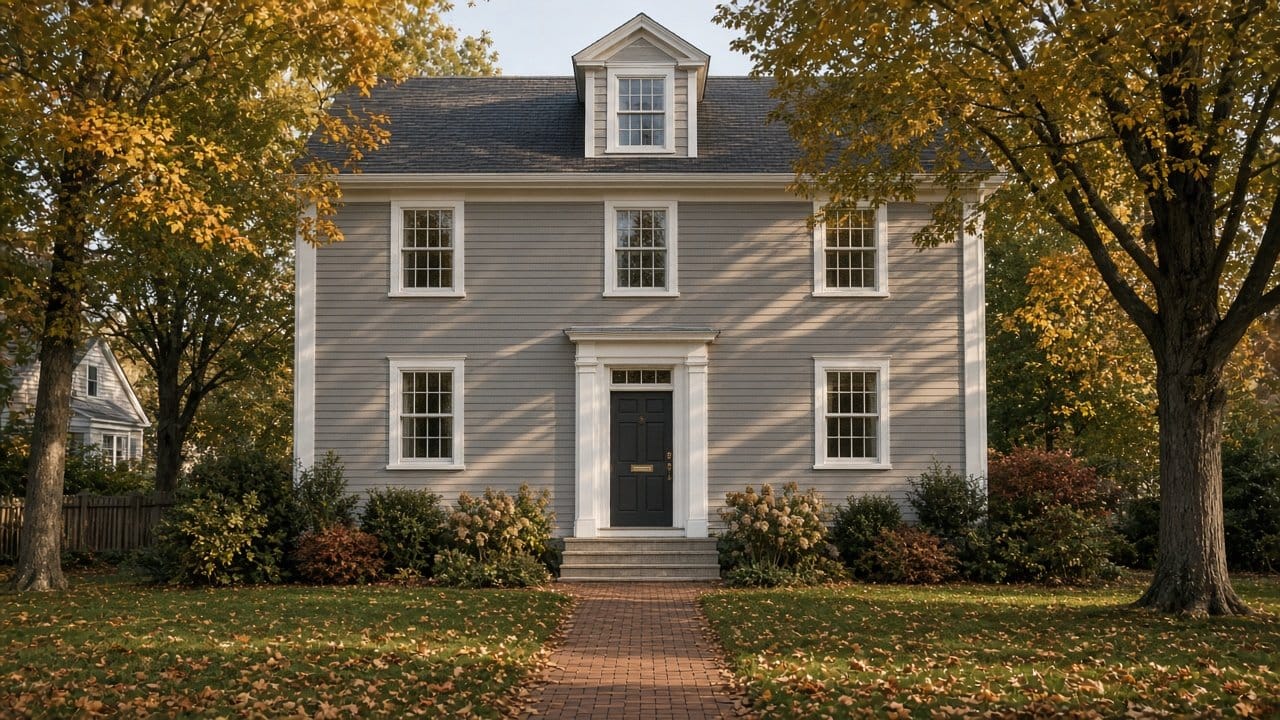
Yes, with the right product. Vinyl-safe lines use pigments that reflect infrared radiation, the heat portion of sunlight, while keeping the visible color. That lets a darker shade behave thermally more like a mid-range one. Sherwin-Williams VinylSafe offers 100 colors including a limited set of darks, and Benjamin Moore's Colors for Vinyl palette works the same way across roughly 75 vetted shades.
Two cautions we give every customer. The technology has limits, and very dark navy or forest tones remain a risk on a full south elevation. And the paint manufacturer's approval does not by itself protect you, because your siding manufacturer's warranty can be stricter. Check both.
On wood or fiber cement, none of this applies and the palette opens up completely. Fade behavior still differs by color, which is its own decision in fade-resistant siding colors for the New England climate.
Trim does more for resale than body color
If the budget only stretches to one decision, spend it on trim contrast. Crisp white trim against a muted body is the combination that reads as maintained in a listing photo, and it is doing most of the work in nearly every high-appeal exterior. Body color changes the mood. Trim changes whether the house looks cared for.
That is also where a two-tone approach earns its keep, which we cover in two-tone siding color combinations for New England homes. Doors and shutters are the cheapest lever of all, in repainting the front door and shutters.
Timing it against a spring listing
Most MetroWest sellers list in spring, which means the exterior work has to happen in the window before it. In practice that means booking in winter for an April or May slot, because every painter in the region is full by then. The scheduling logic is in planning a spring exterior paint job and booking your exterior painter early.
What not to do is squeeze it into late fall against a dew point that will not cooperate. A rushed coat that fails in the first freeze is worse for a listing than the faded color you started with. That limit is in the fall exterior cutoff.
The part that outlasts the color
A resale color on a badly prepped wall is a short-term trick. Washing, scraping, sound caulk lines and correct film build are what keep the finish reading as new through a full selling season and the inspection that follows. We pressure wash before every exterior repaint, which is a service in its own right in power washing in Holliston and pressure washing before painting.
For the full exterior scope on a house in our area, see exterior painting in Holliston and exterior painting in Natick.
Frequently asked questions
What siding color has the best resale value in Boston?
Warm white, soft gray, and greige perform most consistently across New England housing stock, paired with crisp white trim. They appeal broadly and do not date the house to a specific decade.
Does painting siding increase home value?
It captures much of the visual gain of replacement at a fraction of the cost. The 2025 Cost vs Value data puts vinyl siding replacement near 97 percent recouped and fiber cement near 114 percent.
Are dark siding colors bad for resale?
Not inherently, and they photograph well in listings. On vinyl they carry a real heat-distortion risk below LRV 55, so they require a vinyl-safe paint line and a check of the siding warranty.
Should trim be a different color than the siding when selling?
Yes. Crisp trim contrast against a muted body is what reads as well maintained in photos and from the street, and it usually does more for perception than the body color itself.
How long before listing should I repaint the exterior?
Book in winter for an April or May slot. Schedules in MetroWest fill well before spring, and a rushed late-fall coat risks failing against the dew point.
The bottom line
Pick the color a buyer will not argue with, keep vinyl at LRV 55 or above unless you are in a vinyl-safe line, and spend the marginal dollar on trim contrast. Paint Pro New England has painted exteriors across Holliston and the rest of our 18 towns since 2011, Benjamin Moore and Sherwin-Williams, fully insured, with a 2-year warranty on our work. Call (774) 217-9567 and we will walk the street view with you. For the full color picture start at the best siding colors for New England.
Dave Griffiths
Dave Griffiths is the owner of Paint Pro New England, a professional painting company serving MetroWest Boston since 2011. With 15+ years of interior and exterior painting experience across the region, he leads every project with thorough prep, premium Benjamin Moore and Sherwin-Williams paints, and a 2-year warranty.

