



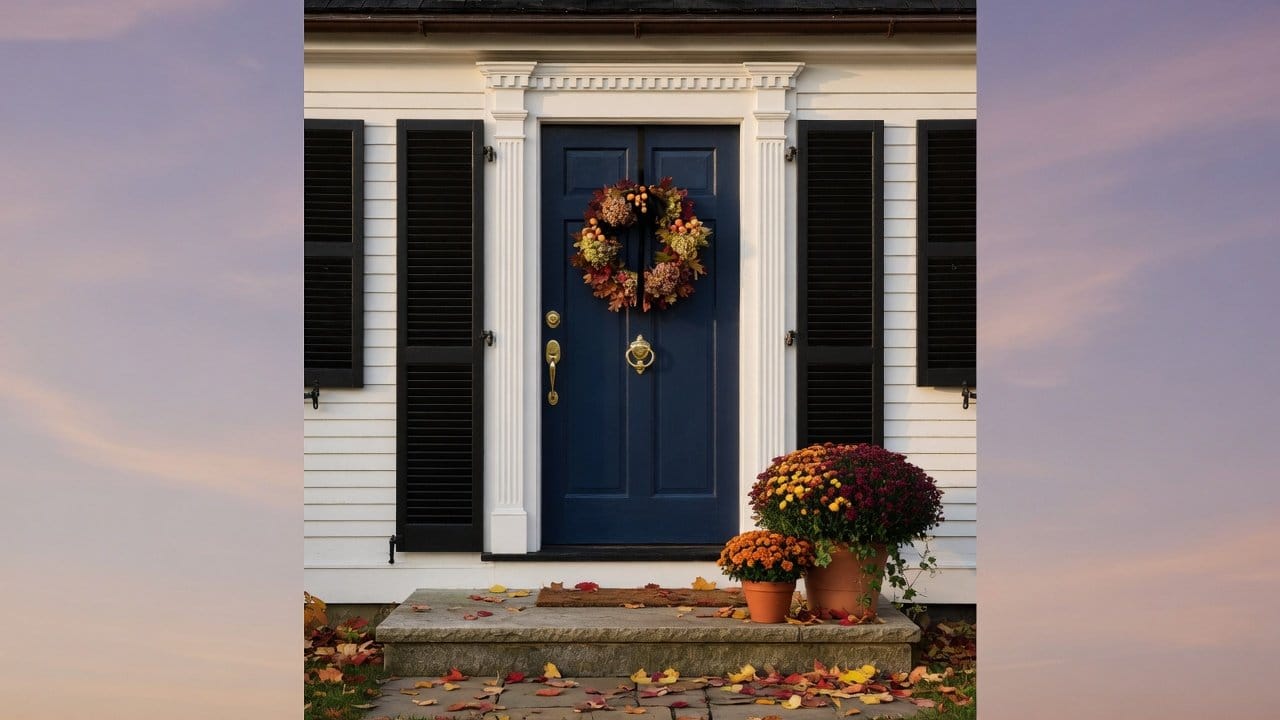
TL;DR: Repainting the front door and shutters is the highest-return exterior project in MetroWest, and early fall is the right window: 50 to 85°F, no rain for 24 to 48 hours, and no harsh direct sun on the slab. Expect roughly $150 to $350 for a professionally painted front door, $45 to $85 per shutter, and about $600 to $1,200 for a door plus ten shutters. The one real trap: on a south or west facing entry with no shade, a true black on a fiberglass or steel door can absorb enough heat to bow the slab and void the door warranty. Go mid-tone there, and save the deep colors for shaded entries.
Want the entry done before the holidays? Call or text Dave at (774) 217-9567. Door and shutter work is a one to two day job, and we book it right through the fall.
Of every dollar a homeowner in MetroWest can spend on the outside of their house, the front door returns the most. It is the one element every guest touches, every photograph frames, and every buyer forms an opinion about from the driveway. It is also the piece that takes the most abuse: full sun, driven rain off the porch roof, and a winter of road salt tracked against the bottom rail. Fall is when we fix it, and there are a few things worth knowing before you pick a color.
Why is fall the right time for door and shutter work?
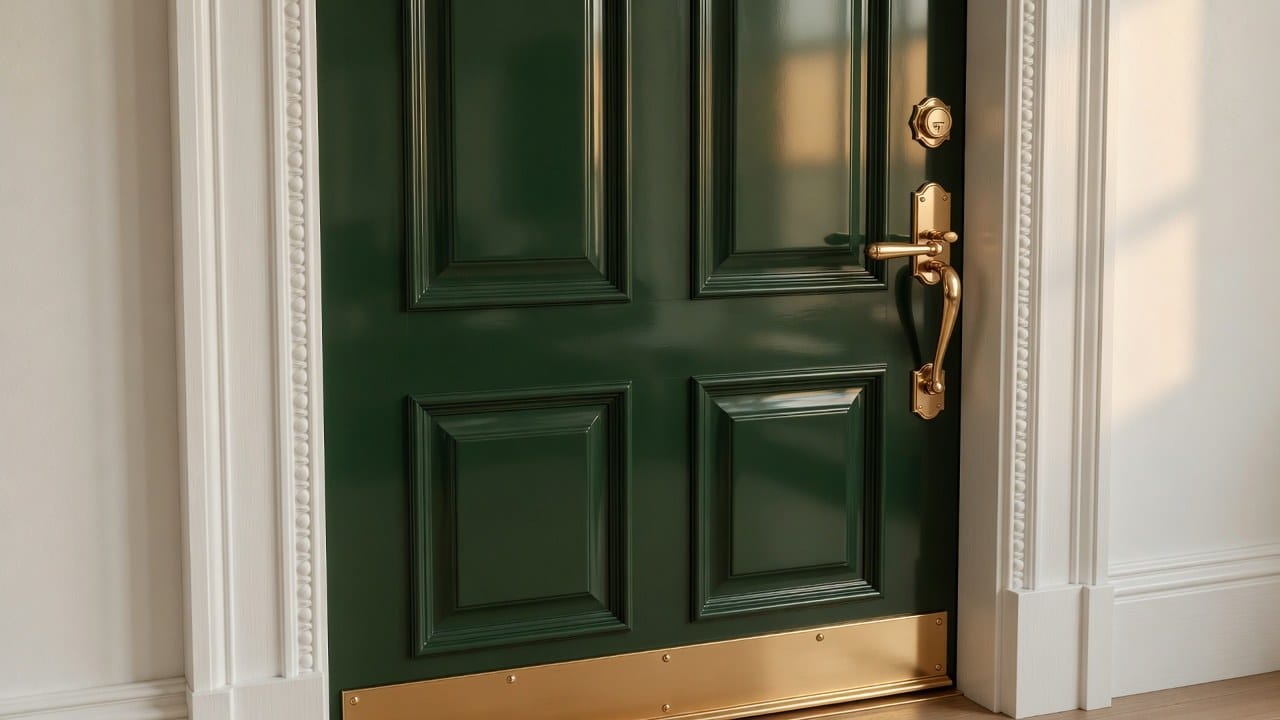
Three reasons. First, conditions: doors and shutters want 50 to 85°F and moderate humidity, and September into early October delivers that far more reliably than a humid July afternoon, when high humidity causes blistering and uneven drying.
Second, it is small enough to fit after the full-exterior season ends. A whole house needs a long stretch of stable weather. A door and a set of shutters needs one good day, so we can still place it in late October when a full siding job no longer fits inside the temperature requirements for exterior painting in Massachusetts.
Third, timing. Finish in the fall and the entry looks its best through the holidays, then goes into winter with a fresh, sealed film on the surface that takes the most weather.
Will a black front door warp in the sun?
It can, and this is the single most important thing on this page.
Dark colors absorb heat. On a fiberglass or steel door, the exterior skin and interior skin are separate layers that expand at different rates. Park a black door in unshaded southern or western exposure and the outer skin can run dramatically hotter than the inner one, so it grows, the slab bows, and the door pulls away from its weatherstripping. You feel it as a draft in January and a door that no longer latches cleanly.
A storm door makes it materially worse. The gap between the two doors traps heat like a small greenhouse and cooks the slab and the plastic surrounds. Many door manufacturers explicitly limit or exclude warranty coverage for very dark colors on unshaded installations, so check yours before committing.
What we recommend in practice:
- Unshaded south or west entry, especially behind a storm door: choose a mid-tone. Deep colonial blue, hunter green, oxblood, graphite, or a saturated charcoal instead of true black. You get the drama without the heat load.
- North or east entry, or a deep covered porch: black and near-black are fair game.
- Any exposure: confirm the door warranty language first. It takes one phone call.
Wood doors are the exception to the warping concern, but they trade it for a different problem: UV and moisture degrade a wood slab faster, so they want more frequent maintenance and a hard look at the bottom rail where water sits.
What prep does a door actually need?
Fiberglass is non-porous, and paint will not grip it without work. Steel is worse, because any breach in the film lets the substrate start oxidizing underneath, which then pushes the paint off from below.
The sequence that lasts:
- Degrease. Hands touch this surface thousands of times a year. Skin oil around the handle is the most common adhesion failure point on a door.
- Scuff sand. Break the existing sheen so the primer has tooth.
- Spot prime bare fiberglass, exposed steel and any rust, with a primer matched to the substrate.
- Topcoat in 100% acrylic enamel, satin or semi-gloss. Oil-based coatings are not recommended on fiberglass. Acrylics also hold up better against UV, which matters on a south-facing slab.
- Respect the cure. Dry to the touch is not cured. The film needs several days to reach full hardness, and the risk window is the moment you close a freshly painted door against weatherstripping and it sticks. We leave doors operable and warn you exactly how long to be careful.
Louvered shutters are the labor story. Paint has to reach inside every slat, which usually means brushwork rather than spraying or rolling, and that is why a large board-and-batten or louvered shutter can run to the top of the range while a flat panel sits at the bottom.
What does it cost?
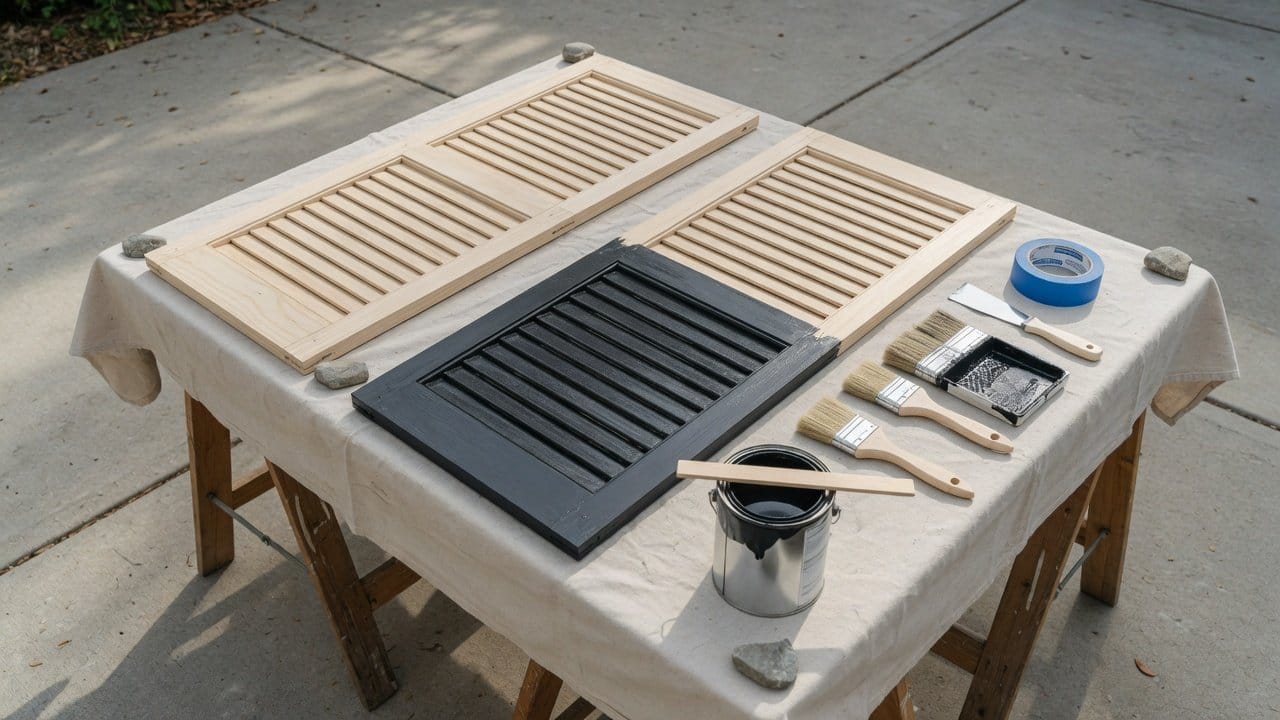
MetroWest ranges for professional work:
- Front or exterior door: $150 to $350
- Per shutter: $45 to $85, averaging around $70 to clean, prime and paint
- Door plus 10 shutters: roughly $600 to $1,200
Two things move the number. Material: vinyl and metal shutters need specialty adhesion products that cost meaningfully more per gallon than standard exterior paint. And profile: a flat panel shutter is quick, a louvered one is not.
One easy saving. Using the same color on the door and the shutters reduces material cost and setup, and bundling the entry with other exterior work usually earns a better price than calling us out for the door alone. The porch rail is the other half of that composition; rust at the welds is a different product and a different prep, covered in how we repaint wrought-iron railings for a New England winter. If you are choosing a color from scratch, our guides to the best exterior paint colors for MetroWest Boston in 2026 and exterior colors for Holliston colonials are the place to start.
The bottom line
The entry is the cheapest meaningful upgrade on a New England house, and fall is the easiest time to fit it. Get the conditions right (50 to 85°F, dry for a day or two after, no blazing sun on the slab), prep properly because fiberglass and steel give paint nothing to hold, and be honest about your exposure before choosing black. A mid-tone on a sun-blasted entry will still stop people in the driveway, and it will still close properly in February.
Paint Pro New England has painted MetroWest entries for 15 years, serving Holliston, Medway, Hopkinton, Sherborn, Dover, Wellesley, Natick and the surrounding towns, with a 2 year warranty and 5.0 stars across 60+ reviews. For a free estimate on your door and shutters, call (774) 217-9567.
Dave Griffiths
Dave Griffiths is the owner of Paint Pro New England, a professional painting company serving MetroWest Boston since 2011. With 15+ years of interior and exterior painting experience across the region, he leads every project with thorough prep, premium Benjamin Moore and Sherwin-Williams paints, and a 2-year warranty.

