



TL;DR: A newer Norfolk home usually needs its first full exterior repaint somewhere between 4 and 10 years after it was built. Purdue Extension puts one top coat of quality acrylic at 4 to 5 years and two top coats at up to 10 years, and the National Park Service calls exterior paint a shield needing re-application every 5 to 8 years. In Norfolk that question covers most of town: 58.8 percent of homes were built in 1980 or later, and only 7.8 percent before 1940, the smallest pre-war share of the 18 towns we serve (ACS 2020-2024).
Not sure whether your house is due? Call or text Dave at (774) 217-9567. We will walk all four sides with you and tell you honestly if it can wait another season.
A common Norfolk call goes like this: "We bought the house new about eight years ago. It still looks fine from the street. Do we need to do anything?" It is a good question, because nobody hands a new owner a repaint schedule, and the first full repaint is the one most people misjudge. This page answers that question for the newer half of Norfolk's housing.
How new is Norfolk's housing stock?
Among the newest in our area, and with the fewest pre-war houses. The American Community Survey counts 3,557 housing units in Norfolk with a median year built of 1984 (plus or minus 3 years). The decade split, from the same ACS 2020-2024 estimates:
- 1939 or earlier: 7.8 percent. The lowest pre-war share of the 18 towns we cover.
- 1940 to 1979: 33.4 percent, with the 1970s alone at 17.2 percent.
- 1980s: 23.2 percent, the single largest decade in town.
- 1990s and 2000s: 18.3 percent combined.
- 2010 or later: 17.3 percent, nearly one home in six.
The full year-built table is on Census Reporter, which mirrors the ACS 2020-2024 5-year estimates. Norfolk is also 94.9 percent owner-occupied and 90.8 percent single-family detached. In practice that means most exterior work in town is an owner deciding when to repaint the house they live in, and for a big share of them it is the first or second repaint the house has ever had.
How long does the first paint job on a newer house last?
It depends mostly on how many top coats went on and which side of the house you are looking at. The clearest published numbers come from Purdue University Cooperative Extension's bulletin Paint Failure Problems and Their Cure, written with the USDA Forest Products Laboratory:
- One top coat of high quality acrylic latex "should last four to five years."
- Two top coats "can last up to 10 years."
- The first 2 to 3 years of normal exposure do not affect properly applied paint.
- South and west sides go first, because they take the most sun and rain.
The National Park Service gives a similar range in Preservation Brief 10, describing exterior paint as a temporary shield "requiring re-application every 5-8 years."
Put those together and the first full repaint on a newer Norfolk house tends to land between year 4 and year 10. If you bought new and do not know how many coats the builder applied, plan on the shorter number and let the south and west walls tell you if you have longer. Our broader take on paint life across New England is in how long exterior paint lasts in New England.
What are the signs a newer house is ready for its first repaint?
Paint on a newer house rarely fails all at once. Purdue describes the normal sequence as soiling, then a flattening stage, then chalking as the film slowly erodes. Walk the house on a dry day and look for these, in roughly this order:
- Flat, dull walls on the south and west sides next to glossier paint on the north side. That contrast is the first stage of normal wear.
- Chalk on your hand. Wipe a palm across the paint. A heavy white or colored residue means the film is eroding.
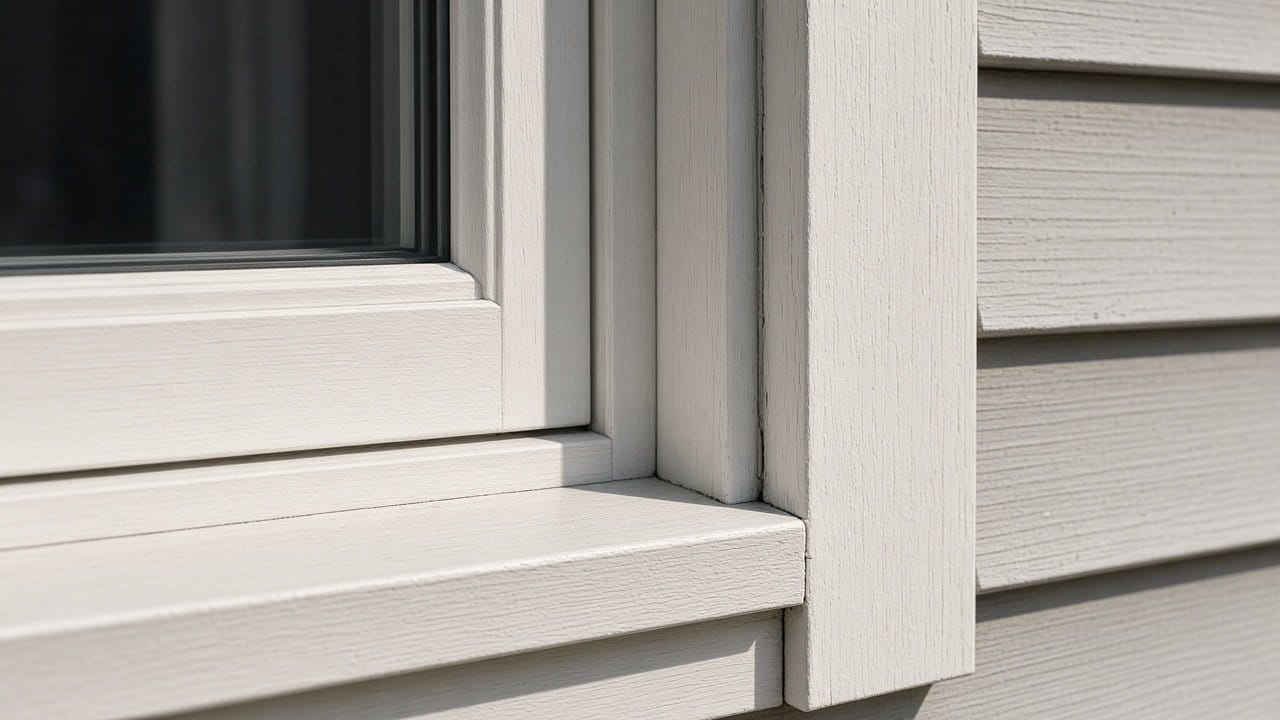
- Open joints in the trim. Caulk at corner boards, casings and where trim meets the house shrinks and splits first. Water gets in there before it gets in anywhere else.
- Peeling at board ends and edges. Purdue notes paint normally fails around the ends and edges of a board first.
Peeling across a whole wall in the first few years is a different problem, usually moisture, and it is worth finding the cause before anyone repaints. We cover that in why house paint peels.
Does the whole house need repainting the first time?
Not always, and this is where a first repaint differs from later ones. Purdue's bulletin makes two points that fit newer houses well:
- Spot painting is legitimate when only isolated areas have failed. Scrape, feather the edges, clean, prime the bare wood and add a top coat to match.
- Sheltered areas can skip a cycle. Porches, eaves and walls under deep overhangs can "probably" be repainted every other time the house is painted.
So the first visit on a newer Norfolk house is often a scoped job: the south and west elevations and all the trim, with the protected sides cleaned and touched up. The trade-off is color. If your current color has faded unevenly, a partial repaint can leave a visible difference between walls, which is why many owners do the full house anyway. We will tell you which way your house leans after we look at it.
Whatever the scope, cleaning comes first. Purdue warns that intercoat peeling "usually occurs within one year of repainting" when weathered paint was not properly cleaned. That is why power washing is part of every exterior we do, and the reasoning is in pressure washing before painting.
What about Norfolk's older houses?
They are a different job, and a smaller share of town. Norfolk's oldest houses cluster in places like Sullivan's Corner, which its National Register nomination calls "the best preserved of the small crossroads villages outside the town center of Norfolk," with walls of clapboard and wood shingle. National Register listing does not restrict what a private owner paints, as our historic district approval guide explains.
The bigger difference is the lead line. Homes built before 1978 fall under the EPA's Renovation, Repair and Painting rule when a paid contractor disturbs paint, while most of Norfolk's housing went up in 1980 or later. If your house is one of the 41.2 percent built before 1980, read our Massachusetts lead paint guide before scoping the job.
Frequently asked questions
How many years before a new house needs to be repainted?
Usually 4 to 10 years: Purdue Extension says one top coat of quality acrylic latex should last four to five years and two top coats up to 10, with south and west walls wearing out first.
How old are most homes in Norfolk, MA?
Norfolk's median home was built in 1984, and 58.8 percent of its homes were built in 1980 or later, according to American Community Survey 2020-2024 estimates; only 7.8 percent date to 1939 or earlier.
Can I repaint just the sunny side of my house?
Often yes on a first repaint, because Purdue Extension says isolated failures can be spot painted and sheltered areas such as porches and eaves can be repainted every other cycle, though faded color can make partial work visible.
How do I know if my house paint is chalking?
Wipe your palm across a dry, sunny wall; if it comes away with a white or colored powder, the paint film is eroding, which Purdue Extension describes as a normal stage of weathering before failure.
Does a Norfolk house built after 1980 need lead-safe painting?
No, the federal Renovation, Repair and Painting rule applies to homes built before 1978, so a house built in 1980 or later is outside it, although ordinary dust control and cleanup still matter on any exterior job.
The bottom line
A newer Norfolk house usually gets its first full repaint between year 4 and year 10, earlier with one top coat, later with two, and earliest on the south and west walls. Start checking around year 3, look for flat paint, chalk and open trim joints, and remember that a first repaint can sometimes be a scoped job rather than the whole house. For everything else about painting in town, start at our Norfolk painters page, and if you want a firm date on your calendar, booking an exterior painter early explains why winter is the time to schedule.
Paint Pro New England has painted homes across Norfolk, Franklin, Medway, Millis, Walpole and the rest of our 18 towns since 2011, with Benjamin Moore and Sherwin-Williams products, full insurance, a 2-year warranty and 5.0 stars across 62+ reviews. See exterior painting in Norfolk, or call (774) 217-9567 and we will tell you whether your house is due.
Dave Griffiths
Dave Griffiths is the owner of Paint Pro New England, a professional painting company serving MetroWest Boston since 2011. With 15+ years of interior and exterior painting experience across the region, he leads every project with thorough prep, premium Benjamin Moore and Sherwin-Williams paints, and a 2-year warranty.

