



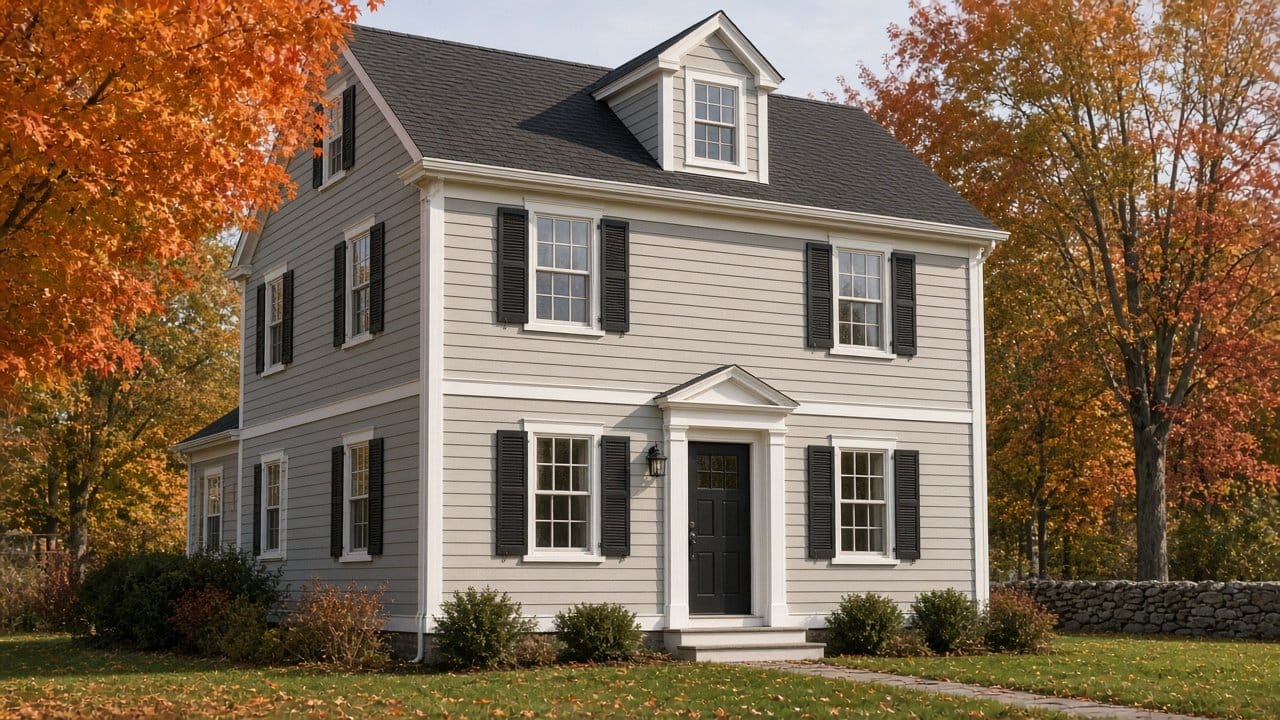
TL;DR: Yes, James Hardie siding can be painted. The requirements are specific: 100 percent acrylic exterior paint, never oil-based, and a Light Reflectance Value of 55 or higher to limit heat absorption and fading. Factory-primed Hardie must be painted within 180 days of installation. ColorPlus factory finish carries a 15-year limited finish warranty, and repainting it voids that finish warranty while leaving the 30-year substrate warranty intact if your paint meets the manufacturer's specification.
Not sure whether your Hardie is primed or ColorPlus? Call or text Dave at (774) 217-9567. It changes the whole answer, and it takes two minutes to tell.
Homeowners ask whether Hardie Board can be painted as though it were a yes or no question. It is really three questions: which product you have, whether you are inside a warranty window, and what paint the manufacturer will accept.
Can Hardie Board be painted?
It can, and fiber cement takes paint extremely well. The substrate is dimensionally stable, it does not swell and shrink the way wood does, and a correctly specified acrylic film bonds to it and stays put for years.
The catch is that the paint has to be the right paint. James Hardie's guidance is 100 percent acrylic for field painting, with product-specific instructions taking precedence. Oil-based paints and stains are to be avoided. Current best practices and product instructions are published at James Hardie Pros, and they take precedence over anything a general guide says, including this one.
Primed or ColorPlus? This decides everything
Two very different products arrive on New England job sites and they get discussed as though they were one.
Factory-primed Hardie ships ready for on-site painting and must be painted. There is a window: paint it within 180 days of installation. Primed board left past that window can lose moisture and crack, and at that point you have a substrate problem rather than a finish problem.
ColorPlus Technology arrives with a baked-on factory finish and is not meant to be painted at all. It carries a 15-year limited finish warranty against peeling, cracking and chipping. If the finish is intact, painting over it is the one thing you should not do, because it trades a warranted factory coating for a field coating.
So the first question on any Hardie repaint is which one is on the wall. Primed board that has been painted once looks much like ColorPlus from the ground. The paperwork, the installer, or a close look at the cut edges and the finish uniformity will tell you.
What repainting does to the warranty
This is the part that costs people money, and the distinction is finer than most contractors explain.
- Repainting ColorPlus voids the 15-year ColorPlus finish warranty. That warranty covers the factory coating, and once you cover it, it no longer applies.
- It does not void the 30-year non-prorated substrate warranty on the board itself, provided the paint you select meets James Hardie's recommendations. The board stays covered. The finish does not.
- Where the factory finish has a covered defect, the warranty language itself calls for the area to be properly cleaned and sanded, then repainted immediately with a good quality 100 percent acrylic paint. The warranty document is published as the James Hardie limited finish warranty.
The practical reading: do not repaint an intact ColorPlus finish just because you want a different color this year. Wait until it is outside the warranty window or genuinely failing, then repaint in whatever color you like with a compliant acrylic. That is a very different conversation from a homeowner who was told the whole warranty disappears.
Why does the color matter on fiber cement?
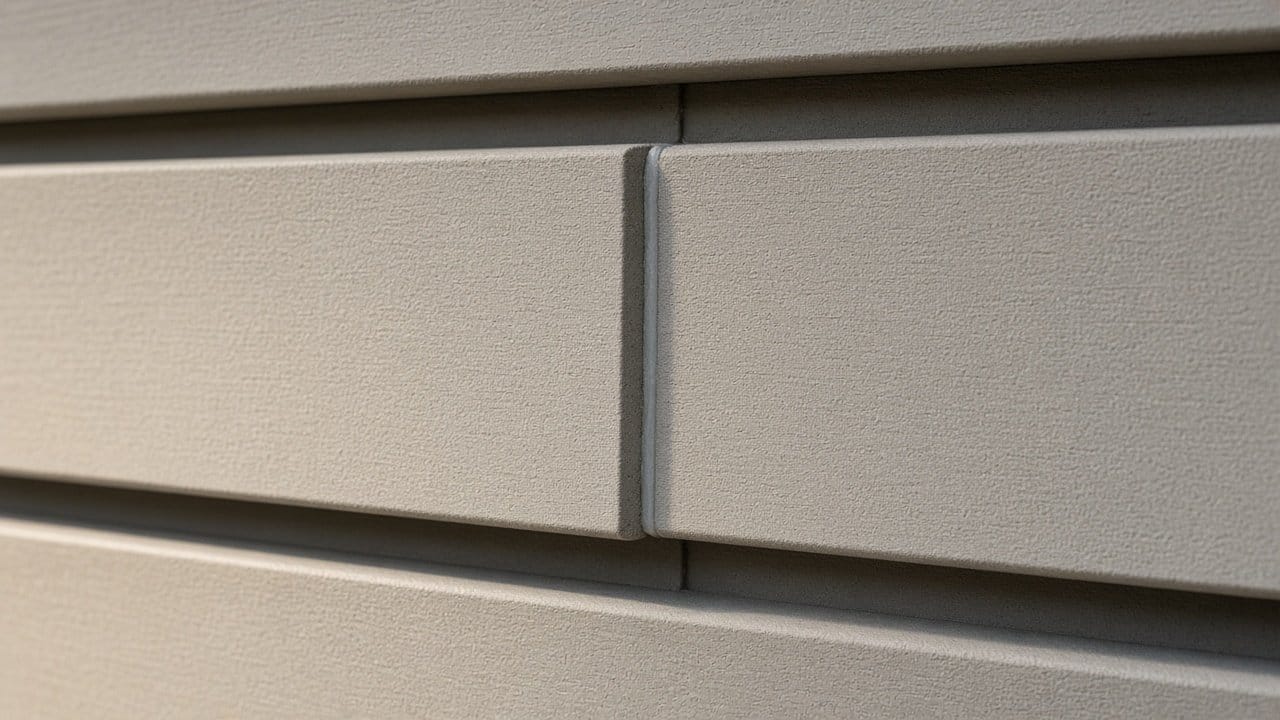
Fiber cement does not warp from heat the way vinyl does, so the concern is different, but the number turns out to be the same. The recommendation when field-painting James Hardie siding is 100 percent acrylic with a Light Reflectance Value of 55 or higher, which limits how much solar heat the wall absorbs and slows fading.
It is worth understanding that this is about the coating's life, not the board's survival. Darker colors on a south or west elevation fade, chalk and thin faster. ColorPlus is warranted 15 years against fade, but in practice deeper colors show change sooner, and in harsh climates sooner still. New England's combination of high summer UV and freeze-thaw is not gentle.
The LRV 55 figure lines up with the vinyl guidance from both major paint manufacturers, for different physical reasons, which is a useful coincidence when a house has both materials on it. That side of it is covered in fade-resistant siding colors for the New England climate.
How often does Hardie need repainting here?
Less often than wood, and that is most of its appeal. A correctly specified acrylic over properly prepared fiber cement in our climate is a long interval, and ColorPlus is warranted for 15 years against finish failure although real-world fade appears earlier on dark colors and hot elevations.
What shortens it, every time, is the same short list: dark colors on a full-sun wall, a coating that was not 100 percent acrylic, inadequate washing before the coat went on, and painting outside the temperature and dew point window. The by-material intervals across all siding types are in how often to repaint siding by material.
Preparation, which is where the job is won
Fiber cement is unforgiving of a dirty surface because the coating has nothing to soak into. The sequence we run:
- Wash. Remove chalk, pollen, mildew and road film. A chalked wall will take paint and release it in sheets a year later.
- Let it dry. Fully. The board holds water longer than it looks like it should.
- Address caulk and joints. Butt joints, trim intersections and penetrations, before any coating.
- Prime only where needed. On a repaint over an existing sound ColorPlus or field-painted surface, primer is generally not required. Primer matters on factory-primed board and on bare or repaired substrate.
- Two coats of 100 percent acrylic, within the manufacturer's temperature window.
The washing step is a service on its own and it is not optional here, as in power washing in Holliston and pressure washing before painting. The temperature and dew point limits are in exterior painting temperature requirements in Massachusetts.
What it costs against replacing it
Repainting sound fiber cement is a fraction of replacing it, and replacement is expensive. Regional New England fiber cement replacement averages around $20,678 in the 2025 Cost vs Value data, against roughly $17,590 for vinyl. Those are replacement figures and 2025 vintage, not a 2026 edition. Current Boston-area project ranges are tracked in This Old House's siding replacement cost guide.
Since fiber cement is the material most likely to still be structurally perfect when the color goes tired, it is the material where repainting returns the most. The resale side of that decision is in siding colors and resale value, and the general Hardie painting walkthrough is in painting HardiePlank fiber cement siding.
For the work itself in our towns, see exterior painting in Holliston and exterior painting in Wellesley.
Frequently asked questions
Can James Hardie siding be painted?
Yes. James Hardie recommends 100 percent acrylic exterior paint, never oil-based, with product-specific instructions taking precedence over general guidance.
Does painting Hardie Board void the warranty?
Repainting a ColorPlus finish voids the 15-year finish warranty only. The 30-year non-prorated substrate warranty stays in effect provided the paint meets James Hardie's recommendations.
How soon does primed Hardie siding need to be painted?
Within 180 days of installation. Factory-primed board left unpainted past that window can lose moisture and crack, which becomes a substrate problem rather than a finish one.
What LRV should paint be for James Hardie siding?
55 or higher is the recommendation, using 100 percent acrylic. Higher light reflectance limits heat absorption on the wall and slows fading of the coating.
Do you need to prime Hardie Board before repainting?
Usually not, when repainting over a sound existing ColorPlus or field-painted surface. Primer is for factory-primed board and for any bare or repaired substrate.
The bottom line
Identify the product first, respect the 180-day window on primed board, leave an intact ColorPlus finish alone, and when you do paint, use 100 percent acrylic at LRV 55 or above over a properly washed wall. Paint Pro New England has painted fiber cement across Holliston, Wellesley and the rest of our 18 towns since 2011, Benjamin Moore and Sherwin-Williams, fully insured, with a 2-year warranty on our work. Call (774) 217-9567 and we will tell you which Hardie you have before we quote anything.
Dave Griffiths
Dave Griffiths is the owner of Paint Pro New England, a professional painting company serving MetroWest Boston since 2011. With 15+ years of interior and exterior painting experience across the region, he leads every project with thorough prep, premium Benjamin Moore and Sherwin-Williams paints, and a 2-year warranty.

