



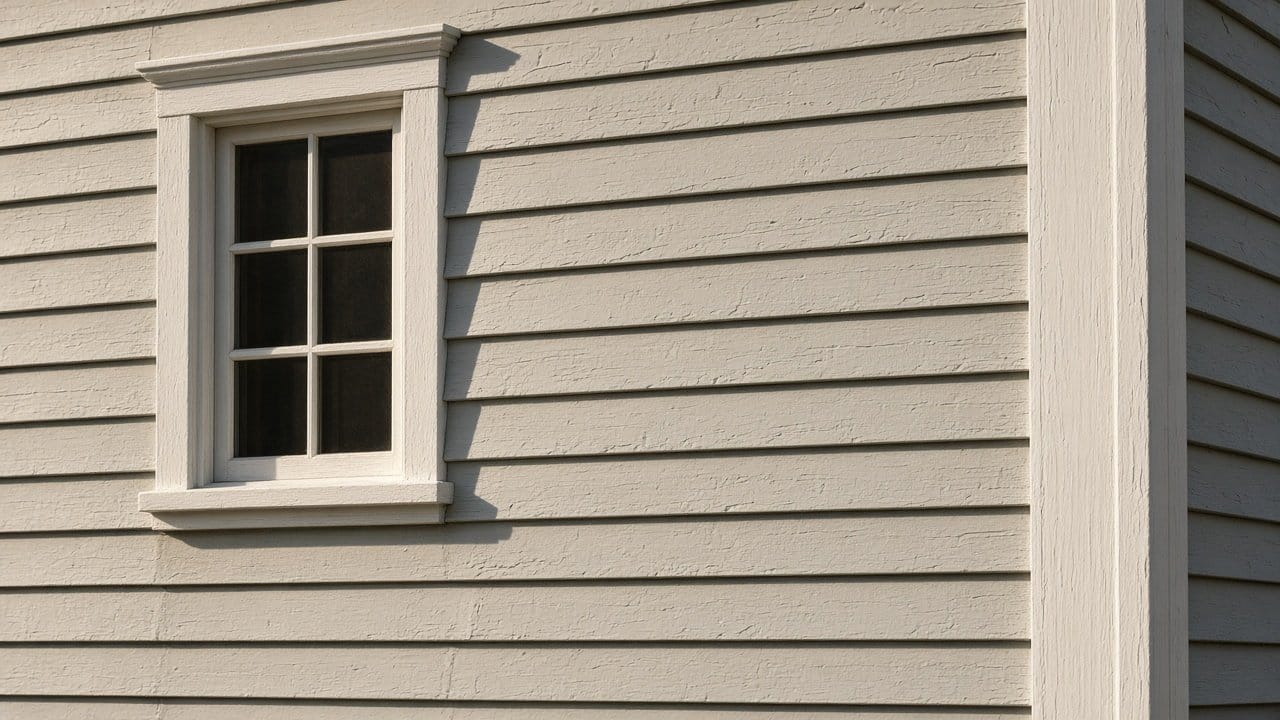
TL;DR: Fade resistance is mostly a function of how much light a color reflects and what pigments carry it. Light and mid-tone colors at a Light Reflectance Value of 55 or above hold their appearance longest on New England walls. Below that, on vinyl, you are also risking heat distortion, which is why Benjamin Moore sets its floor at LRV 55 and Sherwin-Williams at LRV 56 unless a vinyl-safe line is used. Those lines use infrared-reflective pigments that let a darker shade behave thermally like a lighter one.
Watching a south wall go chalky? Call or text Dave at (774) 217-9567. We will tell you whether it is the color, the product, or the prep.
Everything fades. The useful question is not which colors never change, it is which ones change slowly and gracefully enough that you do not notice for a decade. In New England that answer is driven by three things: light reflectance, pigment chemistry, and which wall you are standing in front of.
What LRV is, and why it decides this
Light Reflectance Value runs from 0 to 100, where 0 is a theoretical perfect black and 100 a perfect white. A low-LRV color absorbs more light, and absorbed light becomes heat in the wall.
Heat drives two separate problems. It accelerates the breakdown of the binder and pigment in the coating, which is fading and chalking. And on vinyl it approaches the material's heat distortion temperature, which is warping and buckling. The second one is not a cosmetic issue, it is a repair.
That is why the paint manufacturers publish a number rather than a suggestion. Benjamin Moore's exterior technical data sheets state that you should not paint vinyl with any color darker than the original or with an LRV below 55 unless it is in their approved Colors for Vinyl palette and complies with the siding manufacturer's guidelines, warning that the color will otherwise absorb more heat and possibly cause the siding to warp. That language is in the Regal Select Exterior technical data sheet. Sherwin-Williams places the floor at 56 in its 09 91 13 exterior coatings specification, unless VinylSafe colors are used.
Which siding colors fade least in the New England climate?
Ranked roughly by how well they hold up on a full-sun wall here:
- Warm whites and off-whites. The most stable category. Very little pigment to lose, and what change occurs reads as softening rather than fading.
- Light grays and greige. Nearly as stable, and they hide the pollen and road film that make a wall look older than it is.
- Mid-tone blue-grays and sage. Good performers when the pigment package is right. This is where product quality starts to separate results noticeably.
- Taupe and clay mid-tones. Reasonable, and often the practical darkest choice on vinyl without stepping into a specialty line.
- Deep navy, charcoal, forest. The fastest to show change, especially on south and west elevations. Achievable, but treat them as a maintenance commitment rather than a set-and-forget choice.
Reds and strong yellows sit outside this list for a reason. Those pigment families have historically been the least lightfast on exteriors, and on a New England south wall they show it first.
How dark colors are made to survive
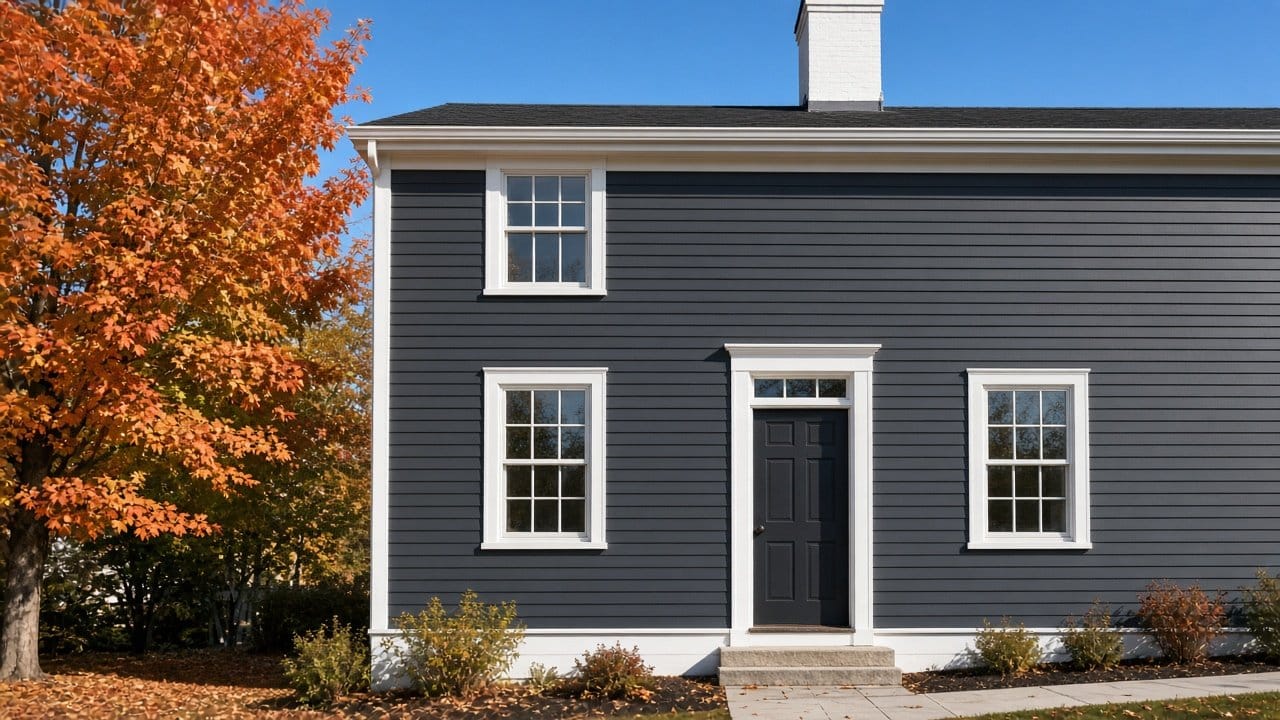
The workaround for the LRV floor is pigment technology rather than restraint. Vinyl-safe lines use pigments that reflect infrared radiation, the heat portion of sunlight, while still presenting a dark visible color. The wall reads charcoal to your eye and behaves closer to mid-gray thermally.
Sherwin-Williams VinylSafe offers 100 colors including a limited set of darks formulated to resist warping and buckling on a sound, stable vinyl substrate. Benjamin Moore's Colors for Vinyl palette covers roughly 75 vetted shades on the same principle, and their contractor guide to painting vinyl siding notes those products are self-priming on properly prepared vinyl, though pitted or porous siding still needs primer.
The same idea shows up in PVC trim. VERSATEX's painting guidelines state that only light-to-medium colors at LRV 55 or greater should be applied, and that going below 55 voids the product warranty, citing heat absorbed relative to the material's heat distortion temperature.
Two limits worth stating plainly. The technology reduces heat build, it does not eliminate it, so very dark tones remain a genuine risk on a full south elevation. And paint manufacturer approval does not override your siding manufacturer's warranty, which can be stricter.
Exposure matters as much as color
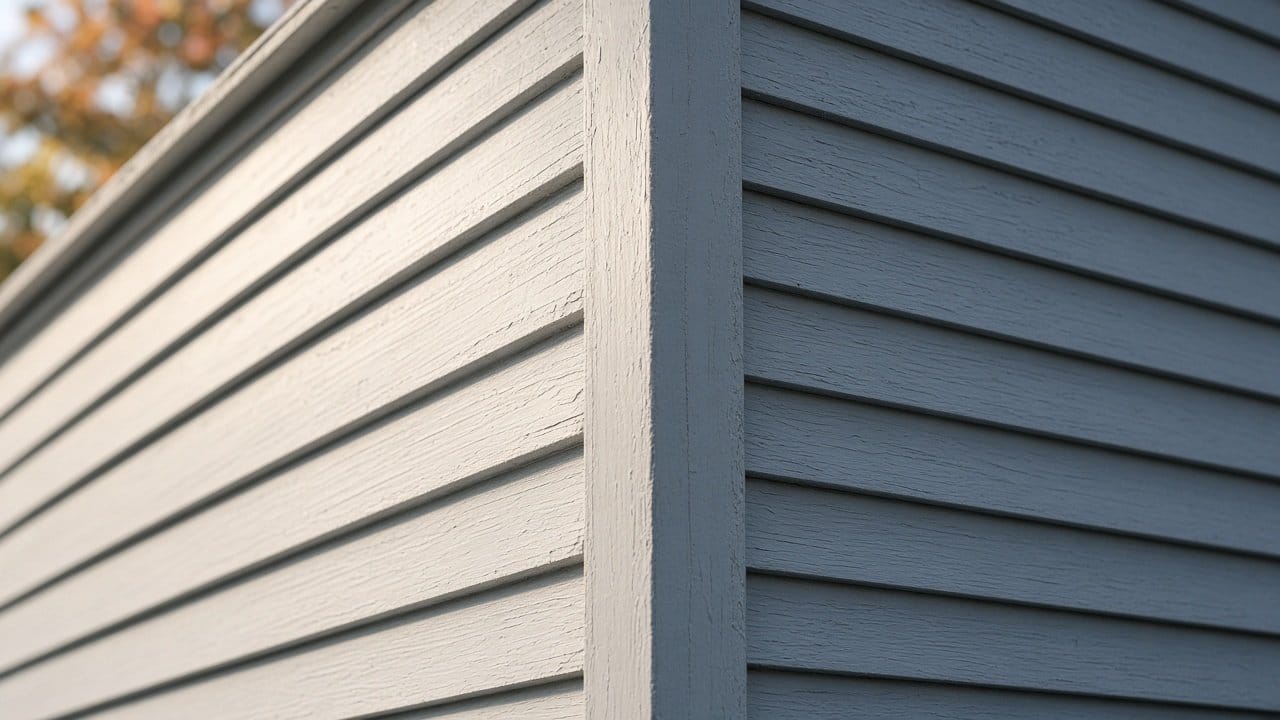
The same color on the same house fades at four different rates. South and west elevations take the most UV and the most heat, so they go first. North walls often look nearly new when the south wall is visibly chalked, which is why a partial repaint almost never matches.
In MetroWest there is a second factor: tree cover. A shaded lot in Dover or Sherborn protects a color for years longer than an open lot in Framingham, and it trades that protection for mildew and green film, which is a washing problem rather than a fading one. That side of it is in painting over mold and mildew.
The practical consequence is scheduling. If you repaint only the elevation that failed, you will see the seam. Budget the whole envelope or accept the difference.
Fade behaves differently by material
On vinyl you are managing both fade and heat distortion at once, which is why the LRV floor exists.
On fiber cement there is no warping concern, but the coating still fades, and James Hardie recommends 100 percent acrylic at LRV 55 or above for field painting partly to limit heat absorption and fading. The full requirement set is in James Hardie siding painting requirements.
On cedar and wood the wood itself weathers underneath the coating, so color change and coating failure arrive together. That is covered in painting cedar clapboard siding and paint versus stain on cedar.
On aluminum chalking is the dominant mode rather than fading, in painting aluminum siding.
What the color choice does to cost
Color does not change the price of the job much. Repainting sound siding runs roughly $2.81 to $5.14 per square foot in Massachusetts whichever color you pick, though a substantial change in depth can mean an extra coat. What color changes is how long you wait before doing it again, and that is where the real money sits. The full pricing picture is in what it costs to paint faded siding.
For reference on the factory side, James Hardie warrants its ColorPlus finish for 15 years against fade, peeling and cracking, though darker colors on hot elevations show visible change well before that. Our own work carries a 2-year warranty.
Product quality is the variable you control
Color choice sets the ceiling. Product and prep decide whether you reach it. A premium 100 percent acrylic exterior carries more and better pigment and more binder than an economy line, and on a south wall that difference is years rather than months. The case is made in the real cost of cheap paint, and the brand comparison in Benjamin Moore versus Sherwin-Williams for New England exteriors.
Prep matters just as much. A coat applied over chalk, pollen or mildew fails early regardless of how good the color choice was, which is why washing is the first line item on every exterior we quote. See power washing in Natick and exterior painting in Framingham.
Frequently asked questions
What siding colors fade the least?
Warm whites, off-whites and light grays hold appearance longest because they reflect more light and carry less pigment to lose. Deep navy, charcoal and forest fade fastest on sun-exposed walls.
What LRV is safe for painting vinyl siding?
Benjamin Moore sets the floor at LRV 55 and Sherwin-Williams at 56, unless you use their vinyl-safe palettes. Below that, vinyl can absorb enough heat to warp.
Can you paint vinyl siding a dark color?
Only with a vinyl-safe line using infrared-reflective pigments, and even then very dark tones stay risky on full-sun walls. Check your siding manufacturer's warranty as well as the paint manufacturer's.
Why does one side of my house look faded and another does not?
South and west elevations take the most UV and heat, so they change first. This is also why repainting a single elevation rarely matches the rest of the house.
Does expensive exterior paint actually fade less?
Premium 100 percent acrylic lines carry more binder and better pigment than economy products, and on a sun-exposed New England wall that difference shows up as years of additional appearance life.
The bottom line
Stay at LRV 55 or above for the longest-looking finish, step into a vinyl-safe line if you want to go darker, and spend on product and washing before you spend on a specialty color. Paint Pro New England has painted exteriors across Holliston, Framingham, Natick and the rest of our 18 towns since 2011, Benjamin Moore and Sherwin-Williams, fully insured, with a 2-year warranty on our work. Call (774) 217-9567. For the full palette start at the best siding colors for New England, and for the resale angle see siding colors and resale value.
Dave Griffiths
Dave Griffiths is the owner of Paint Pro New England, a professional painting company serving MetroWest Boston since 2011. With 15+ years of interior and exterior painting experience across the region, he leads every project with thorough prep, premium Benjamin Moore and Sherwin-Williams paints, and a 2-year warranty.

