



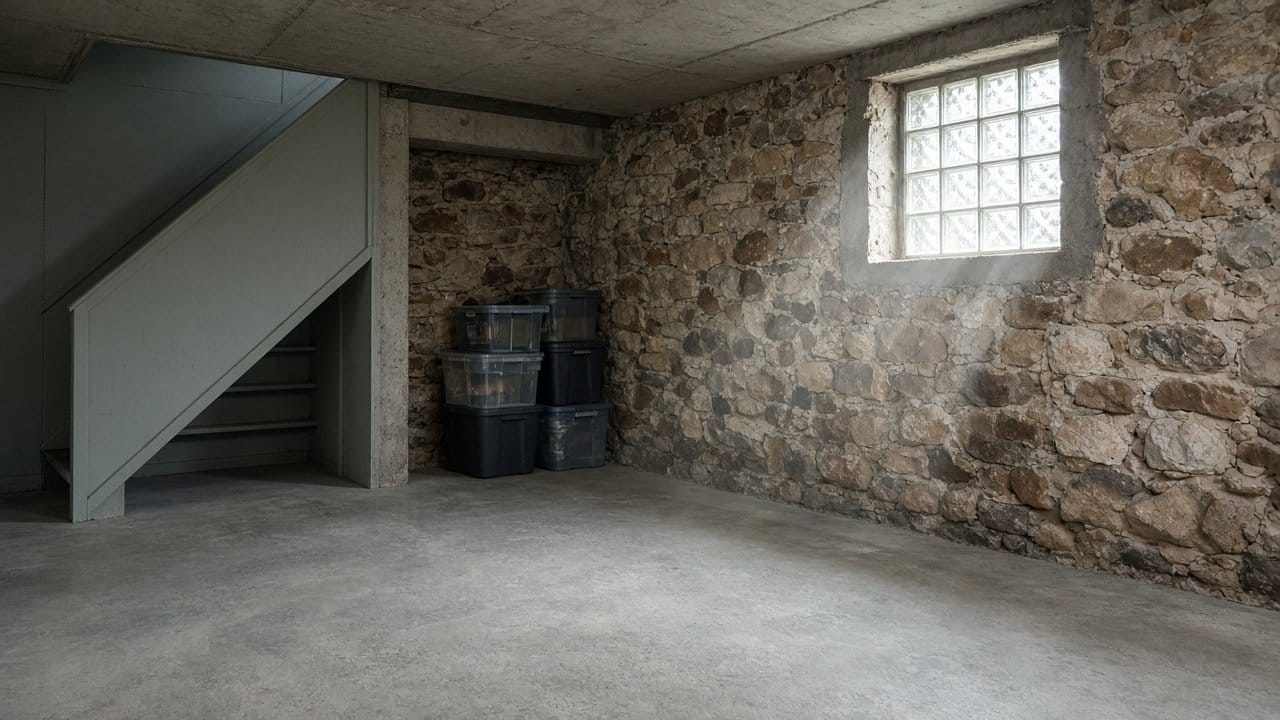
TL;DR: Run the test before you buy anything. Tape an 18-inch square of plastic sheet flat to the wall and leave it a minimum of 16 hours. That is ASTM D4263, and it is free. If the underside comes off dry and the masonry under it has not darkened, a waterproofing coating is a reasonable next step. If it is damp, coating is not the next step, drainage is. Rated products are tested to ASTM D7088: DRYLOK Extreme at 15 psi, the standard Floor and Wall product at 4 psi. Both need the surface at 50 degrees or above and two coats.
Want a second opinion on a basement wall before you coat it? Call or text Dave at (774) 217-9567. The test costs nothing and it settles the argument.
This is one of the few questions in painting with a genuinely objective answer. You do not have to guess, and you do not have to take anyone's word for it, including ours. There is a standard test, it takes an evening, and it tells you which of two very different projects you are looking at.
The 16-hour test, step by step
- Pick the spot you are most unsure about. Low on the wall, and a second one higher up for comparison.
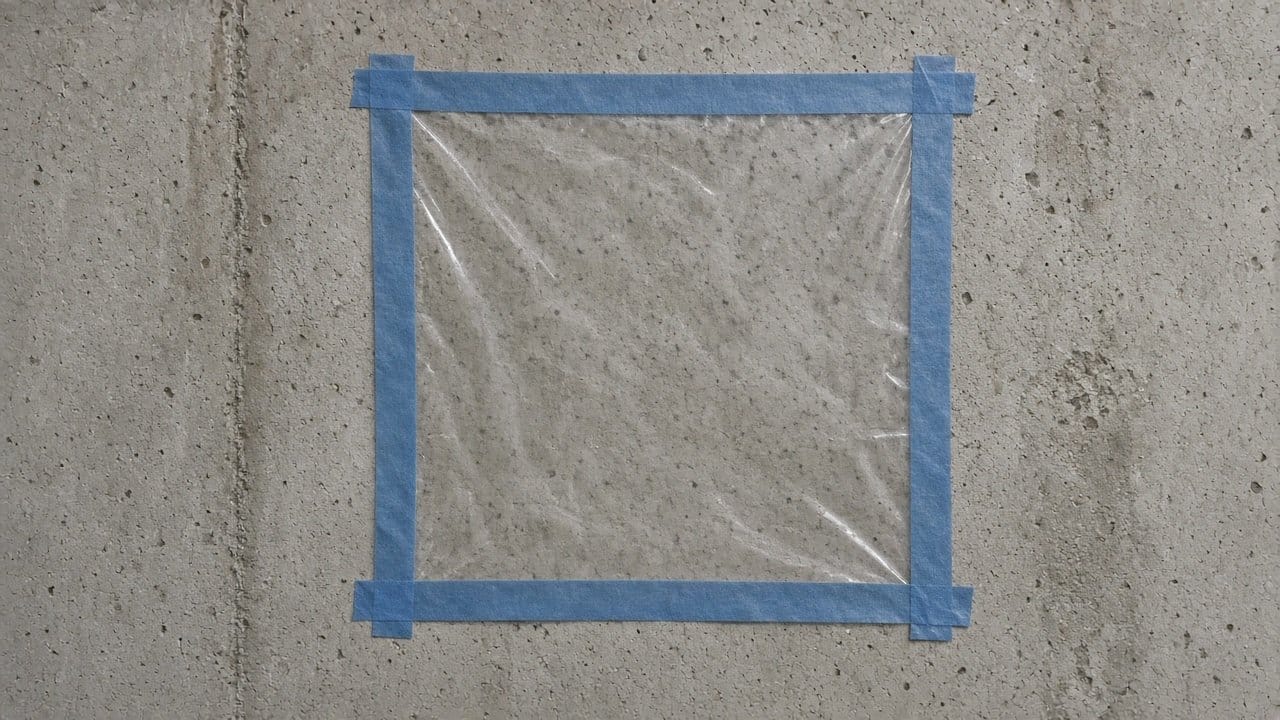
- Cut a square of clear polyethylene sheet about 18 inches (460 mm) on a side.
- Tape it flat to the masonry on all four edges so the perimeter is sealed. Painter's tape is fine.
- Leave it a minimum of 16 hours. Overnight is the easy version.
- Pull it off and look at two things: the underside of the plastic, and the masonry that was under it.
Condensation on the plastic, or visible darkening of the masonry beneath it, indicates excessive moisture. A dry sheet over unchanged masonry is a pass.
This is ASTM D4263, the plastic sheet method for indicating moisture in concrete. It exists specifically because capillary moisture can wreck coating systems that cannot tolerate water at or just under the surface, and it is written to be run before a coating goes on. The standard is at ASTM D4263. One point of precision worth knowing: the 2024 revision reclassified it from a Standard Test Method to a Standard Practice.
What the test cannot tell you
Being straight about the limits is what makes the result useful.
- It reads surface moisture only, roughly the first inch. It says nothing about what is deeper in the wall.
- It will not tell you whether water is entering from below, for instance where there is no vapor retarder.
- Results move with temperature, relative humidity, sunlight, and the composition of the masonry. A test run on a humid August evening and one run in January are not directly comparable.
- An unsealed wall normally has a moisture gradient, drier at the face and wetter behind. A dry face does not mean a dry wall.
For that reason the usual professional practice is to run more than one kind of test before putting something impermeable over concrete, commonly pairing D4263 with ASTM F1869, the calcium chloride moisture vapor emission test. For a basement wall a homeowner is deciding about, D4263 on its own is still worth far more than a guess.
Reading your result
Dry sheet, unchanged masonry. The wall is a candidate for coating. Move on to surface condition and product selection.
Light condensation, or slight darkening. Something is moving through. Run it again in a different season before spending money, and look hard at the exterior: grading that slopes toward the house, a downspout discharging at the foundation, a blocked gutter, a window well holding water. Those are cheap fixes with large effects, and they are worth doing first regardless.
Wet sheet, or water visible on the wall at any point in the year. This is not a paint decision. No coating is a substitute for drainage, and this is the moment to bring in someone who does foundations and water management rather than finishes.
What is that white powder on the wall?
Efflorescence. It is mineral salt left behind on the surface when water moves through masonry and then evaporates. It is useful information rather than a problem in itself: it is physical evidence that water has been traveling through that wall, even if the wall looks dry the day you are standing there.
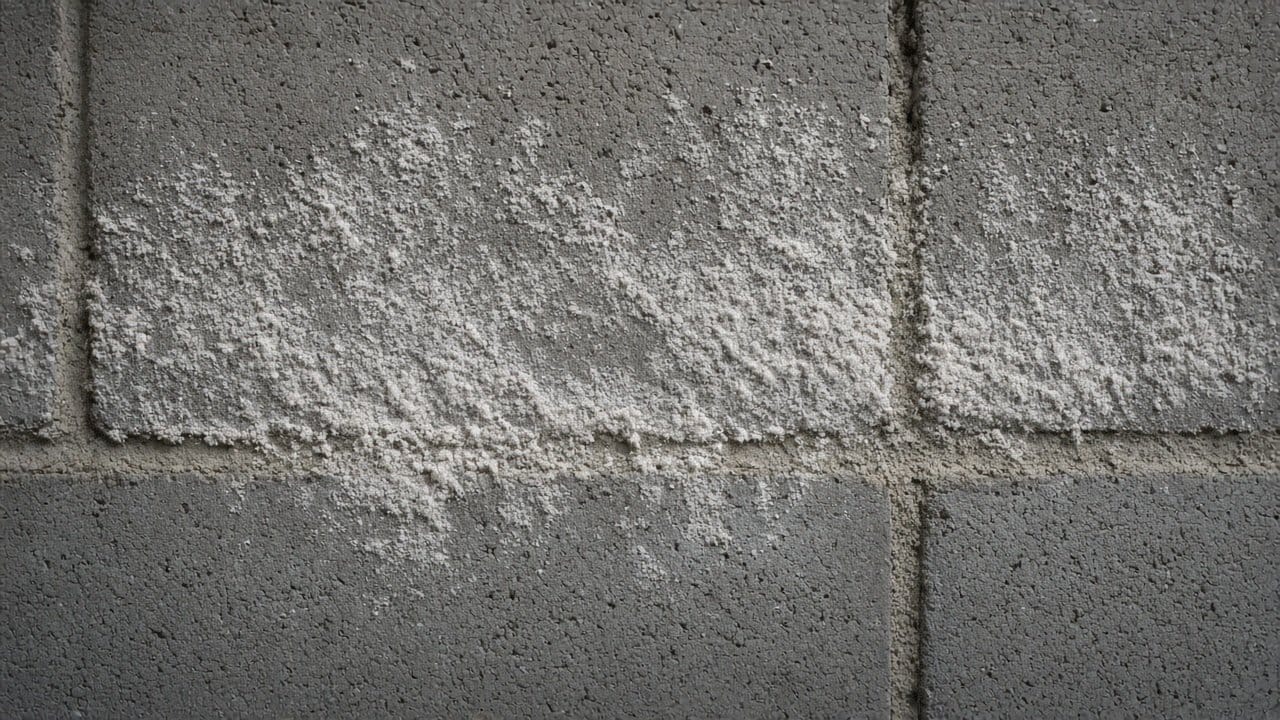
Two practical consequences. First, it tells you where to run the plastic sheet test. Second, it has to come off before any coating goes on, because a coating applied over loose salt is bonded to the salt rather than to the masonry, and it will let go. Removal is mechanical, then the surface has to dry again before you re-test.
What does a psi rating on a waterproofer actually mean?
Masonry waterproofers are rated by resistance to hydrostatic pressure under ASTM D7088, which is a laboratory test on a masonry panel. The number tells you how much water pressure the coating held in that test.
The tiers are not close together:
- DRYLOK Extreme: tested to ASTM D7088 at 15 psi, and exceeds ASTM D6904 for wind-driven rain resistance at 140 mph. Carries a 15-year warranty.
- DRYLOK Floor and Wall: tested at 4 psi, and exceeds D6904 at 98 mph.
Marketing converts 15 psi into "greater than a wall of water 33 feet high," and the arithmetic checks out, since one psi is about 2.31 feet of water head. Read it for what it is: a panel test result, not a guarantee against sustained groundwater pressure on your particular foundation. The manufacturer data is in the DRYLOK Extreme product data sheet and the lower-tier figures on the Floor and Wall product page.
The reason the pre-test matters is right there in the product requirements. These coatings expect bare, uncoated masonry within moisture tolerances. Which is precisely the condition D4263 is written to confirm.
Conditions the coating needs to work at all
Straight from the data sheets, and all of them are regularly ignored:
- Air and surface temperature at 50 degrees Fahrenheit or above.
- Two coats. Not one heavy one.
- Two hours of drying between coats.
- Do not thin. Thinning changes the film build the rating depends on.
- Drying and curing both stretch out in cool, damp, humid conditions, which describes a Massachusetts basement in October fairly well.
That last point is the scheduling reality here. An unheated basement in late fall can sit below 50 degrees at the wall surface even when the air upstairs feels fine, and the wall surface is the number that counts. Measure it rather than assuming. The same surface-temperature discipline applies to exterior work, as in exterior painting temperature requirements in Massachusetts.
When paint is the wrong tool
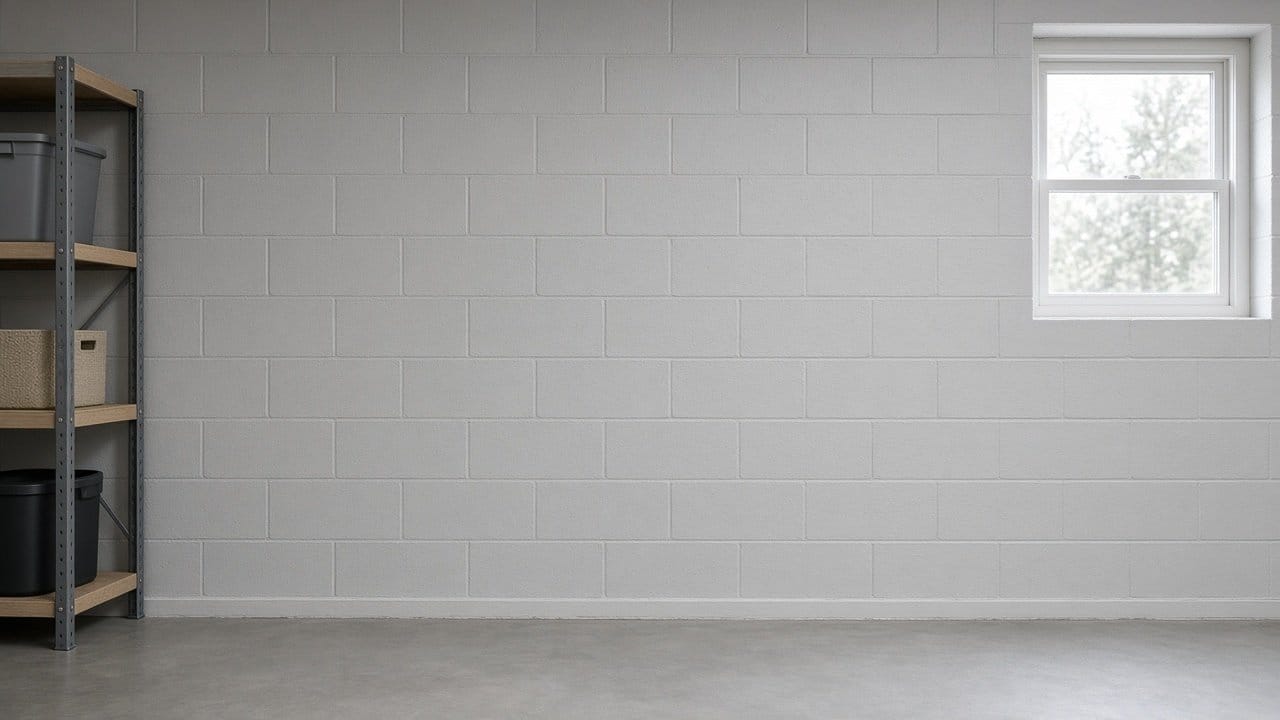
We will turn this work down when the test says to, and it is worth explaining why rather than just declining.
A coating applied to a wall with active water behind it is under pressure from the back. The film has nothing to grip once moisture accumulates at the bond line, and it releases in sheets. You then own the original water problem plus a wall of failing coating that has to be removed before anything else can be done. That is a worse position than the one you started in, and it is expensive to undo.
The right order is boring and it works: fix the water outside, verify with the sheet test across a couple of seasons, prepare the surface, then coat. If there is visible mildew involved, that gets handled properly first rather than painted over, which we cover in painting over mold and mildew in Massachusetts.
The same principle shows up everywhere in this trade. Coatings are finishes, not repairs. It is the same argument we make about wood in repairing or replacing rotted trim before painting, and about walls in plaster wall repair before painting.
What about the floor?
Basement floors are a separate decision with the same logic and a higher bar, because a slab can pass a surface test while still passing vapor from below. That is exactly the case where the calcium chloride test earns its keep, and it is why garage and basement floor coatings fail more often than wall coatings do. The trade-offs there are in garage floor epoxy, DIY kit versus hiring a pro.
Frequently asked questions
How do you tell if a basement wall is too damp to paint?
Tape an 18-inch square of plastic sheet to the wall for at least 16 hours, then check it. Condensation underneath or darkened masonry means the wall is too damp to coat.
Does DRYLOK actually stop water?
It is tested to ASTM D7088 at 15 psi for the Extreme product and 4 psi for the standard one. That is a laboratory panel result on sound, dry, bare masonry, not a substitute for exterior drainage.
What does 15 psi mean on a basement waterproofing paint?
It is the hydrostatic pressure the coating resisted in ASTM D7088 testing, roughly equivalent to 33 feet of water head, since one psi is about 2.31 feet.
Can you paint a basement wall that gets damp only in spring?
Test it in that season, not a dry one. Seasonal dampness usually points to grading, gutters or window wells, and those are worth correcting before any coating goes on.
How cold is too cold to paint a basement wall?
Below 50 degrees Fahrenheit at the air or the surface. Measure the wall itself, since masonry in an unheated Massachusetts basement runs colder than the air around it.
The bottom line
Run the sheet test first. A dry result turns this into a straightforward coating job with a clear product spec. A damp result tells you the money belongs outside the house this year, which is genuinely good news to get before you have spent it. Paint Pro New England has worked on older foundations across Holliston, Medway, Milford, Franklin and the rest of our 18 towns since 2011, fully insured, with a 2-year warranty on our work. Call (774) 217-9567 and we will read the test with you. We serve Medway and the surrounding towns, and handle interior masonry like brick and stone fireplaces on the same principles.
Dave Griffiths
Dave Griffiths is the owner of Paint Pro New England, a professional painting company serving MetroWest Boston since 2011. With 15+ years of interior and exterior painting experience across the region, he leads every project with thorough prep, premium Benjamin Moore and Sherwin-Williams paints, and a 2-year warranty.

