



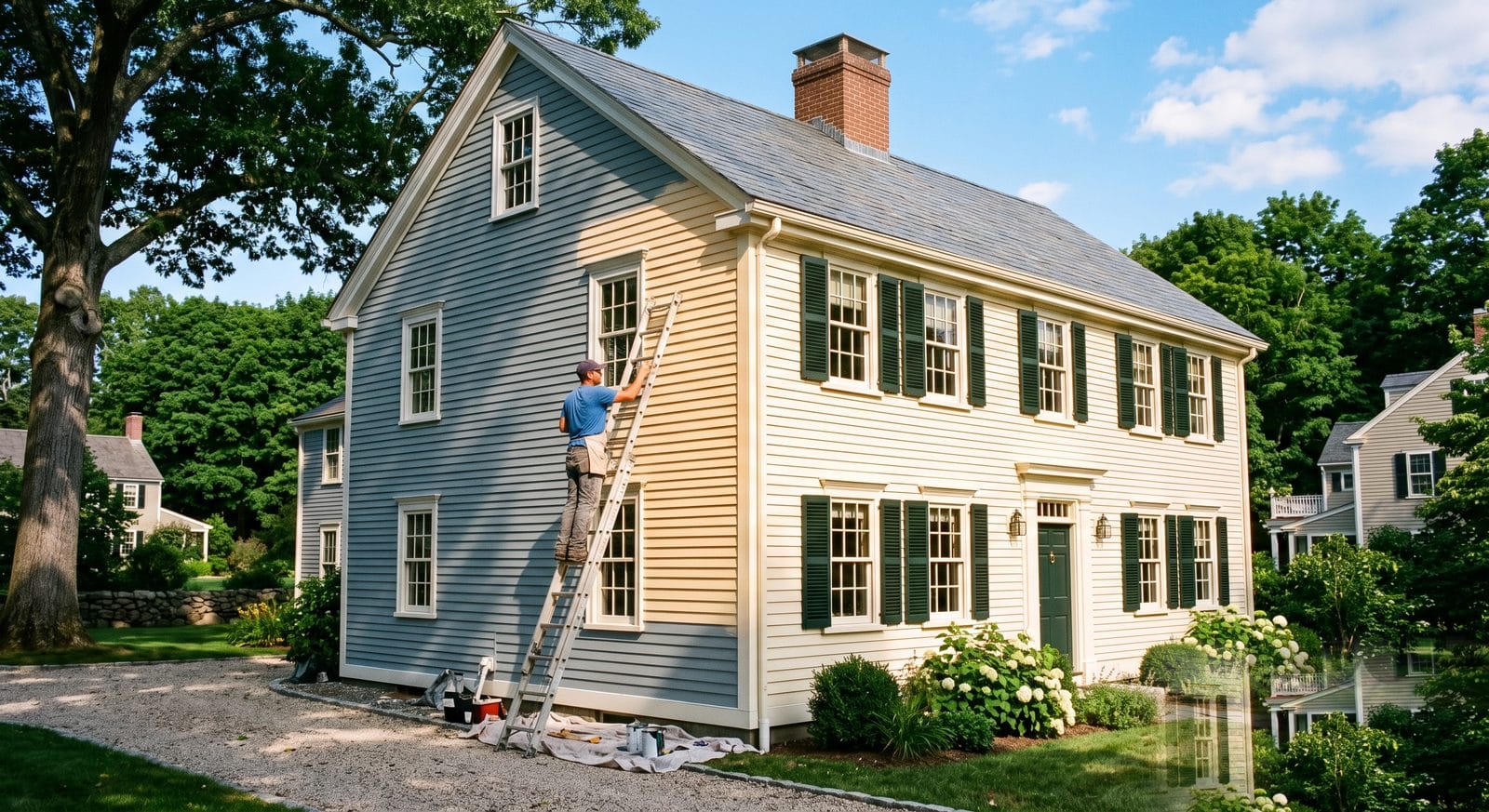
TL;DR: Everyone knows it can be too cold to paint — far fewer people realize it can be too hot. Most exterior paints want a surface between roughly 50°F and 90°F, and in direct July sun your siding can reach 120–140°F, well past the limit. When a coat goes on a surface that hot it skins over and dries before it can flow out and bond, which causes lap marks, blisters, and early peeling. The fix isn't to skip summer — it's smart scheduling: a good MetroWest crew follows the shade around the house, starts early, and pauses in the peak afternoon heat. A typical whole-home exterior repaint runs $4,500–$12,000 here depending on size, prep, and stories.
Planning exterior work this summer? Call or text Dave for a free, no-pressure estimate — (774) 217-9567. Exterior calendars fill up fast once the warm weather hits, so the sooner we walk your home the better your scheduling options.
Ask a homeowner what stops an exterior paint job and they'll almost always say rain or cold. They're not wrong — but after fifteen years painting homes across MetroWest Boston, the question we field most on a blazing July afternoon is the one nobody expects: is it actually too hot to paint today? Sometimes the honest answer is yes. Here's what heat does to a fresh coat, where the real ceiling is, and how a good crew works around it so your paint job still lasts.
Can it really be too hot to paint outside?
Yes. Paint isn't just a color you spread on a wall — it's a chemistry that needs the right conditions to cure into a tough, flexible film. Manufacturers formulate exterior paint to be applied when both the air and the surface sit roughly between 50°F and 90°F. Push past the top of that range and the same problems that plague cold-weather painting show up from the other direction. We've written about the cold-weather temperature minimums before; this is the hot-weather flip side of the exact same rule.
And here's the part most people miss: it's not the temperature on your phone that matters. It's the temperature of the wall.
Why does heat ruin a fresh coat of paint?
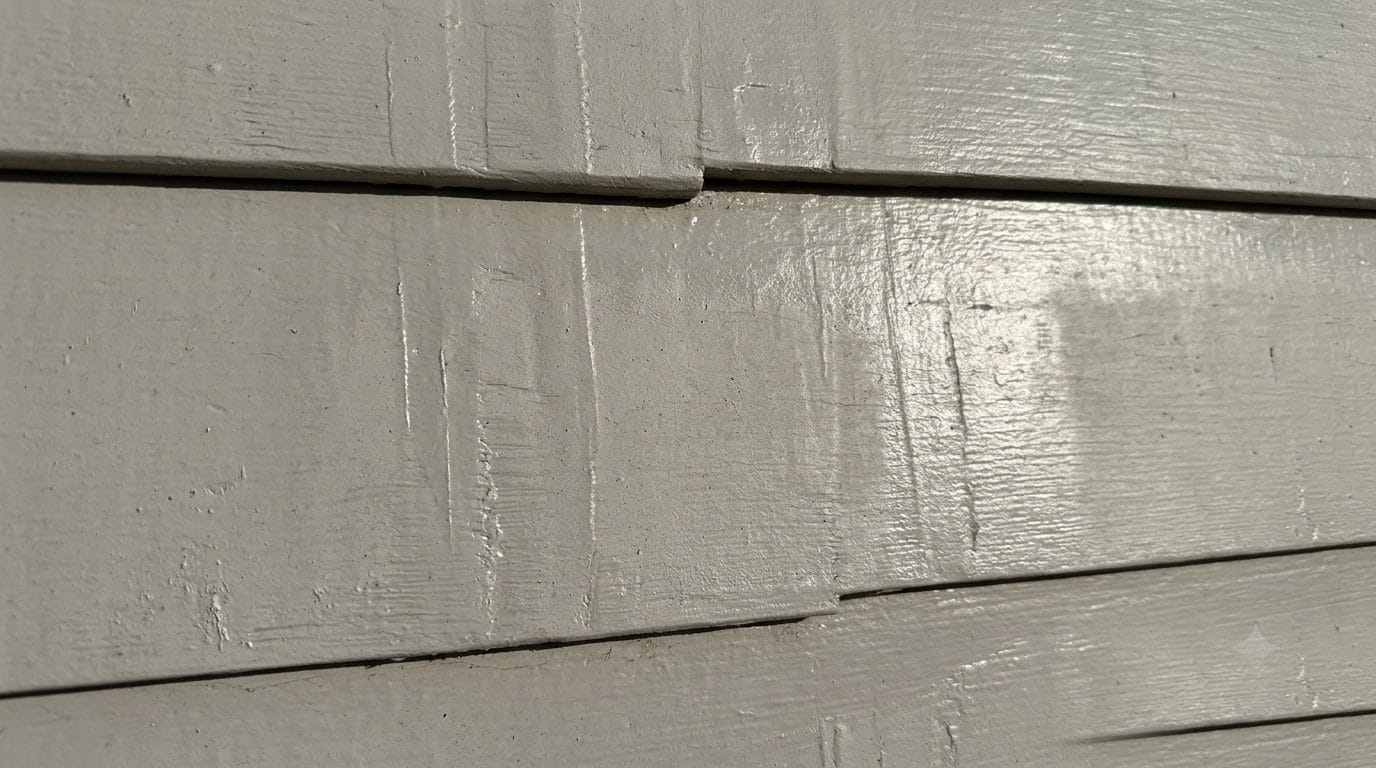
Latex paint cures as the water evaporates and the acrylic binder coalesces into a film. That process is supposed to happen at a measured pace. Crank up the heat and it happens too fast, and three things go wrong:
- Lap marks. A clean finish depends on keeping a “wet edge” — each pass blending into the last before it dries. In high heat the paint sets up in seconds, so the overlaps never blend and you're left with visible streaks and lines across the siding.
- Blistering and bubbling. When the surface skins over while the layer underneath is still wet, trapped moisture and solvent push up into blisters. Those bubbles become tomorrow's peeling and flaking.
- Weak adhesion. Paint that dries before it can wet out and grip the surface never bonds properly. It looks fine on day one and starts failing within a season or two — the opposite of the 10-plus years a proper coat should give you.
In other words, a job rushed onto a too-hot wall can look perfect the afternoon it's finished and still be a callback waiting to happen.
What temperature is too hot for exterior paint?
The working rule we use: don't paint when the surface temperature is above about 90°F. The catch is that surface temperature and air temperature are not the same number. A clapboard wall, a dark front door, or a metal railing sitting in direct summer sun can run 30 to 50 degrees hotter than the air around it. So an 85°F day — which sounds fine — can mean a south-facing wall is well over 120°F and completely off-limits.
This is why the pros carry an infrared thermometer and why the manufacturers spell it out: both Benjamin Moore and Sherwin-Williams publish minimum and maximum application temperatures on their product data sheets, measured at the surface. A simple homeowner test: if the siding is too hot to rest your palm against comfortably, it's too hot to paint.
Does direct sun matter as much as the temperature?
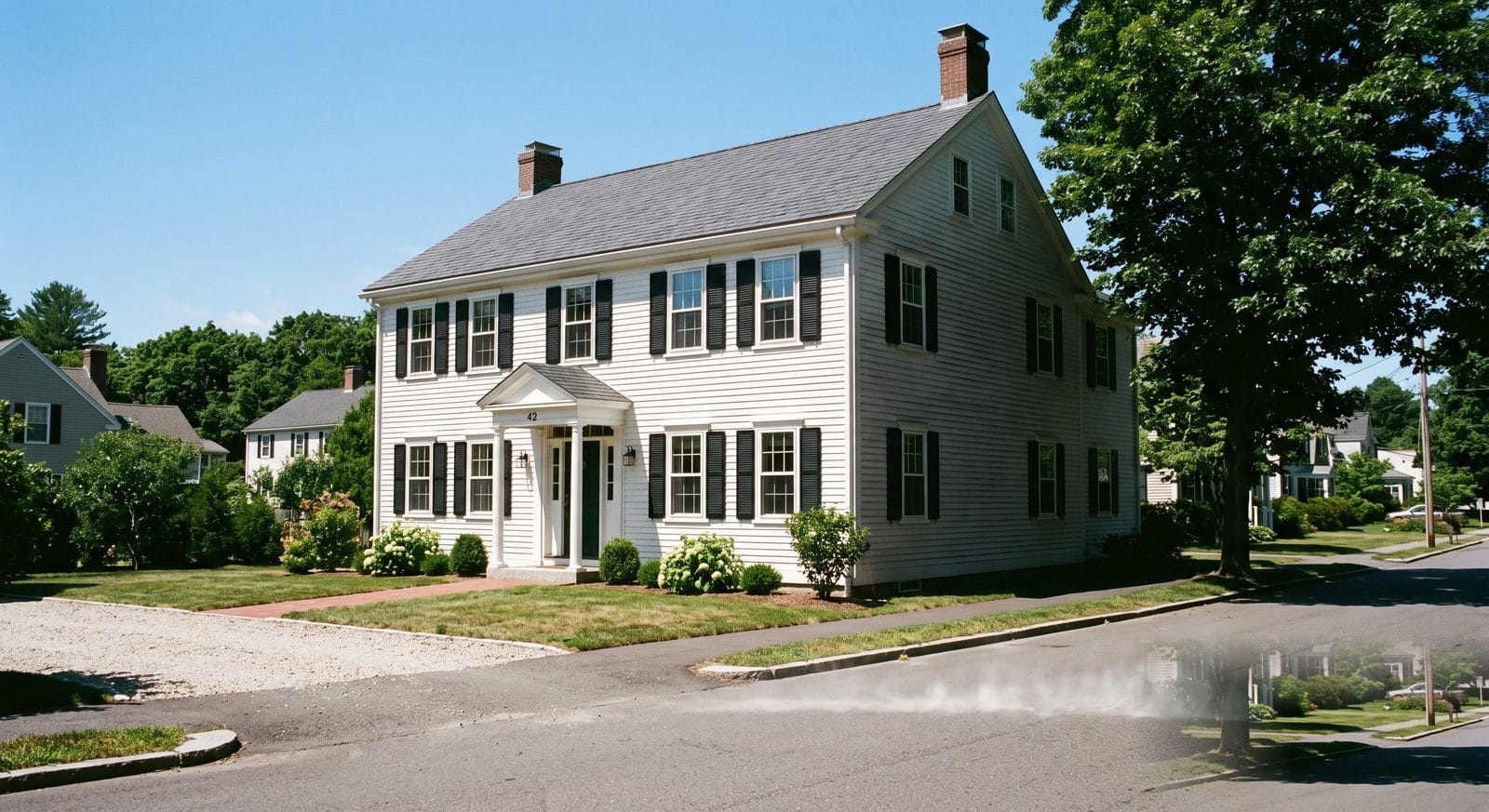
Just as much — sometimes more. Direct sun is what drives surface temperature far above the air temperature, and it also bakes the coat from above the instant it's applied. Painting a wall in full midday sun is the single fastest way to get lap marks, even on a day that isn't especially hot. That's why you'll never see a careful crew chasing the sun around your house. They do the opposite: they chase the shade.
Humidity is the other half of the summer equation, and it cuts the other way — too much moisture in the air slows drying and keeps coats tacky. We dig into that side in our guide to painting in humid Massachusetts weather. The ideal summer painting window threads the needle between the two: warm and dry, but out of the direct, baking sun.
How do professional painters work in summer heat?
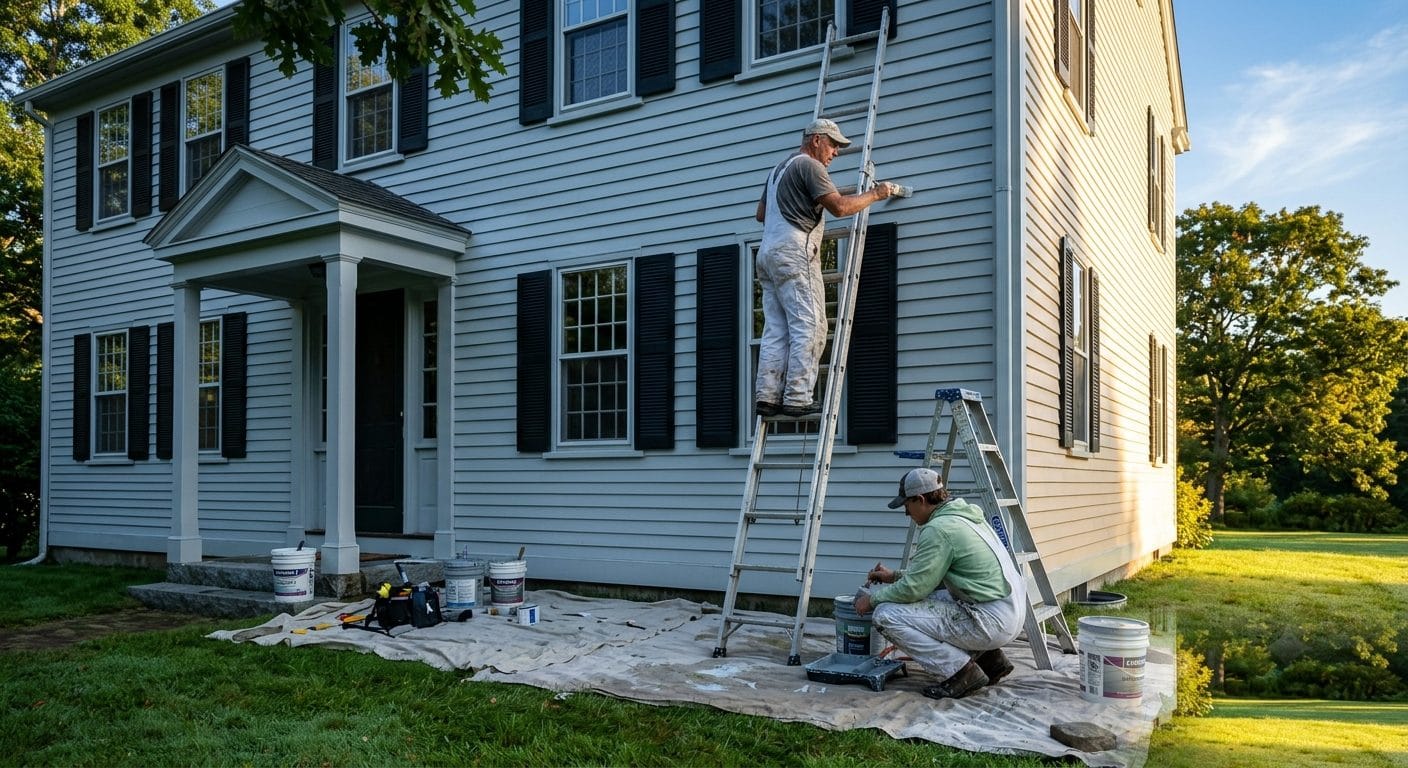
Heat is a scheduling problem, and scheduling is something a seasoned crew solves every summer day. The playbook:
- Start early. The coolest, calmest hours of a summer day are the first ones. We get the most surface area done before the sun climbs.
- Begin on the shaded side — usually the north or west face in the morning — and never on a wall that's already in full sun.
- Follow the shade around the house. As the sun moves, so do we, always painting a wall after it falls into shade rather than while it bakes.
- Pause through the midday peak. When surface temperatures top out in the early afternoon, that's the time for prep, sanding, masking, and cleanup — work that doesn't put wet paint on a scorching wall.
- Keep the paint cool and the edge wet, working from smaller amounts so nothing thickens in the sun.
- Stop before the dew. The last coat needs to dry before evening, when the temperature drops and dew can form on the cooling surface.
None of this is exotic — it's just the difference between a crew that treats your house like a deadline and one that treats it like a finish that has to last. It's the same reason prep work is 80% of a great paint job: the visible result depends on everything you don't see.
So is summer still a good time to paint my house?
Absolutely. Summer is the heart of exterior season in MetroWest — long days, warm surfaces, and the dry stretches that paint needs. The point isn't to fear the heat; it's to respect it and plan around it. A few genuinely brutal days (90°F-plus, full sun, high humidity) are best spent on prep or pushed a day, and the rest of the season is wide open for great work. If you're weighing when to book, our guide to the best time to paint your exterior in Massachusetts lays out the full calendar, and there's a real case for booking early before the season fills up.
How much does exterior painting cost in MetroWest?
Exterior pricing is driven by the size of the home, the number of stories, the siding material, and — above all — the condition and prep the surface needs. Realistic ranges for MetroWest Boston homes:
- An average single-family exterior repaint typically runs $4,500–$12,000, with most MetroWest homes landing in the middle of that band.
- Smaller homes, ranches, and trim-only refreshes can come in under $4,500.
- Large, detailed, or multi-story Colonials and Victorians with heavy prep or peeling to address run toward the top of the range and beyond.
- Prep-heavy jobs — scraping, sanding, priming bare wood, carpentry repairs — add cost, but skipping that prep is exactly what turns a 10-year job into a 2-year one.
A written, itemized estimate that spells out the prep, the number of coats, the products, and which surfaces are included is the only fair way to compare painters. For the full picture, see our Massachusetts house painting cost guide.
The bottom line
It can be too hot to paint — but in MetroWest that almost never means losing a day, just moving with the shade and the clock. The crews that get this right are the ones whose work still looks sharp a decade later, because a finish that's applied in the right conditions is a finish that bonds, flexes, and holds through New England's seasons. Heat doesn't have to cost you a good paint job. Rushing past it does.
Paint Pro New England has painted home exteriors across Holliston, Medway, Hopkinton, Sherborn, Dover, Wellesley, Framingham, Natick, Needham, and the rest of MetroWest Boston for 15 years. EPA Lead-Safe certified, fully insured, 2-year warranty, 5.0 stars across 60+ reviews. For a free, itemized estimate, call (774) 217-9567.
Dave Griffiths
Dave Griffiths is the owner of Paint Pro New England, a professional painting company serving MetroWest Boston since 2011. With 15+ years of interior and exterior painting experience across the region, he leads every project with thorough prep, premium Benjamin Moore and Sherwin-Williams paints, and a 2-year warranty.

