



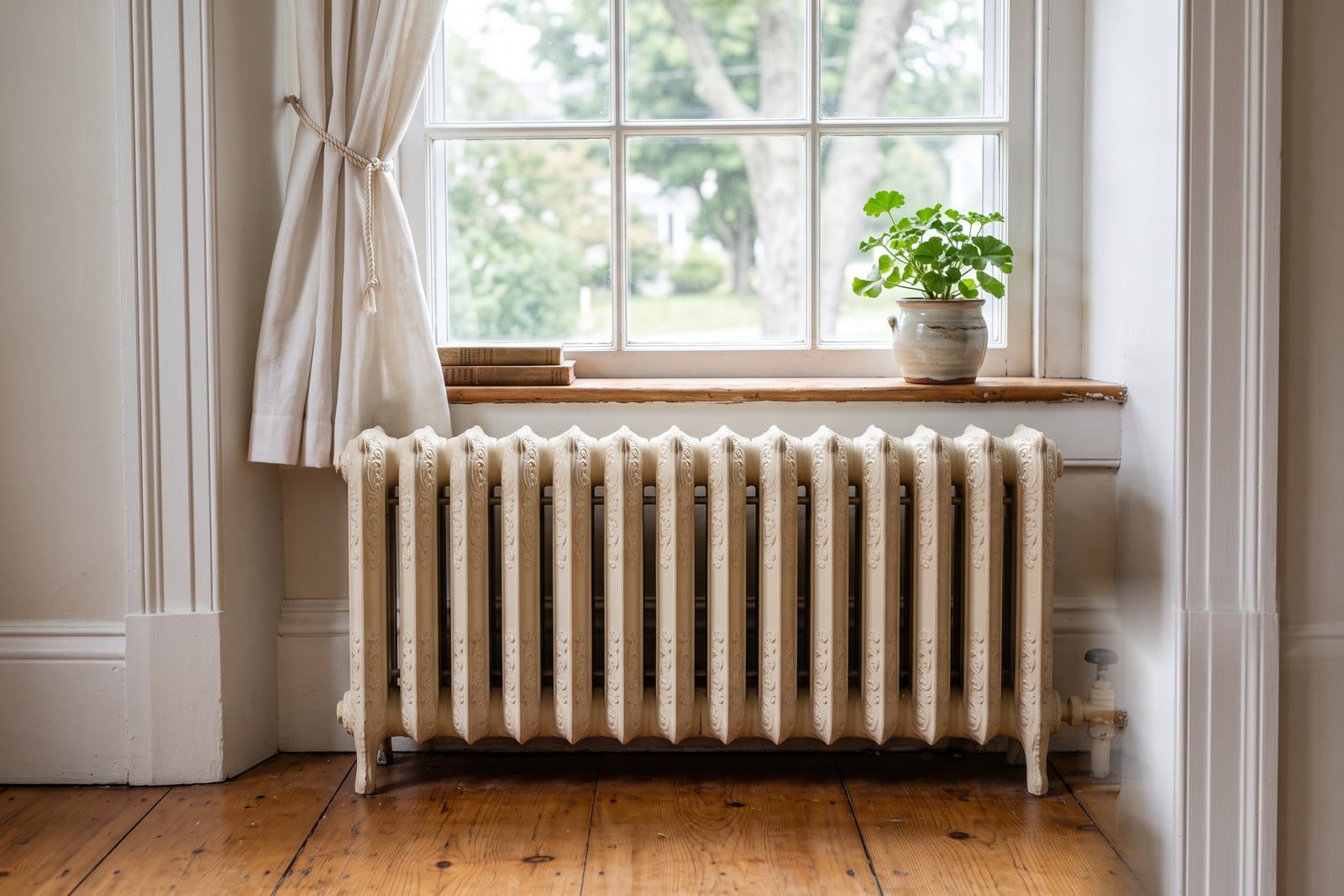
TL;DR: You can absolutely repaint the cast-iron radiators in an older New England home, and done right it makes them look intentional instead of an eyesore. Three things decide the result: test for lead first (old radiators often wear lead paint, so never sand blindly), prep the bare metal properly, and use an oil-based / direct-to-metal paint — water-based paint flash-rusts on bare cast iron. Painting doesn't hurt heat output unless it's caked on too thick. A straightforward professional repaint typically runs about $150–$400 per radiator, far less than replacing a unit.
Have tired radiators in an antique MetroWest home? Call or text Dave — (774) 217-9567. We'll test for lead, prep them right, and make them look like part of the room again.
MetroWest is full of homes with original cast-iron radiators, and most of them are hiding under decades of chipped, drippy paint. People assume they're stuck with them — they're not. After fifteen years working on this area's older homes, here's how to bring a radiator back the right way, and the one safety step you can't skip.
Does painting a cast-iron radiator reduce its heat?
Barely, if you do it right — and this is the worry that stops most people. The truth: a couple of thin coats have a negligible effect on how a radiator heats a room. What actually hurts output is caked-on paint — radiators buried under many thick layers over the years do lose efficiency, which is one reason a clean repaint (or a full strip) often heats better than what you started with. Color is essentially a non-issue for a home radiator's warmth, despite the old myth. The rule is simple: thin, even coats — not a thick smother.
Why do you have to test for lead first?
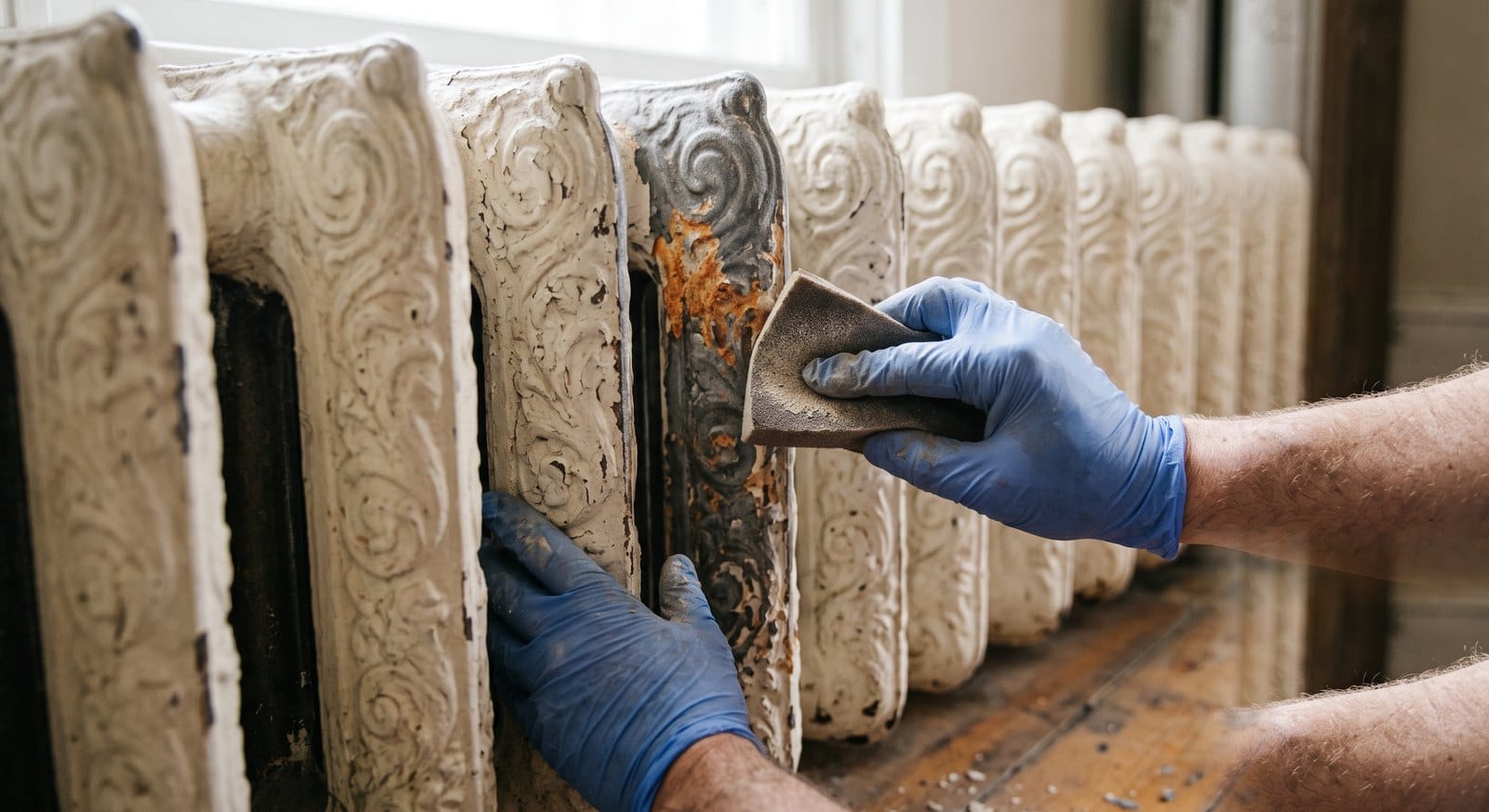
Because sanding old paint without checking is the single most dangerous mistake here. Radiators in pre-1978 homes — which describes most of MetroWest's older housing — frequently carry lead paint, and dry-sanding or scraping it throws lead dust into the air your family breathes. Test first, and if lead is present, the work has to follow lead-safe practices, which is exactly what a certified pro is trained for. We cover the whole picture in our Massachusetts lead paint homeowner's guide, and it's the same care that antique homes deserve throughout — the kind of detail that matters in a historic district home.
How do you prep a cast-iron radiator for paint?
Prep is where a radiator job is won or lost — the metal, the heat cycling, and the rust all work against a lazy coat. The professional sequence:
- Let it cool completely. Never paint a warm radiator; heat cycling stresses fresh paint and causes chipping.
- Clean and degrease every surface, including between the columns where dust and grime hide.
- Address rust — after confirming it's lead-safe to do so, remove loose rust and flaking paint with steel wool or 180–220-grit sanding, then stabilize any remaining rust with a rust converter.
- Prime the bare metal with a metal primer so the topcoat has something to grip and rust can't creep back underneath.
It's the same philosophy that governs every job we do — prep work is 80% of a great paint job, and on cast iron that's not an exaggeration.
What paint should you use on a radiator?
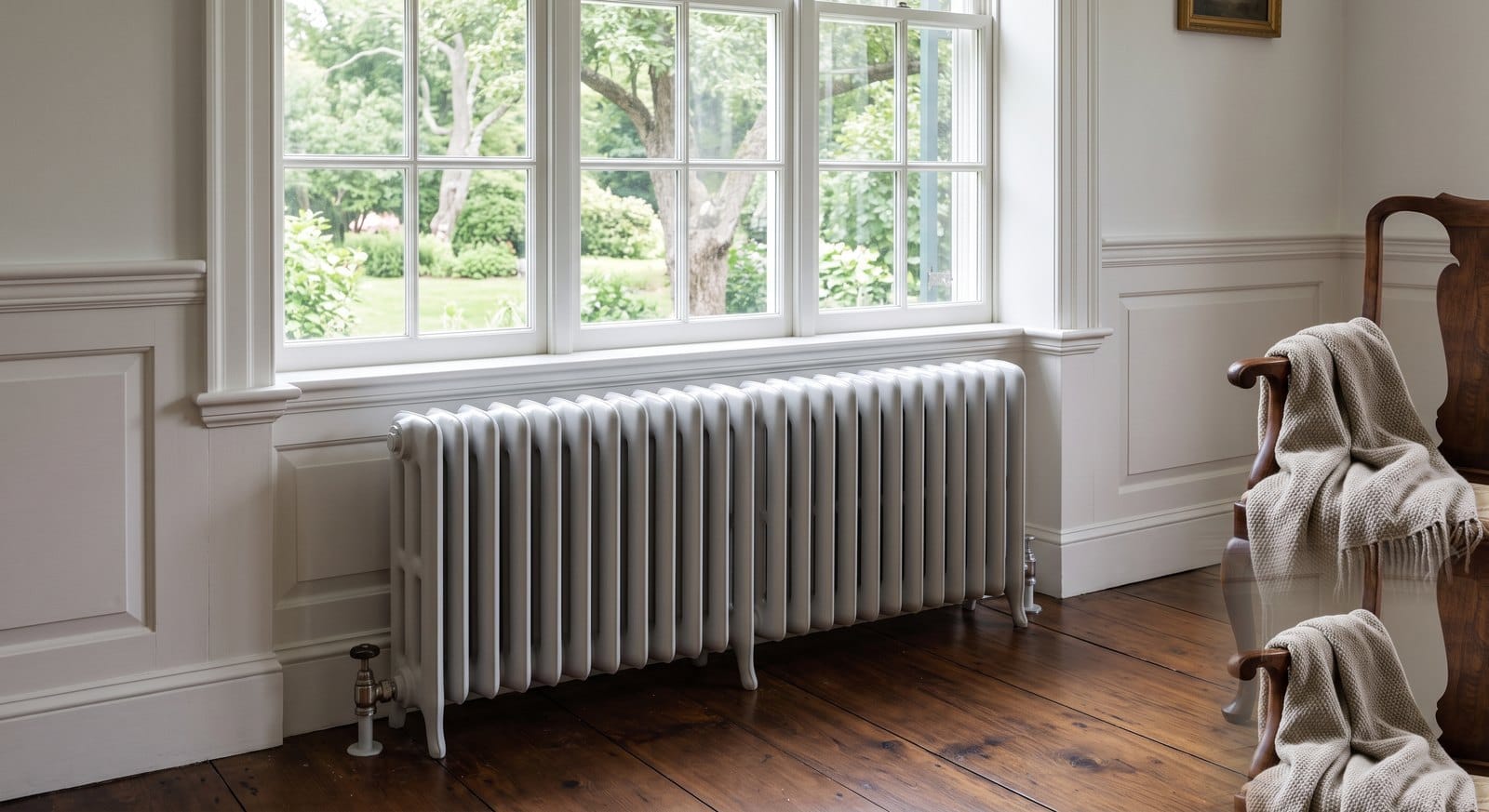
Here's the detail that trips up most DIY radiator jobs: use an oil-based or direct-to-metal (DTM) paint, not a standard water-based wall paint. Water-based paint applied to bare cast iron flash-rusts with surprising speed. A quality DTM alkyd enamel bonds directly to ferrous metal and includes rust-inhibiting pigment, which is exactly what an old radiator needs. Specialty “high-heat” paint isn't strictly necessary — a home steam or hot-water radiator doesn't get anywhere near industrial temperatures — but the paint must be the right type, or it will smell and fail. Then:
- Apply thin coats, and lightly sand between them for adhesion.
- Let it cure fully before turning the heat back on — generally 3 to 7 days for oil-based paint — then bring the system up gradually so the new finish isn't shocked.
If you love a color-matched, integrated look, radiators can be finished to disappear into the trim — the same eye we bring to trim and crown moulding in period homes.
How much does it cost to paint a radiator?
For a straightforward professional repaint, plan on roughly $150–$400 per radiator depending on size, the amount of detail, and how much rust and old paint have to be dealt with. Radiators with heavy, widespread rust are sometimes best sent out for professional dip-stripping — a chemical bath that reaches every column and detail — which costs more but returns the unit to bare, pristine metal. Either way it's a fraction of replacing a working cast-iron radiator.
The bottom line
Original cast-iron radiators are a feature of New England homes, not a flaw — and a proper repaint proves it. Test for lead first, prep the metal patiently, use the right oil-based or DTM paint in thin coats, and let it cure before the heat comes on. Do that and a tired radiator becomes a quiet, handsome part of the room that heats just as well as before. If yours are older and you're unsure about lead, that's exactly the kind of job worth handing to a certified pro.
Paint Pro New England specializes in the details of older homes — radiators, trim, plaster, and period finishes — across Holliston, Medway, Hopkinton, Sherborn, Dover, Wellesley, Natick, and the rest of MetroWest Boston. EPA Lead-Safe certified, fully insured, 2-year warranty, 5.0 stars across 60+ reviews. For a free assessment and itemized estimate, call (774) 217-9567.
Dave Griffiths
Dave Griffiths is the owner of Paint Pro New England, a professional painting company serving MetroWest Boston since 2011. With 15+ years of interior and exterior painting experience across the region, he leads every project with thorough prep, premium Benjamin Moore and Sherwin-Williams paints, and a 2-year warranty.

