



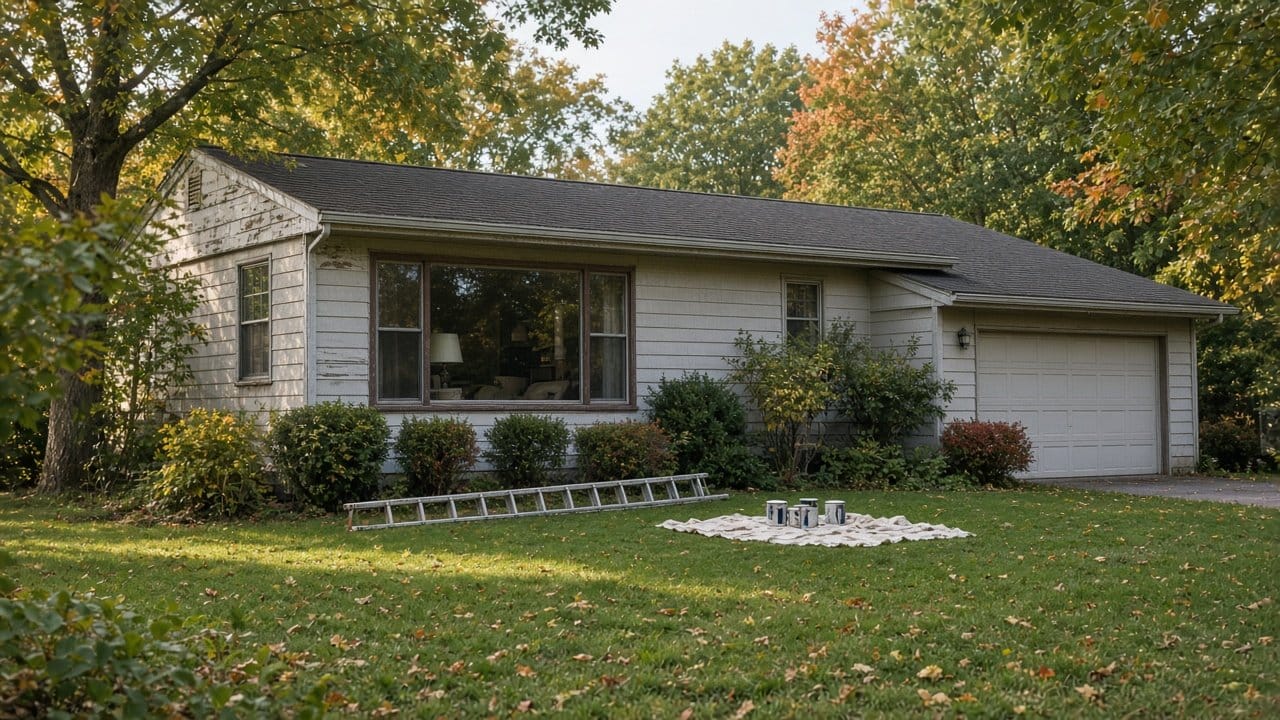
TL;DR: About 1 in 6 Bellingham homes (16.6 percent) were built between 1970 and 1979, and the town's median year built is 1973 (ACS 2020-2024). That decade straddles the 1978 line in the federal lead rule, so the first job before repainting a 1970s Bellingham house is finding its exact build year. If it was built before 1978, paid work that disturbs more than 6 square feet of paint in a room, or 20 square feet outside, falls under lead-safe work rules.
Not sure which side of 1978 your house falls on? Call or text Dave at (774) 217-9567. We will look at the house and tell you what the prep plan has to include.
A 1970s house does not look old, and that is exactly why the question gets skipped. A Bellingham split-level or ranch from 1974 reads as a modern house next to an 1880s farmhouse, yet for lead purposes it sits in the same category. A house finished in 1979 does not. Same street, same style, different rules for the person holding the scraper.
How many Bellingham homes were built in the 1970s?
About one in six. The American Community Survey counts 6,691 housing units in Bellingham, and 16.6 percent of them fall in the 1970 to 1979 bracket, with a town-wide median year built of 1973 (margin of plus or minus 3 years).
The rest of the picture explains why that decade matters so much here:
- 61.9 percent of Bellingham homes were built before 1980.
- 45.3 percent were built before 1970.
- 12.0 percent were built in 1939 or earlier.
The gap between the first two numbers is the 1970s building wave. You can read the full year-built table for the town on Census Reporter, which mirrors the ACS 2020-2024 5-year estimates. One limit to keep in mind: the census groups 1970 through 1979 into a single bracket, so it cannot tell you how many of those homes came before 1978. Only your own house's records can.
Why does the 1978 build year matter when you repaint?
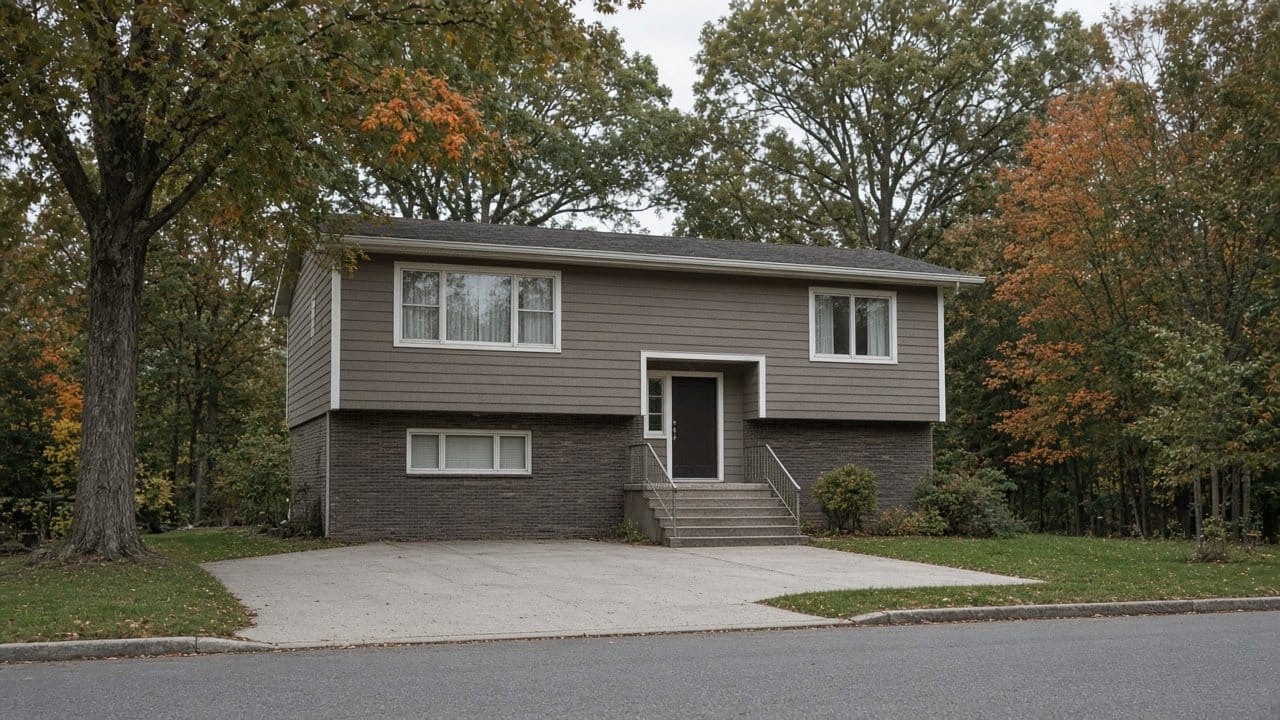
Because 1978 is where the federal lead rule draws its line. The EPA Renovation, Repair and Painting (RRP) rule covers "anyone paid to perform work that disturbs painted surfaces in homes, childcare facilities and preschools built before 1978," according to the EPA's RRP program page. Those requirements have been fully in effect since April 22, 2010.
The same EPA page lists Massachusetts among the states authorized to run their own RRP program, so here the program is state-administered rather than run by EPA directly. The 1978 line is the same either way.
For a 1970s house, that makes the build year a working fact, not trivia. Check your deed, closing documents or property record card before the estimate, not after the first wall is scraped. If the house turns out to be from 1978 or later, the RRP rule does not apply to it. If it is earlier, it does, whether or not anyone has tested the paint.
Massachusetts also has its own lead law, which is triggered when a child under six lives in a pre-1978 home. We cover that law, testing options and deleading in our Massachusetts lead paint guide for homeowners, so this post sticks to what changes on a repaint.
How much paint can be disturbed before the rules apply?
The federal rule exempts small "minor repair and maintenance" jobs. Under 40 CFR 745.83, that means work that disturbs:
- 6 square feet or less of painted surface per room on interior work.
- 20 square feet or less of painted surface on exterior work.
Three details trip people up. The exemption is lost if any prohibited practice is used, or if the work involves window replacement or demolition. Jobs in the same room within the same 30 days count as one job, so you cannot split a project into small pieces to stay under the line. And a full repaint almost never qualifies: scraping and sanding one side of a typical ranch disturbs far more than 20 square feet.
What do lead-safe work practices look like on a repaint?
In practical terms, lead-safe work means containing the dust, keeping certain tools off old paint, and cleaning up every day. The work practice section of the rule, 40 CFR 745.85, spells out the specifics a homeowner will notice:
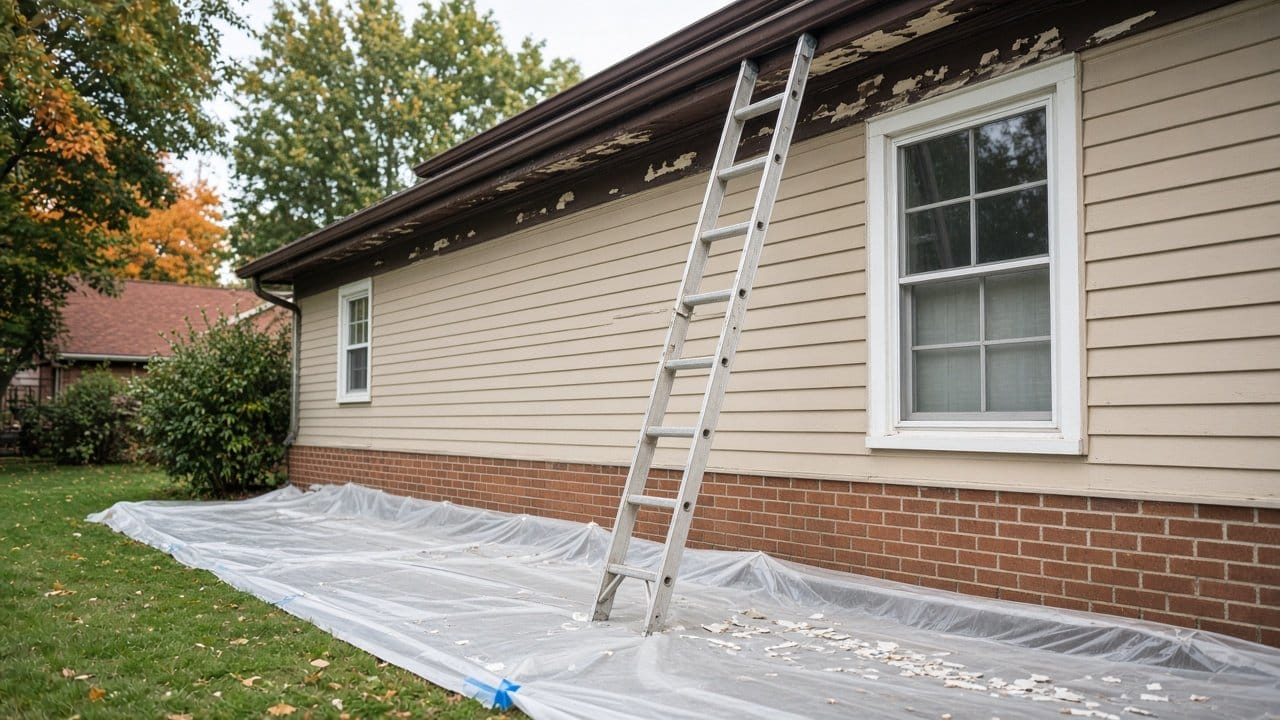
- Ground cover 10 feet out. Outside, plastic sheeting or other disposable material covers the ground 10 feet beyond the surfaces being worked, or farther if debris would travel farther.
- Doors and windows closed within 20 feet. Nearby openings are generally closed while exterior work is under way.
- No torching. Open-flame burning of painted surfaces is prohibited.
- No open power sanding. Sanders, grinders and similar machines are allowed on painted surfaces only with a shroud and a HEPA vacuum attachment collecting dust at the source.
- Heat guns under 1,100°F. Above that temperature they are not allowed.
- Signs and daily cleanup. The work area is marked off for occupants, and cleaned and verified at the end.
Inside, the EPA's guidance for do-it-yourselfers describes the same idea at room scale: close and seal doors to the work area, turn off forced-air heating and air conditioning, and wipe surfaces with wet disposable cloths until the cloths come up clean.
If you are hiring, the simplest test of a painter is to ask how they will handle these steps on your house, and whether their firm holds the certification the rule requires. A clear, specific answer is a good sign.
What else changes in the prep on a 1970s house?
Once the lead question is settled, a 1970s Bellingham house is a straightforward repaint with a few habits of its era:
- Layers you cannot see. Fifty years of repaints often means an oil-based coat somewhere under the latex, especially on trim and doors. New paint over old oil without the right primer is a common cause of peeling, which we explain in painting over oil-based paint in older homes.
- Original wood windows and doors. These are the surfaces that rub and wear, so they deserve the most care on a pre-1978 house. Our notes on painting wood window sashes cover the technique.
- Prep time drives the schedule. Containment and cleanup add time on each side of the house. We build that into the estimate up front rather than discovering it on day two, and the reasoning is in why prep is most of a good paint job.
For what a Bellingham job looks like from start to finish, see exterior painting in Bellingham and interior painting in Bellingham, or the town overview at painters in Bellingham, MA.
Frequently asked questions
Does a house built in 1979 need lead-safe painting?
The federal RRP rule covers homes built before 1978, so a house built in 1978 or 1979 falls outside it. Lead could still be present from older materials, but the rule's work practice requirements do not apply by date.
How many homes in Bellingham, MA were built in the 1970s?
About one in six Bellingham homes, or 16.6 percent of the town's 6,691 housing units, were built between 1970 and 1979, according to the ACS 2020-2024 5-year estimates. The town's median year built is 1973.
Can I touch up paint on a pre-1978 house without following the lead rules?
Small jobs that disturb 6 square feet or less per room inside, or 20 square feet or less outside, are exempt from the federal work practice rule. The exemption is lost if prohibited practices or window replacement are involved.
Can a painter use a heat gun or power sander on old paint?
Under the federal rule, heat guns are allowed only below 1,100 degrees Fahrenheit, and power sanders only with a shroud and HEPA vacuum attachment. Open-flame burning of painted surfaces is prohibited outright.
Where do I find out what year my Bellingham house was built?
Your deed, closing documents or the town property record card will usually list the year your Bellingham house was built, and it is worth confirming before any painting estimate. A 1970s build year decides whether the 1978 lead rule applies.
The bottom line
About a sixth of Bellingham's homes come from the 1970s, and that decade splits right at 1978. Find the build year first. If the house predates 1978, expect containment, restricted tools and daily cleanup on any repaint larger than a touch-up, and expect the estimate to account for them. If it is 1978 or later, it is a normal repaint with normal prep.
Paint Pro New England has painted homes in Bellingham, Franklin, Milford, Medway and the rest of our 18 towns since 2011, with Benjamin Moore and Sherwin-Williams products, full insurance, a 2-year warranty and 5.0 stars across 62+ reviews. If you want a second opinion on a 1970s house, call (774) 217-9567.
Dave Griffiths
Dave Griffiths is the owner of Paint Pro New England, a professional painting company serving MetroWest Boston since 2011. With 15+ years of interior and exterior painting experience across the region, he leads every project with thorough prep, premium Benjamin Moore and Sherwin-Williams paints, and a 2-year warranty.

