



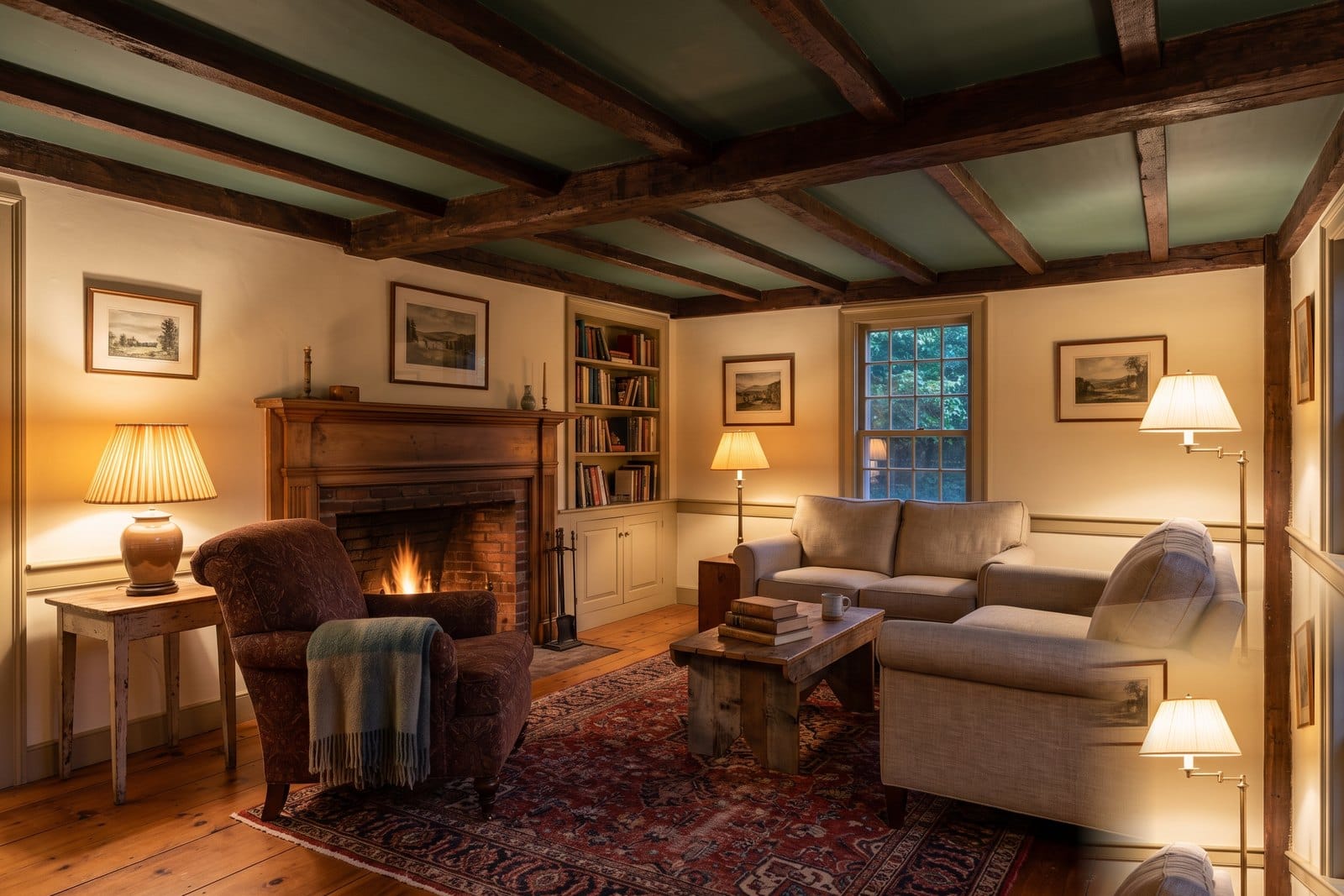
TL;DR: The biggest interior trend of 2026 is looking up. Designers are treating the ceiling as the “fifth wall” — painting it a color, wrapping it in a limewash or plaster texture, or matching it to the walls for a soft, enveloping room — and calling the plain white ceiling and the old accent wall the real things dating your home. It's a natural fit for MetroWest Boston's older homes, where ceilings often carry beams, medallions, or fine plaster worth showing off. Matte, mineral finishes also cut glare and soften light. Expect roughly $250–$800 to paint a standard ceiling in color, more for textured or high-detail work. The one caution: a bold ceiling shows every flaw, so prep is everything.
Curious how a painted ceiling would feel in your room? Call or text Dave for a free consult — (774) 217-9567. We'll help you test a ceiling color in your own light before we ever pick up a roller.
For as long as most of us can remember, the ceiling had exactly one job: be white and disappear. In 2026, designers decided that was a waste of the biggest uninterrupted surface in the room. The result is the “fifth wall” movement — and after fifteen years painting MetroWest homes, we think it's one of the most rewarding, and most under-used, ways to transform a room.
What is the “fifth wall”?
The “fifth wall” is simply the ceiling, treated as a genuine design surface instead of an afterthought. Rather than defaulting to flat white, designers are giving ceilings color, texture, and detail so a room feels layered and complete overhead as well as around. The related twist: the single accent wall — that one bold wall we all painted a decade ago — is now considered one of the quickest ways to date a room. The advice for 2026 is to look up (and down) instead.
Why is everyone painting ceilings in 2026?
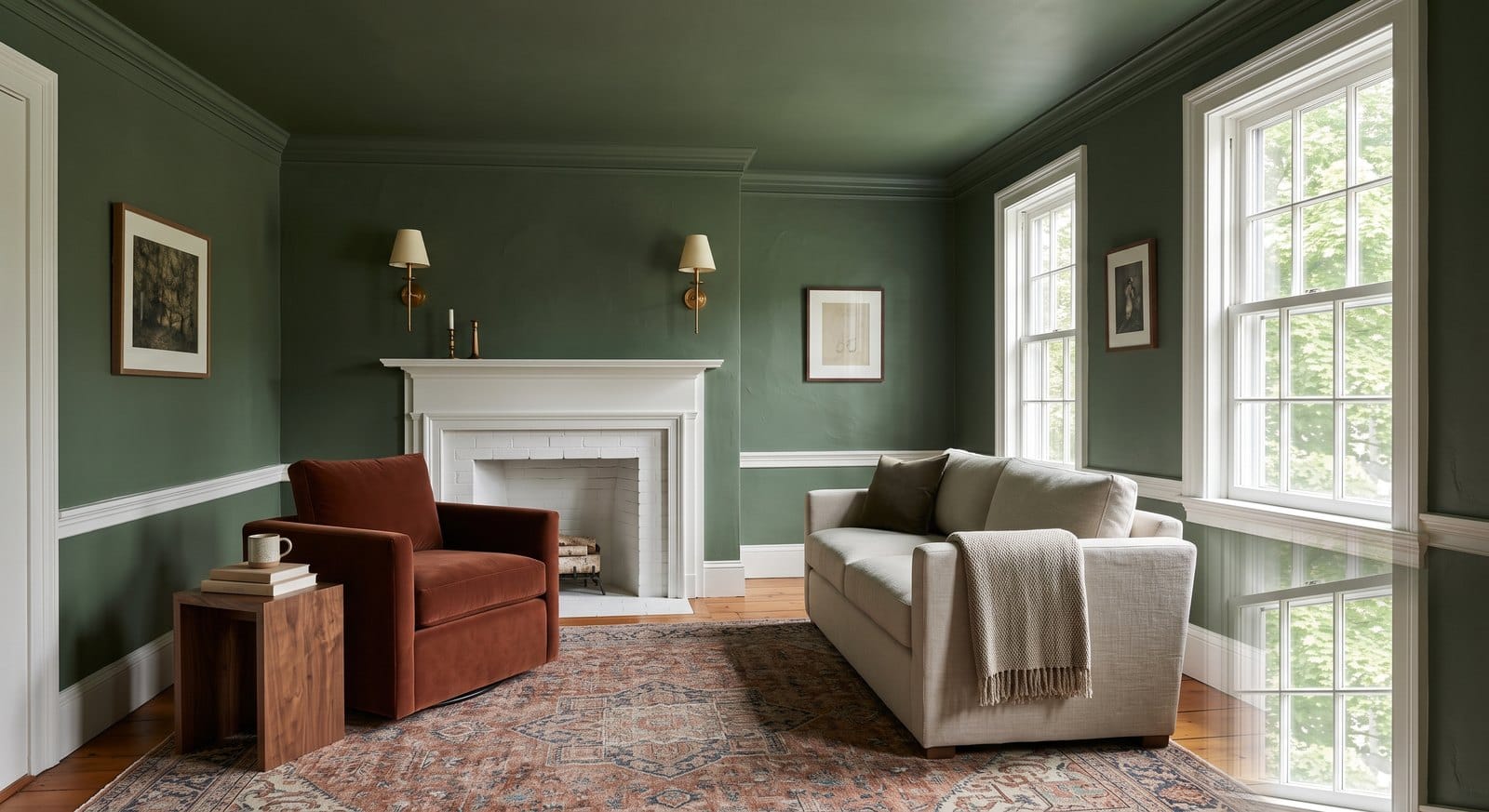
Part of it is the broader move away from sterile minimalism toward rooms that feel warm and enveloping. A colored or textured ceiling adds depth and atmosphere you simply can't get from white. A few of the looks driving it:
- Tonal “hue drenching” — walls, trim, and ceiling in one color, which blurs the room's edges and can make a small space feel larger and calmer.
- A contrasting or deeper ceiling color — a soft blush, moody blue, or warm clay overhead that draws the eye up.
- Textured mineral finishes — limewash or Venetian plaster on the ceiling, which catch light softly and add gentle movement.
- Architectural detail picked out in paint — beams, coffers, or tongue-and-groove emphasized rather than hidden.
There's a practical bonus, too: matte, mineral ceiling finishes significantly reduce glare and soften reflected light, giving a room a calmer, easier-on-the-eyes feel.
Why does the fifth wall suit MetroWest's older homes?
New construction tends to have flat, featureless ceilings. MetroWest's Colonials, Victorians, and antique capes often have the opposite — plaster medallions, exposed or boxed beams, tray and coffered ceilings, and fine old plaster with real character. All of that is an invitation to the fifth-wall treatment. Carrying wall color up onto the ceiling in a trim-heavy old room does the same quieting magic that color drenching does on the walls, and a soft limewash finish overhead is stunning on antique plaster. Hairline cracks and hollow fields have to be made sound first; that is plaster repair before painting. If you've been living under a dated popcorn ceiling, smoothing it out first opens the door to all of this.
How do you paint a ceiling without it going wrong?
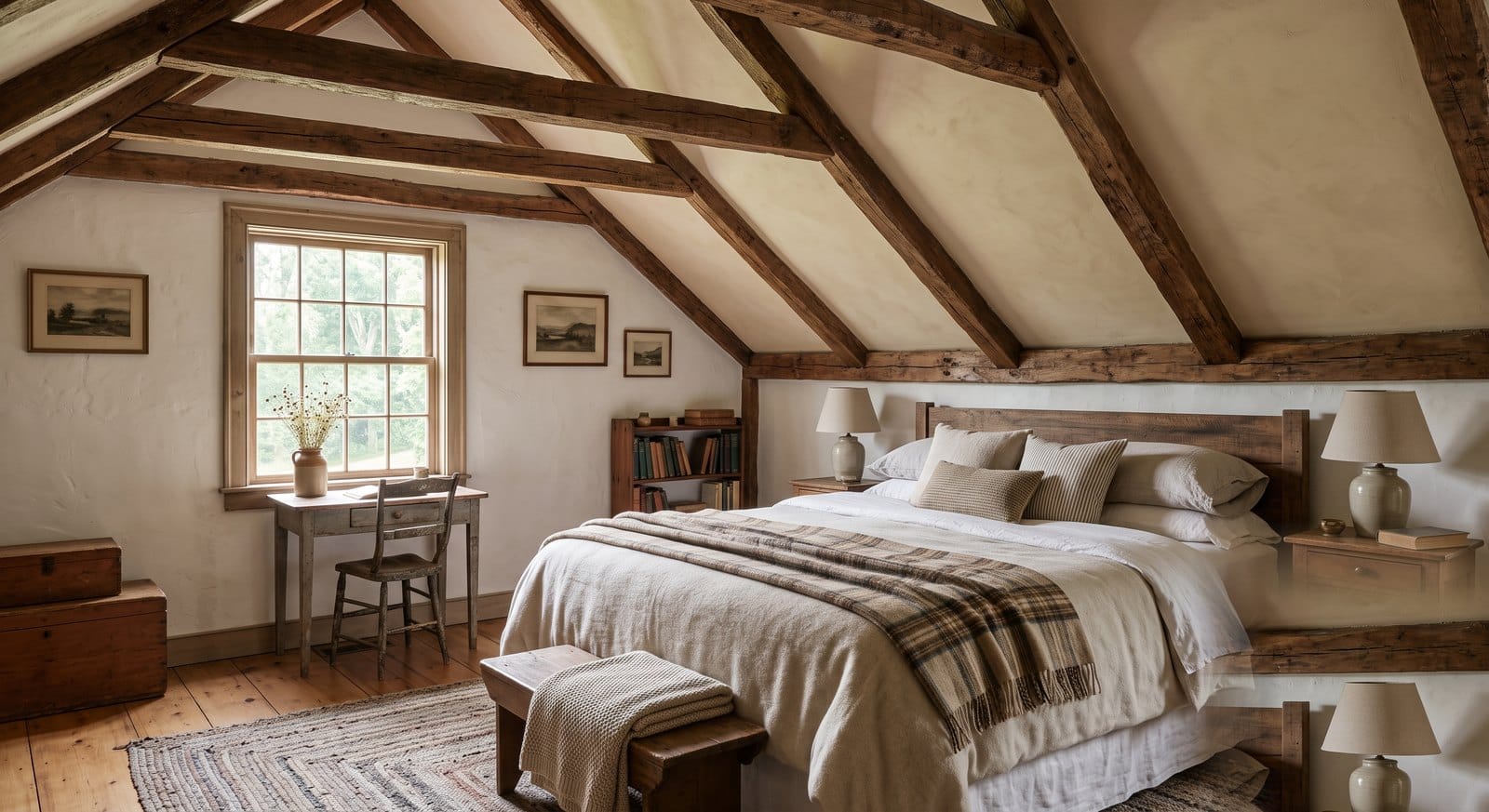
A ceiling is the most unforgiving surface in the house because it's lit from the side and nothing hides an imperfection. A few things that separate a beautiful fifth wall from a blotchy one:
- Prep obsessively. Fill, sand, and smooth first — a color ceiling reveals every ridge and patch a white one forgives.
- Prime, especially for deep colors, so coverage is even and you're not fighting flashing.
- Choose the sheen deliberately. Matte is the go-to for hiding minor imperfection and killing glare; our guide to choosing the right paint finish covers when to step up.
- Mind the light. A color that's lovely on the wall can go heavy overhead — sample it on the ceiling and look morning and night.
- Respect the trim relationship. How the ceiling meets crown moulding matters; our trim and crown moulding guide pairs naturally here.
How much does a fifth-wall ceiling cost in MetroWest?
A straightforward ceiling painted in color typically runs about $250–$800 for a standard room, depending on size, height, and how much patching it needs. Textured finishes like limewash or plaster, high ceilings, or intricate beam-and-coffer work sit above that because it's slower, more detailed hand-work. If you're doing the whole room, folding the ceiling into a full repaint is the most cost-effective way to go — see our Massachusetts painting cost guide for the bigger picture.
The bottom line
The fifth wall is the rare trend that's both fresh and genuinely at home in the houses it's landing in. MetroWest's older homes have ceilings worth looking at — beams, plaster, medallions, real detail — and a considered color or soft texture overhead turns an ordinary room into one that feels finished and enveloping. Start with one room you want to feel special: a bedroom, a study, a dining room. Look up, and see what you've been missing.
Paint Pro New England has painted ceilings, beams, plaster, and full color-drenched rooms across Holliston, Medway, Hopkinton, Sherborn, Dover, Wellesley, Natick, and the rest of MetroWest Boston for 15 years. EPA Lead-Safe certified, fully insured, 2-year warranty, 5.0 stars across 60+ reviews. For a free consult and itemized estimate, call (774) 217-9567.
Dave Griffiths
Dave Griffiths is the owner of Paint Pro New England, a professional painting company serving MetroWest Boston since 2011. With 15+ years of interior and exterior painting experience across the region, he leads every project with thorough prep, premium Benjamin Moore and Sherwin-Williams paints, and a 2-year warranty.

