



TL;DR: Not by the statute's own words. Under the lead paint law, Massachusetts General Laws chapter 111, section 197(f) says repainting with non-lead paint "without containment or abatement" does not "constitute compliance." In a pre-1978 rental where a child under six lives, deleading or interim control is its own process, finished with a letter from a lead inspector or risk assessor.
Turning over an older rental this winter? Call or text Dave at (774) 217-9567. We'll walk the unit, look at the paperwork you already have and plan the painting around it.
Winter is when a lot of MetroWest landlords repaint. A tenant moves out, the unit sits empty for a few weeks, and fresh paint makes it rentable again. In a building put up before 1978, that turnover brings a question we hear often: if the walls and trim get a new coat, is the lead handled? This post puts the painting job and the deleading process side by side, in the words of the statute and the regulation.
If you own and live in an older home, start with our guide to lead paint for Massachusetts homeowners. If you're selling, our post on lead paint disclosure when selling a house in Massachusetts covers the buyer's side. This one stays with the rental unit.
This is general information, not legal advice. For the state's guidance on hiring and working with contractors, see the Mass.gov Home Improvement Contractor program page, and talk to a lawyer or the Department of Public Health about your own building.
The short version
The lead paint law Massachusetts relies on is chapter 111 of the General Laws, sections 189A through 199B, with the details in the regulation 105 CMR 460. Section 197 ties the owner's duty to "a child under six years of age" living in the premises, and section 189A defines premises as property "constructed prior to nineteen hundred and seventy-eight." The statute says a new coat of non-lead paint on its own isn't compliance. Compliance is shown by a letter: a Letter of Full Compliance or a Letter of Interim Control. Painting comes after either one.
A checklist for a pre-1978 rental before anyone opens a can of paint:
- Find the year built. The assessor's card or deed usually has it. Under the lead paint law, Massachusetts draws the line at 1978 in section 189A.
- Pull the lead paperwork. Look for a lead inspection report, a Letter of Full Compliance, a Letter of Interim Control or an abatement plan for the unit and the common areas.
- Check the dates on any interim control letter. The statute and the regulation both set it at one year from issue.
- Ask who does what. Deleading, inspection and painting are separate jobs, and the statute names a licensed contractor for the deleading work.
- Plan the order. Inspection and any deleading or interim control first, then reinspection, then painting.
- Tell your painter what was covered or encapsulated. Those surfaces get gentle prep.
- Keep the paper trail. Section 197A lists the documents a prospective tenant receives, so every letter and report belongs in the unit's file.
What does the lead paint law, Massachusetts General Laws chapter 111, section 197, say?
It says that when a young child lives in a pre-1978 home with dangerous levels of lead, the owner deals with that paint through abatement or containment. Here's subsection (a) of MGL c.111 s.197, word for word:
"Whenever a child under six years of age resides in any premises in which any paint, plaster or other accessible structural material contains dangerous levels of lead, the owner shall abate or contain said paint, plaster or other accessible structural materials in accordance with the requirements of subsection (b) or (c)."
The same subsection gives a buyer a timeframe: "the new owner shall have ninety days to contain or abate said paint, plaster or other accessible structural material." That's 90 days, written out in words in the statute.
The regulation defines the two key words. From 105 CMR 460.020:
- "Abatement means the removal of paint, plaster or other accessible structural material containing dangerous levels of lead or the replacement of the architectural fixture or element containing paint or other accessible structural material containing dangerous levels of lead."
- "Containment means the encapsulation, covering or enclosing by means authorized by the Director, of paint, plaster or other accessible structural material containing dangerous levels of lead."
Neither definition says repainting. Under the lead paint law, Massachusetts lists removal, replacement, encapsulation, covering and enclosing, and that gap is what this post is about.
Does painting count as deleading in a pre-1978 rental?
The statute answers this directly. In the lead paint law, Massachusetts lawmakers put it in subsection (f) of section 197:
"Under no circumstances shall repainting with a non-lead based paint, without containment or abatement of the offending paint, plaster or other accessible structural material, constitute compliance with either subsection (b) or (c)."
That sentence is why we treat a paint job and a deleading job as two different projects, even in the same empty apartment in the same week. Deleading is removal, replacement or a containment method, checked by an inspector who issues a letter.
Where the two jobs meet is the order of work. Paint on trim that's about to be stripped or replaced is wasted money. Paint over a sill that was just encapsulated is fine, as long as the prep doesn't sand through the encapsulant. So the useful question isn't "paint or delead," it's "what happens first."
What is a Letter of Full Compliance, and how does painting affect it?
It's the letter a lead inspector issues once a unit meets the full standard. Section 197(c) lets an owner go straight there: "Owners may proceed either directly, or at the end of the process of interim control," to abate or contain "in order to achieve full compliance."
The regulation's definition is the part every painter in these units should read. 105 CMR 460.020 begins: "Letter of Full Compliance means a written statement, signed, dated and issued by a lead inspector certifying that as long as there continues to be no loose lead-based paint, other coating, plaster or putty and as long as coverings forming an effective barrier over lead-based paint, other coating, plaster or putty remain in place," the unit and common areas are found to be in full compliance.
Those two "as long as" conditions are about upkeep, and upkeep is where painting comes back in. When we prep a unit that has a compliance letter, we ask for the inspection report so we know which surfaces were encapsulated or covered, and we keep the prep on them light: clean, scuff by hand, prime and paint, with no aggressive sanding.
The everyday name is "Letter of Compliance," the phrase section 197A uses. The regulation's formal term is Letter of Full Compliance.
What is interim control, and how long does it last?
It's a set of temporary measures for urgent hazards, used until full compliance under the lead paint law. Massachusetts regulation 105 CMR 460 says: "Interim Controls means all the temporary measures required by the risk assessment to be taken for a particular dwelling unit or residential premises to address urgent lead hazards until full compliance is achieved."
Section 197(b) of the statute says those urgent hazards "include, but are not limited to, paint containing a dangerous level of lead that is chipping, peeling or flaking, and highly lead-contaminated dust."
The letter has a clock on it. Section 197(b) says a letter of interim control "shall expire at the end of one year from the date of its issuance" and "may be renewed once, for an additional one-year period," then caps it: "In no case shall premises be subject to an emergency lead management plan and letter of interim control for longer than two years." 105 CMR 460.105 repeats it: "The Letter of Interim Control shall state a date of expiration that shall be one year from the date of issue."
So under the lead paint law, Massachusetts sets the numbers at 1 year, renewable once, 2 years at most. During that time, 105 CMR 460.105 says the owner "shall take reasonable care to ensure that all required interim control measures remain in place and are effective."
For a painter, the difference from a compliance letter is the date. If the letter runs out next spring, more lead work may be coming, so we ask before scheduling finish coats on trim or windows that could be stripped or replaced soon after.
Who does deleading work and lead inspection in Massachusetts?
The lead paint law, Massachusetts General Laws chapter 111, names a licensed contractor for deleading, with a narrow route for owners. Section 197(d) says containment or abatement "shall be conducted only by a contractor licensed by the department of labor standards," except that an owner or the owner's agent, acting under the director's regulations, "need not be licensed to engage in such activities." It adds that an unlicensed person may do the work "only after successful completion of a course of instruction approved by the commissioner," and that "all containment or abatement activities by an unlicensed person shall be inspected and approved after completion by a licensed inspector."
The letters come from inspectors. The statute refers to "a letter of interim control issued by a licensed inspector." The regulation names the roles more narrowly: a Letter of Full Compliance is "issued by a lead inspector," and a Letter of Interim Control is "a written statement, signed, dated and issued by a risk assessor." If you're booking a lead inspection, say which letter you're after so the right professional comes out.
None of those roles is the painter. Under the lead paint law, Massachusetts gives the inspection, the risk assessment and the letter to licensed people, so it's fair to ask anyone working in your unit which license they hold.
When was lead paint banned in Massachusetts?
The ban behind the 1978 date was federal. The EPA's page on sources of lead says: "In 1978, the federal government banned the sale of lead-based paint for use in homes and childcare facilities." Under the lead paint law, Massachusetts uses the same year as its cutoff: section 189A defines premises as "any residential premises, dwelling unit or residential property constructed prior to nineteen hundred and seventy-eight."
The state's Lead Law is older. In Massachusetts Rental Housing Association v. Lead Poisoning Control Director (Appeals Court, 2000), the court wrote: "By St.1971, c. 1081, the Legislature enacted a statutory scheme, now appearing as G.L. c. 111, §§ 189A through 199B (Lead Law), to prevent lead poisoning and to control its sources."
The EPA gives the reason age matters on that same page: "Approximately three-quarters of the homes in the United States built before 1978 still contain some lead-based paint."
What does Massachusetts lead paint disclosure look like for a rental?
For a rental, section 197A of the lead paint law, Massachusetts General Laws chapter 111, lists what the owner hands a prospective tenant. Under MGL c.111 s.197A, subsection (d)(2), the owner "shall provide a prospective tenant who is about to enter such an agreement to rent premises with:" items that include "a copy of the most recent lead paint inspection report, letter of interim control, letter of compliance or abatement plan applicable to the dwelling unit and to the common areas or exterior surfaces of the residential premises;" and "two copies of a statement certifying that the prospective tenant received all of the above materials."
A paint job isn't on that list. Under the lead paint law, Massachusetts tenants get reports and letters, which is why the paperwork drives a turnover. The seller's side of Massachusetts lead paint disclosure is in our post on disclosure when selling.
Where does the EPA RRP rule fit in a pre-1978 rental?
It's a federal rule about how renovation, repair and painting work is done. The EPA's Renovation, Repair and Painting Program rules page says the rule covers work in "homes, child care facilities, and kindergartens built before 1978," and requires "renovation, repair, and painting firms to be EPA-certified."
So in an older rental there are two sets of rules in view: the lead paint law, Massachusetts' own deleading process and its letters, and the federal RRP rule on how contractors work around old paint. Ask any contractor you hire about both.
How do we paint a pre-1978 rental unit during a winter turnover?
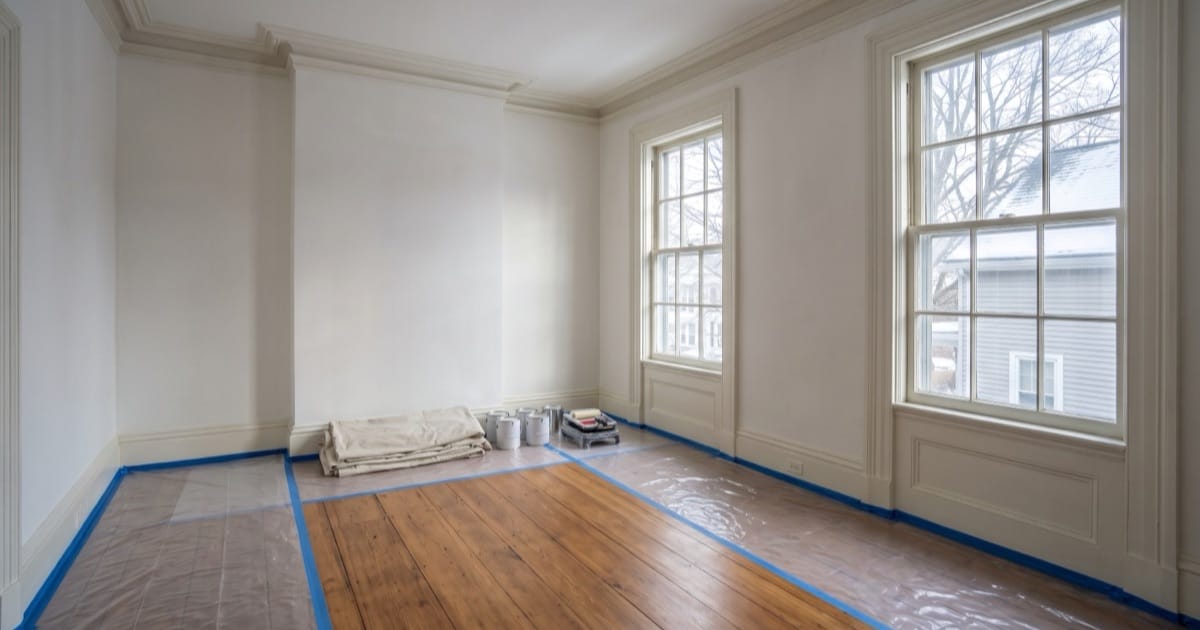
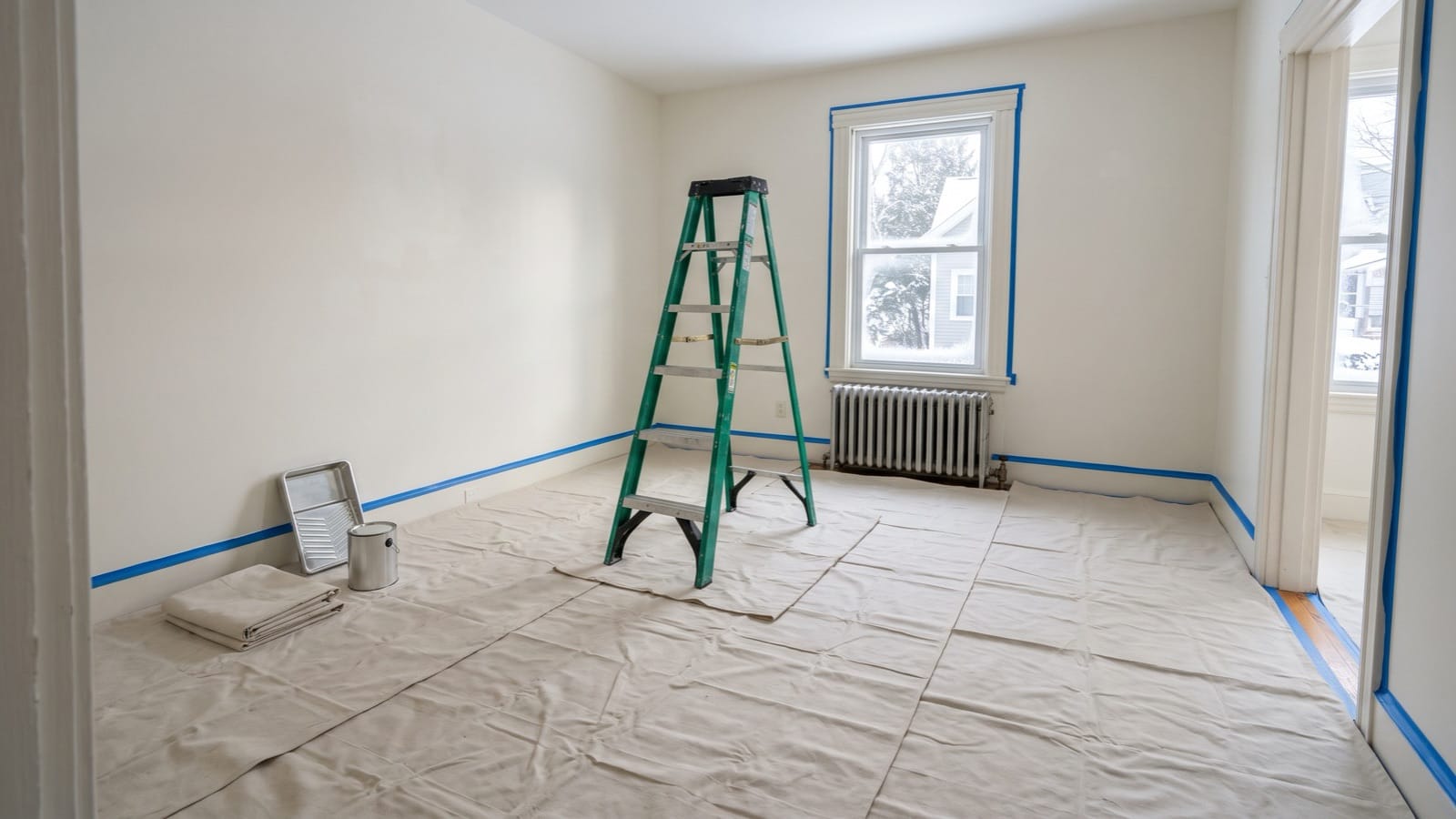
We use lead-safe methods on every pre-1978 home: containment, HEPA vacuums, wet scraping and proper disposal. For a paint job, containment means plastic on floors and over doorways so prep dust stays in the work area. It's dust control, not the legal containment 105 CMR 460 defines.
On an older rental, the work usually goes in this order:
- Paperwork first. Before we price prep, we ask what lead documents the unit has.
- Sequence with the other trades. Painting goes after any deleading work and the inspector's visit.
- Gentle prep on treated surfaces. Encapsulated or covered areas get cleaning, hand scuffing and primer, not heavy sanding.
- Durable finishes. We use premium Benjamin Moore and Sherwin-Williams paints, and in rentals that usually means washable wall finishes and harder-wearing enamels on trim and doors, so the next turnover is a touch-up.
- Clean as we go. HEPA vacuuming and wet wiping at the end of each day, debris bagged and taken out.
Winter suits this work: the unit is empty and the heat is on. Dust control with the windows shut takes longer, so we plan extra cleaning time. Our guide to painting a Holliston rental between tenants and our rental property painting schedule for MetroWest cover timing, finishes and how often to repaint.

Pre-1978 rentals around MetroWest
We're based in Holliston and paint rental units across MetroWest, including Framingham, Ashland, Hopkinton, Medway, Milford and Natick. The approach is the same in every town: find the year built, read the lead documents and put the painting after the lead work.
Frequently asked questions
What is the lead paint law Massachusetts landlords follow?
Massachusetts General Laws chapter 111, sections 189A through 199B, with the regulation 105 CMR 460. Section 197(a) begins: "Whenever a child under six years of age resides in any premises" with dangerous levels of lead, "the owner shall abate or contain" it under subsection (b) or (c).
Does painting over lead paint count as compliance under the lead paint law, Massachusetts section 197?
Section 197(f) reads: "Under no circumstances shall repainting with a non-lead based paint, without containment or abatement of the offending paint, plaster or other accessible structural material, constitute compliance with either subsection (b) or (c)."
When was lead paint banned in Massachusetts?
The EPA says: "In 1978, the federal government banned the sale of lead-based paint for use in homes and childcare facilities." Massachusetts law defines premises as property "constructed prior to nineteen hundred and seventy-eight," and the Appeals Court dates the state's Lead Law to St.1971, c. 1081.
How long does a Letter of Interim Control last?
Section 197(b) says it "shall expire at the end of one year from the date of its issuance" and "may be renewed once, for an additional one-year period," with two years as the outside limit.
What is a Letter of Compliance for lead paint?
105 CMR 460.020 calls it a Letter of Full Compliance: "a written statement, signed, dated and issued by a lead inspector," which holds "as long as there continues to be no loose lead-based paint, other coating, plaster or putty" and the coverings remain in place.
Who does a lead inspection in Massachusetts?
Under 105 CMR 460.020, a Letter of Full Compliance is "issued by a lead inspector" and a Letter of Interim Control is "issued by a risk assessor." A painter doesn't issue either letter.
What does Massachusetts lead paint disclosure include for a new tenant?
Section 197A(d)(2) lists items for a prospective tenant, including "a copy of the most recent lead paint inspection report, letter of interim control, letter of compliance or abatement plan applicable to the dwelling unit."
Which rules cover painting a pre-1978 rental under the lead paint law, Massachusetts and federal?
Two sets are in view. The state statute and 105 CMR 460 cover deleading and the letters. The EPA's RRP rule covers work in "homes, child care facilities, and kindergartens built before 1978." Ask any contractor about both.
The bottom line
In a pre-1978 rental, paint and deleading are different things, and the statute says so: repainting without containment or abatement doesn't count as compliance. The letters show where a unit stands, and painting fits after that work, with prep that keeps coverings intact. The lead paint law Massachusetts wrote is long and specific, so read the sections linked above, keep every letter and get legal advice for your own building.
Talk to Paint Pro
Paint Pro New England is based in Holliston, owned by Dave Griffiths, and has painted homes across MetroWest for more than fifteen years. We're fully licensed and insured, including workers' compensation, use premium Benjamin Moore and Sherwin-Williams paints, back our work with a 2-year warranty on all work, and have more than 60 five-star reviews on Houzz. See our interior painting services for walls, ceilings, trim and doors. Call or text Dave at (774) 217-9567, or request a free, no-obligation estimate online.
Dave Griffiths
Dave Griffiths is the owner of Paint Pro New England, a professional painting company serving MetroWest Boston since 2011. With 15+ years of interior and exterior painting experience across the region, he leads every project with thorough prep, premium Benjamin Moore and Sherwin-Williams paints, and a 2-year warranty.

