



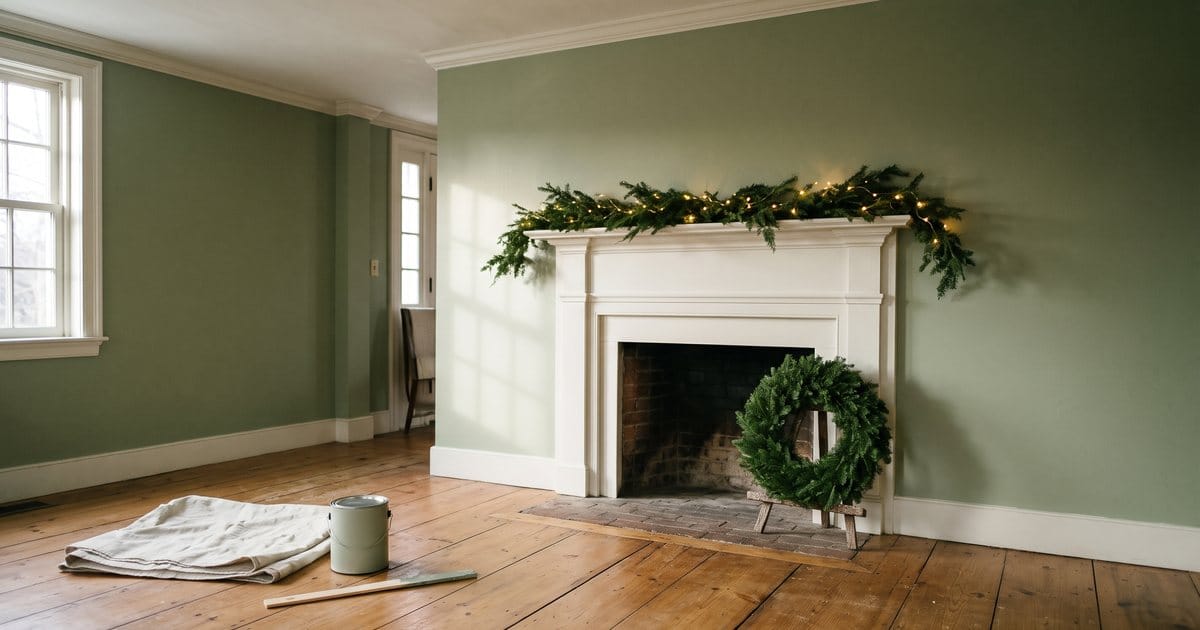
TL;DR: Wait at least 7 days before you put up Command strips after painting, which is what 3M's US Command instructions say. Some 3M packages sold outside the US say 28 days, so if yours does, follow the package. Benjamin Moore says wall paint is not fully cured for about 30 days, so the longer you wait, the safer the paint is when the strip comes off. Painter's tape made for delicate surfaces can go on after 24 hours. Garland, lights and wreaths that need adhesive hooks should be planned around those dates, not around how dry the wall feels.
Getting a room painted before the holidays? Call or text Dave at (774) 217-9567. We will tell you which walls will be ready for hooks by the time the decorations come out of the attic.
Every year around this time, the same question shows up at the end of an interior job: the walls look done, the room smells fine, and the boxes of garland and string lights are already in the hall. Can the hooks go up this weekend? Putting up Command strips after painting is the most common version of that question, and usually the honest answer is "not yet," and the reason is worth two minutes, because an adhesive strip pulled off a wall that has not cured can take a patch of new paint with it.
This post is only about adhesives, hooks and decorations on fresh paint. When the sofa, the bed and the bookcase can go back against the wall is a different clock, covered in how long before furniture goes back after painting.
How long should you wait to use Command strips after painting?
At least 7 days, which is what 3M's US Command pages and FAQ say. Some 3M packages sold outside the US say 28 days, so read the instructions on the package you bought.
- The 7-day instruction. 3M's US how-to page for Command Picture Hanging Strips lists "Wait 7 days after painting before use," and the same line appears on its page for indoor and outdoor hooks. The US Command FAQ says the products work on painted walls when the paint is "fully cured for at least 7 days, clean, smooth, and in good condition."
- The 28-day instruction outside the US. Some of 3M's metric instruction sheets say "Wait a minimum of 28 days after painting to apply," including the sheets for small, medium and large refill strips and clear round cord clips.
- The paint maker's number. Benjamin Moore's guide to cleaning freshly painted walls says "the paint will not be fully cured for about 30 days." Sherwin-Williams says latex and acrylic paints take "two or three weeks to cure" in its guide to paint drying.
Our working rule follows from that: 7 days is the floor, 28 to 30 days is the safe answer, and the package always wins. For a light string of clips on a wall you care about, the extra three weeks costs nothing but patience.
Why does fresh paint matter to an adhesive hook?
Because the strip does not stick to your wall. It sticks to the paint film, and for the first few weeks that film is still hardening. A strip holds by pressing into the surface; it comes off by stretching. Both steps load the paint.
Look at the gap between dry and cured on one real product. Benjamin Moore's data sheet for Regal Select Eggshell (N549) gives a dry time of 1 hour to the touch and 1 to 2 hours to recoat at 77°F and 50 percent relative humidity, then says "Painted surfaces can be washed after two weeks." The wall feels finished the same afternoon. It is not ready for scrubbing for two weeks, and the same company's cleaning guide puts full cure at about a month.
The same data sheet adds that "high humidity and cool temperatures will result in longer dry, recoat and service times." A guest room kept cold to save heat, or an unheated mudroom, is behind the calendar, not ahead of it.
3M's own FAQ says when wall damage happens: if the paint was "weak, old, uncured, damaged," or if the strip was pulled out instead of straight down during removal. Uncured is on that list by name. Command strips after painting that go up on day three might hold fine through New Year's Day. The trouble comes in January, when it is stretched off and the soft film underneath lets go with it.
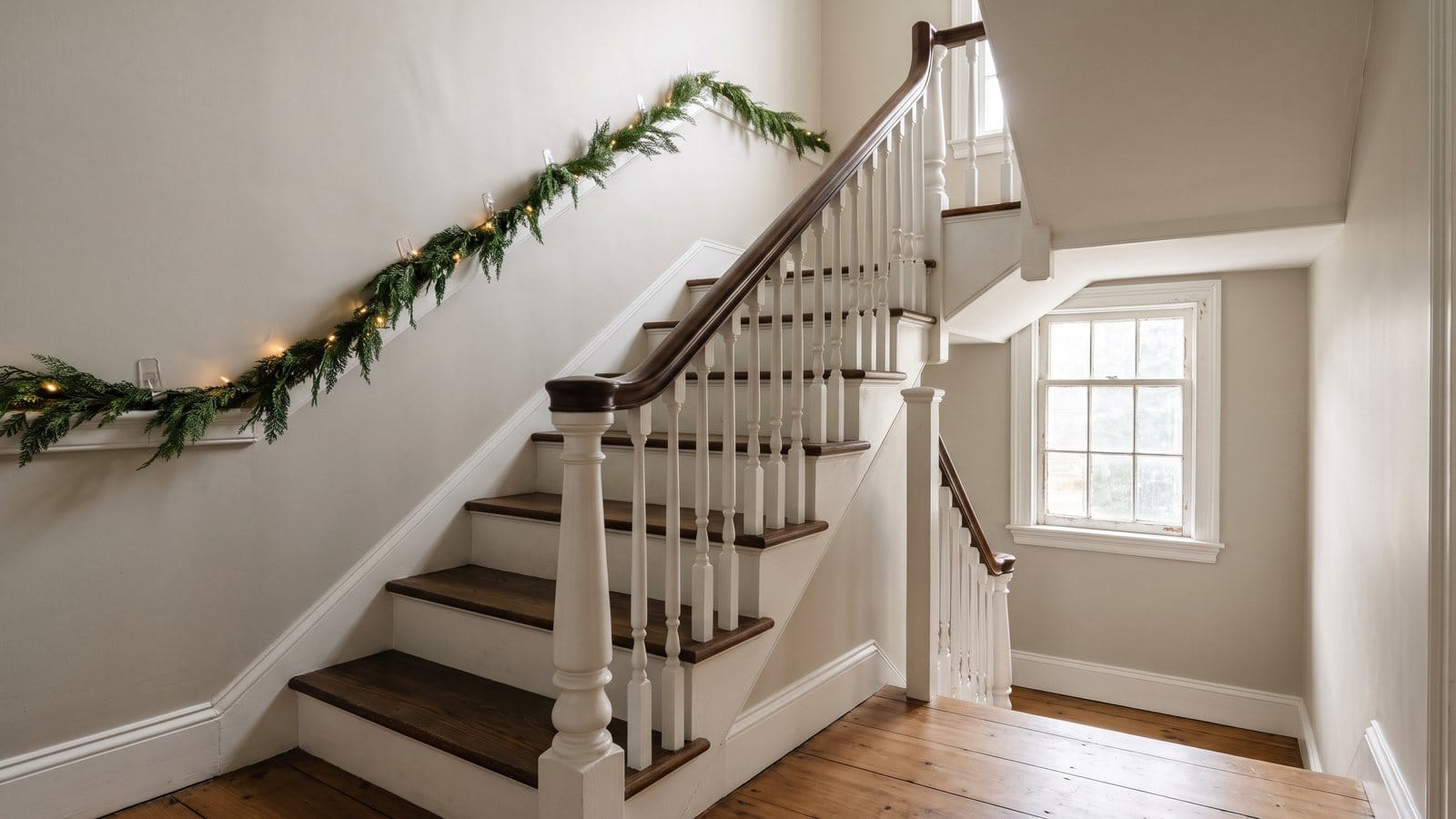
When can you hang decorations and Command strips after painting?
Here is the timeline we give homeowners for decorating on new paint. It covers adhesives, tape and hooks only. The figures come from the manufacturers named in each row.
| What you want to put on the wall | Earliest, per the maker | Source |
|---|---|---|
| Delicate-surface painter's tape (to mask, or to hold a paper sign briefly) | Paint at least 24 hours old | 3M, Scotch 2080 data sheet |
| Command picture strips, hooks and most clips | 7 days after painting | 3M, Command US how-to pages |
| Some packages sold outside the US (refill strips, cord clips) | 28 days after painting | 3M metric instruction sheets |
| Washing the wall, including wiping off adhesive residue | About 30 days | Benjamin Moore cleaning guide |
The tape data sheet marks "freshly painted walls" with "At least 24 hours old." That is a tape built to release gently. It is not permission for ordinary masking tape or packing tape, which are not made for new paint.
Framed pictures on nails are their own topic, and we do not repeat it here; the furniture post above covers them. What this table is for is the decorating that relies on glue: garland clips along a stair wall, light clips around a window casing, a hook for a stocking, a strip that holds a wreath on a door.
How do you plan holiday decorating around a fall paint job?
Count backward from the day the decorations go up. Thanksgiving falls on November 26 this year, so if a family room is finished on November 19, the 7-day mark for Command strips after painting is November 26. A room painted in early November is well past 7 days by the weekend after Thanksgiving.
A few habits help when the dates are tight:
- Paint the decorating walls first. If the job covers several rooms, ask for the stair hall, the mantel wall and the front entry early in the schedule. Those are where the hooks go. What a normal schedule looks like is in what happens when you hire an interior painter.
- Keep the heat on. Normal, steady room conditions keep curing on track. Benjamin Moore's cleaning guide asks you to "maintain normal room temperature and humidity levels" while the paint cures.
- Use freestanding pieces this year. A tabletop tree, a garland laid along the mantel, a wreath on an easel or on a nail you already had. Nothing glued to the new paint.
- Use the old holes. If a nail or screw has hung a wreath in the same spot for ten years, a nail through a new coat is a much smaller risk than an adhesive pad, as long as nothing presses flat against the wall.
- Hang from trim and hardware, not walls. Curtain rods, newel posts and banister spindles take ribbon ties without touching new wall paint.
How do you put up Command strips after painting without peeling the paint?
Wait the full time first, then follow the steps 3M prints, with one change for new paint. Most paint damage happens at removal, not at hanging.
Clean gently on new paint
3M tells you to clean the spot with rubbing alcohol, not household cleaners or water, because alcohol removes dust and oils and dries without a film. On fresh paint, go easy. 3M's Canadian FAQ warns that rubbing alcohol may remove or dull the surface of fresh paint and asks you to check the paint can for the cure time. A light wipe on a cured wall, not a scrub on a new one.
Press, then wait an hour
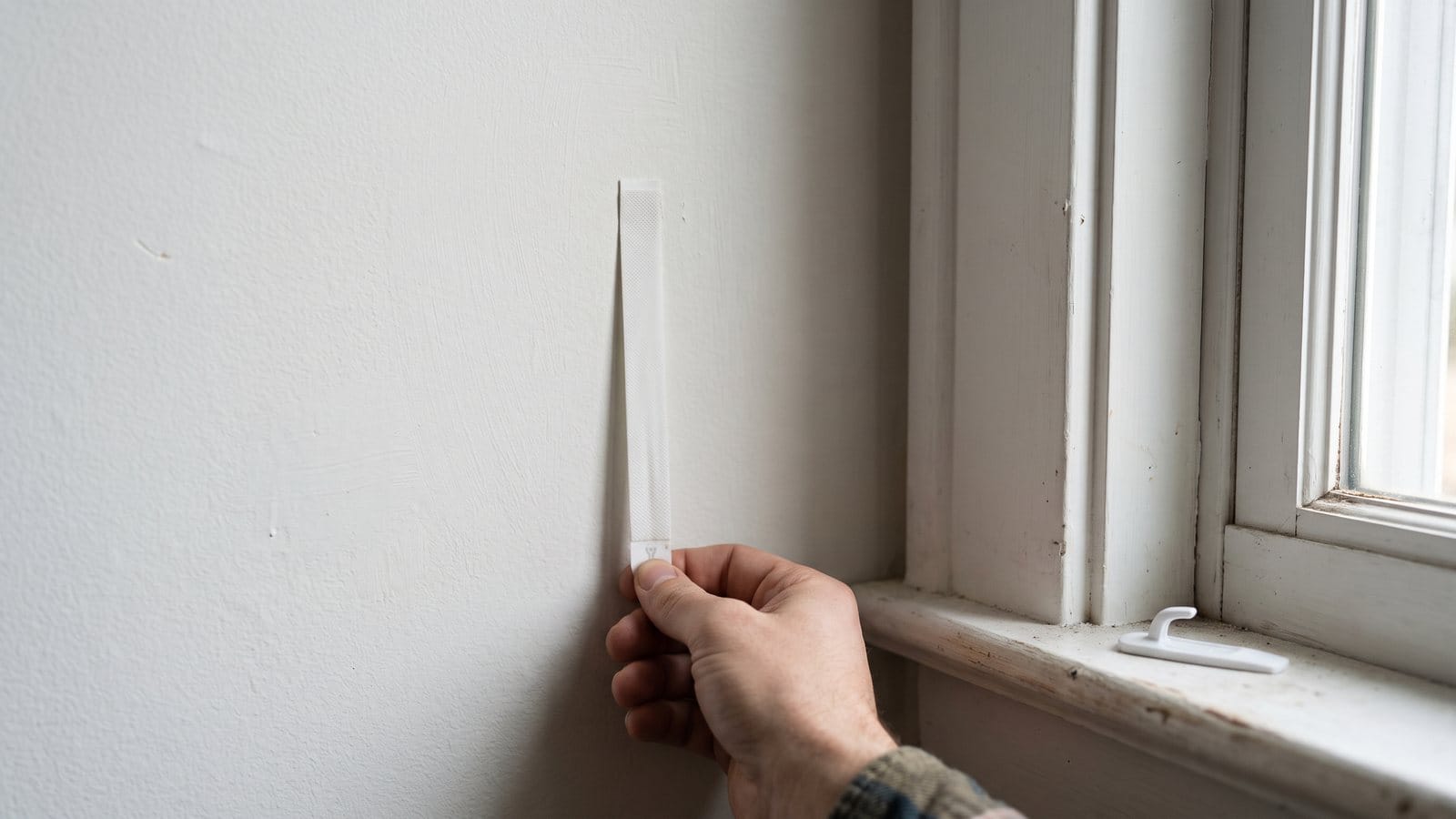
The package steps say to press the strip firmly for 30 seconds, and the Command FAQ says many products need "at least one hour" before you hang anything, so the adhesive builds its hold. Hanging a heavy garland the moment the clip goes on is one of the failure causes 3M names: "hanging too soon."
Check the room and the surface
- Temperature. Command's indoor products are rated for use between 50°F and 105°F, which matters in a cold porch or an unheated entry.
- Texture and wallpaper. The FAQ says the products are not recommended for heavily textured surfaces, wallpaper, brick or rough concrete. Old plaster with a sand finish can fall into the textured group.
- Humidity. 3M lists humidity and temperature changes among the reasons hooks fall, and points you to its bath products for damp rooms. A strip that drops overnight from a cold exterior wall is often one of these, not the paint.
Take it down the way 3M says
This is the step that saves the paint. 3M's FAQ says to pull the tab "straight down slowly along the wall" and never toward you. Its picture-strip and bath instructions ask you to stretch the tab down along the wall at least 15 inches, and its general hook instructions at least 12 inches. If a tab breaks, the FAQ says not to yank the hook; use dental floss or string to saw through the strip, and a hair dryer to soften the adhesive first.
Does the wait for Command strips after painting apply outdoors too?
Yes. 3M's page for indoor and outdoor hooks carries the same 7-day instruction, and outdoor products have their own ratings. 3M says its outdoor hooks handle a range of -20°F to 125°F, and its Canadian FAQ says outdoor products should be applied to a clean, dry, smooth surface above 15°F. Indoor strips are not made for outdoor conditions, so use the outdoor line on trim, doors and siding.
If we painted your front door, trim or shutters in October, count from the day of the last coat. Exterior paint in a cold, damp New England fall dries and hardens slowly, for the same humidity and temperature reasons printed on interior data sheets. A wreath hanger hooked over the top of a newly painted door also presses on the door's top edge and face every time the door closes, so a felt pad under the hanger is a small step that protects the paint. Our exterior work is described on our exterior painting page.
What if Command strips after painting took paint off the wall?
It can be fixed, and the repair is small if you stop at one spot. Do not try the next strip the same way.
- Stop and look at the failure. If the new coat came off and the old color is underneath, the new film had not bonded or cured. If bare drywall paper or primer shows, the problem may be older layers or poor prep from a past job.
- Feather the edges. Sand the torn edge lightly so it does not show as a ridge through the patch.
- Spot prime, then touch up. Prime the bare spot and touch up with the same paint. On a satin or eggshell wall, a touch-up can show in side light, and sometimes the honest fix is to repaint that wall corner to corner.
- Give the patch its own wait. The repaired spot is now the newest paint in the room. Its 7 days, or 28, start over.
If a whole wall shows lifting in several places, call us before anything else goes up on it. That pattern usually points to an adhesion problem below the top coat, and taping or gluing more to it will make it worse. We look at it as part of our interior painting work.
Frequently asked questions
How long should I wait to use Command strips after painting?
At least 7 days, which is the instruction on 3M's US Command pages. Some 3M packages sold outside the US say 28 days, so follow yours if it does. Benjamin Moore puts full cure of wall paint at about 30 days, so longer is safer.
Can I put up Command strips after painting if the wall feels dry?
Not yet. Dry to the touch takes about an hour on a typical latex wall paint, but the film is still curing for weeks, and 3M names uncured paint as one cause of wall damage when a strip is removed.
Will Command strips after painting peel the new paint?
They can if the paint has not cured or the strip is pulled out toward you. Wait the full time on the package, then stretch the tab straight down along the wall, slowly, at least 12 to 15 inches, as 3M instructs.
Can you use Command strips after painting with flat or eggshell paint?
3M says the products work on painted walls that are cured, clean, smooth and in good condition, and it does not single out a sheen. It does advise against heavily textured surfaces and wallpaper, where the strip cannot make full contact.
Do outdoor Command hooks need the same wait on new exterior paint?
Yes, 3M's page for indoor and outdoor hooks carries the same 7-day instruction. Its outdoor products are rated from -20°F to 125°F and should be applied to a clean, dry, smooth surface above 15°F.
Should I clean the wall with rubbing alcohol before using Command strips after painting?
3M recommends rubbing alcohol on the spot before applying a strip, but its Canadian FAQ warns that alcohol may remove or dull the surface of fresh paint. Wait for the paint to cure and use a light wipe.
Why do Command strips after painting pull paint off the wall?
3M lists the causes of wall damage as paint that was weak, old, uncured or damaged, or a strip pulled out instead of straight down. On a new wall, the usual culprit is a film that had not finished curing when the strip went on.
Can you use Command strips after painting a bathroom?
Give the paint the same 7 days or longer, then use 3M's bath products, which it designs for hot, wet and humid rooms. 3M says regular strips may not perform as well in humid areas.
The bottom line
Fresh paint dries in an hour and cures over weeks, and Command strips after painting only care about the second number. Give new walls at least 7 days before any hook goes on, 28 when the package says so, and plan your holiday decorating around the date of the last coat, not around how the wall feels. When the strips come down in January, pull straight down, slowly.
Talk to Paint Pro
If you want a room or a stair hall painted before the holidays, tell us where the decorations go and we will schedule those walls first. Paint Pro New England is based in Holliston and has painted MetroWest homes for more than fifteen years. We are fully licensed and insured, including workers' compensation, we use premium Benjamin Moore and Sherwin-Williams paints, our work carries a 2-year warranty, and homeowners have left more than 60 five-star reviews on Houzz. Call or text Dave at (774) 217-9567, or request your free, no-obligation estimate at paintpronewengland.com/contact.
Dave Griffiths
Dave Griffiths is the owner of Paint Pro New England, a professional painting company serving MetroWest Boston since 2011. With 15+ years of interior and exterior painting experience across the region, he leads every project with thorough prep, premium Benjamin Moore and Sherwin-Williams paints, and a 2-year warranty.

