



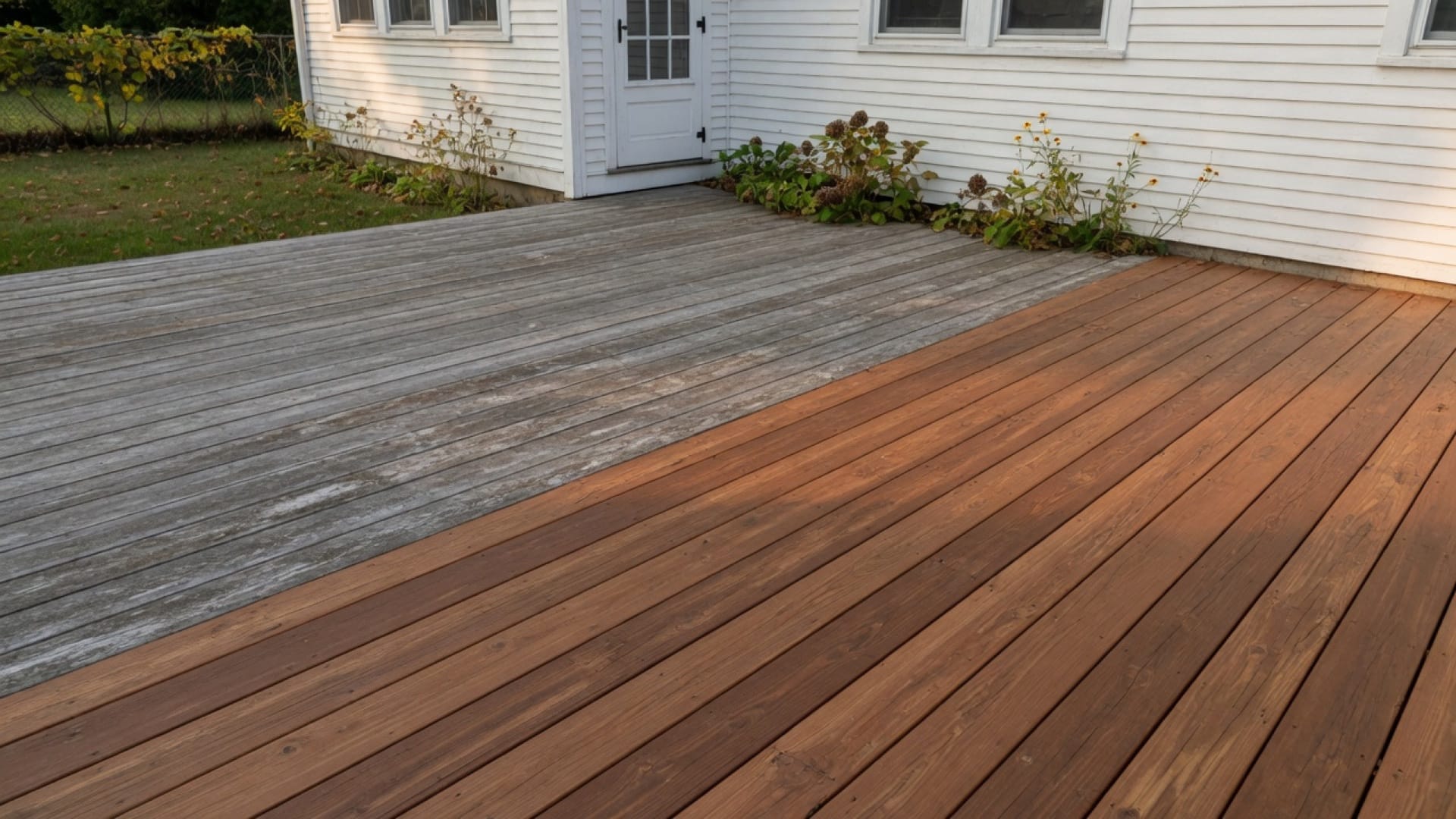
TL;DR: Stain a structurally sound Massachusetts deck for about $2–$6 per square foot (often $800–$3,000 on a typical backyard). Replace only the decking boards, if the frame is sound, at roughly $5–$12 per square foot for pressure-treated pine. A full rebuild is another order of spending: wood commonly $20–$35 per square foot installed, composite higher. If more than about 20–30 percent of the boards are done, staining is buying time, not a deck.
Want a stain-or-replace read before winter? Call or text Dave at (774) 217-9567. We stain. If the joists are the problem, we will tell you to call a carpenter.
Gray boards in August look like a stain job from the driveway. The screwdriver test on the ledger and the joists is the actual test. Color is cheap. Structure is not. Stain cost lives in our Massachusetts deck staining cost guide. This page is whether that money should go on the wood that is already there.
Should you stain or replace deck boards in Massachusetts?
Stain when the boards are gray, checked, and still sound, and the fasteners and framing are dry. Replace boards (keep the frame) when a share of the decking is cupped, split through, or soft underfoot but the joists and ledger pass a probe. Rebuild when the ledger, posts, or joists are the failure. New England freeze-thaw is why that last category shows up earlier here than in a mild climate. Local framing notes put Massachusetts through on the order of 30 to 40 freeze-thaw cycles a winter; water in a check freezes and opens it. That is the climate math behind a New England wood-versus-composite cost comparison, not a sales pitch for composite.
What do the three paths cost?
| Path | Typical 2026 range | What you still own |
|---|---|---|
| Wash, brighten, stain | $2–$6 / sq ft (about $800–$3,000 on many MetroWest decks) | The same boards, recoated every 2–3 years (semi-transparent) or 4–5 years (solid) |
| Replace decking only | About $5–$12 / sq ft pine, higher for cedar, more for composite | The same frame, new walking surface |
| Full rebuild | Wood often $20–$35 / sq ft installed; composite commonly $40–$80+ | A new deck, code, and frost-line footings |
Those stain numbers match what we already publish for a 12×12 through 20×20 deck. Restoration-versus-replacement roundups for 2026 put a cosmetic restore of a 300 sq ft deck in the hundreds to low thousands, and a rebuild in the many thousands. See a current deck restoration vs replacement cost guide for the national brackets; Massachusetts labor sits above them.
A field rule we use on estimates: if you are replacing more than about 20 to 30 percent of the boards, a stain on the rest is paying to coat a deck that is already coming apart. At that point the carpenter’s number is the one that matters.
How do you tell stain-worthy from replace-worthy?
- Probe, do not guess. A screwdriver that sinks into a joist, post, or ledger is not a coating problem. Stop. That is structure.
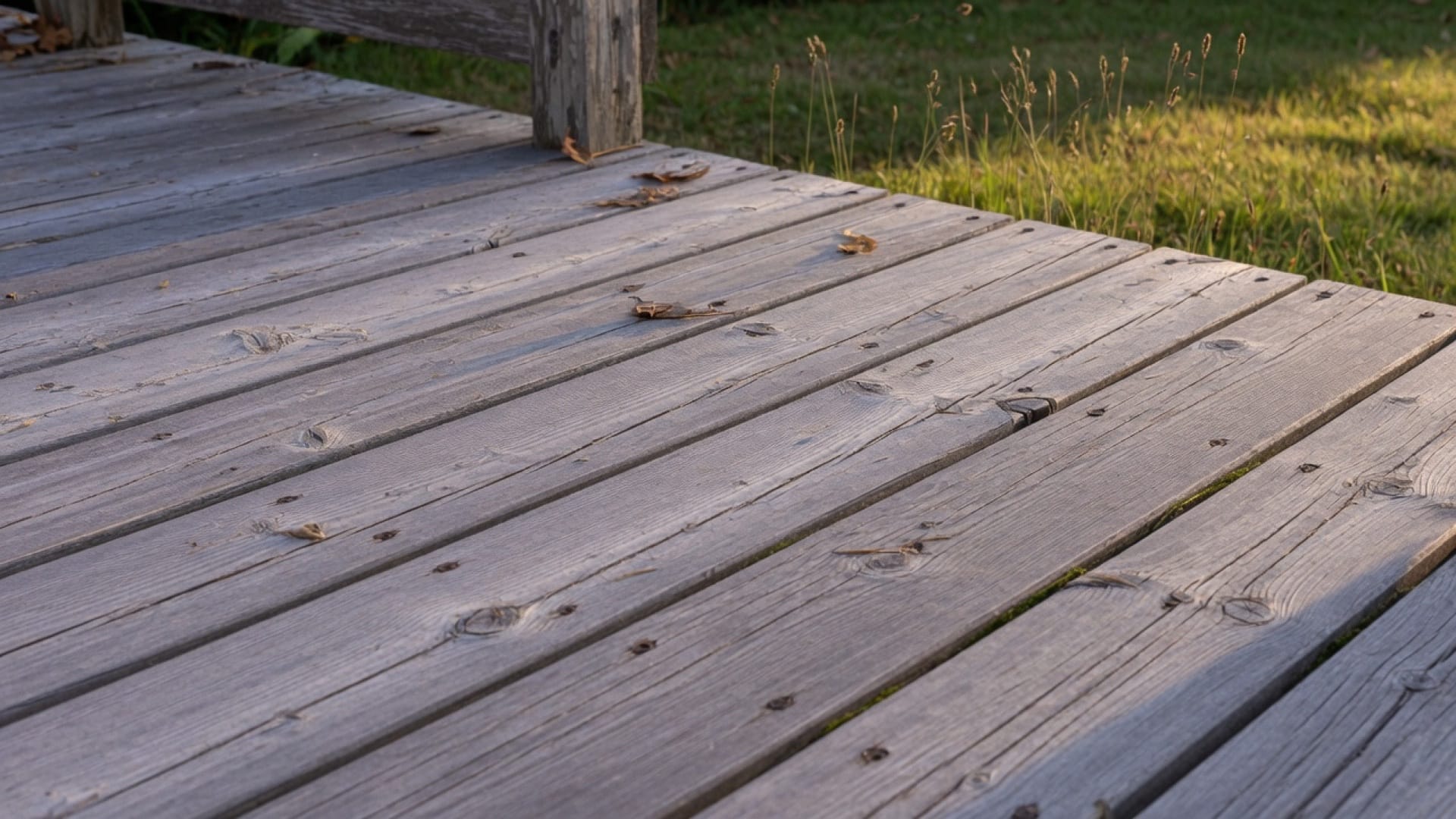
- Cup and split. Surface checks are normal on New England cedar and PT pine. Boards that dump water into a cup, or splits that go through the thickness, do not hold stain as a film-or-penetrant in a useful way. They hold water.
- Fasteners. Popped screws and rusty nails on a 15-year deck are often the first tell that the wood has moved past a wash-and-coat.
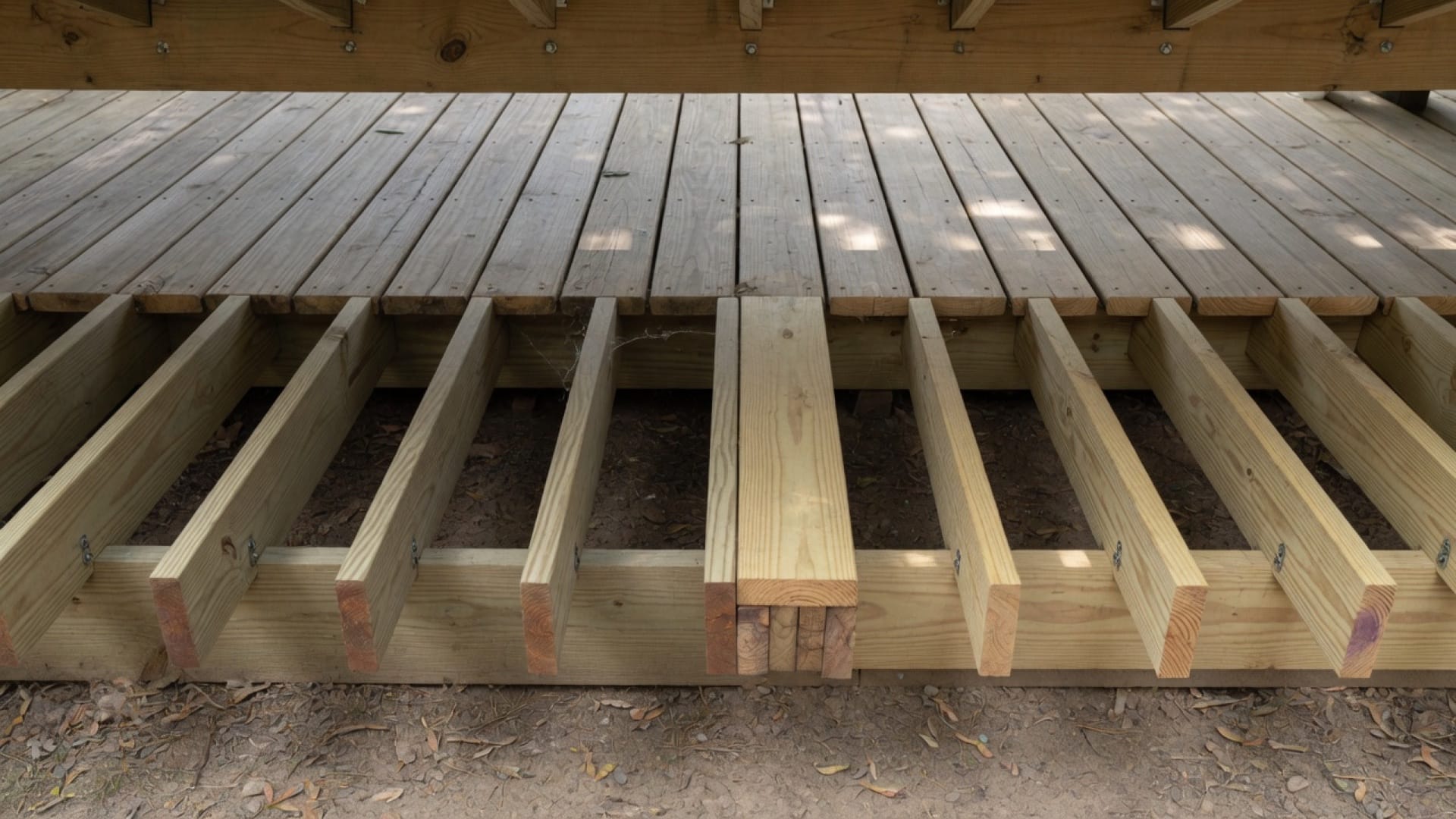
- The ledger. The board that ties the deck to the house is the one that fails quietly. Stain does not fix a bad ledger. Massachusetts snow load and a 48-inch frost line are why rebuilds get engineered; that is a building-code conversation, not a stain conversation. Natick-area builders spell out those footing rules in local deck replacement notes.
We will not stain over rot to make a weekend look better. The complete Massachusetts deck staining guide assumes a deck that can take a coating. So does the late-season window in the last deck stain before winter.
Is painting a tired deck a third option?
Usually no. Solid paint on moving pressure-treated boards peels through freeze-thaw. Then the next job is a strip. That is the same reason we default to stain on fences in stain vs paint a wood fence in Massachusetts and on decks in deck staining vs painting in Holliston. A film on a deck you already distrust is two problems stacked.
Manufacturer lines we actually use (Benjamin Moore Arborcoat, Sherwin-Williams SuperDeck, and similar penetrating systems) are coatings, not lumber. Read the product data: they want clean, sound, dry wood, often under about 15 percent moisture. Wet or failing boards fail that spec before the first coat.
Frequently asked questions
Is it cheaper to stain a deck or replace the boards in Massachusetts?
Stain is cheaper on sound wood: about $2 to $6 per square foot versus about $5 to $12 per square foot to recarpet pine decking. Full rebuilds at $20 to $35 per square foot and up are a different project, not a stain upgrade.
How many bad deck boards mean you should replace instead of stain?
If more than about 20 to 30 percent of the boards are cupped, split through, or soft, staining the rest is usually a delay. Isolated boards can come out; a swiss-cheese walking surface wants new decking or a rebuild.
Can you stain a deck that has some rot?
No. Cut out the rot and decide whether the remaining structure is a deck. Coatings are for sound, dry wood. A pretty film over a soft joist is still a soft joist.
Does Paint Pro New England rebuild decks?
No. We stain, wash, and brighten decks that are structurally sound, with a 1-year warranty on deck staining. Framing, ledgers, and frost-line footings belong with a carpenter or deck builder.
When is it too late in the year to stain instead of waiting for a rebuild?
Late August still works if the boards stay dry and above about 50 degrees F through the cure. Once overnight dew and short days take over, we stop staining and you are on the spring list, rebuild or not.
The bottom line
Gray and tight: stain. A minority of boards shot, frame sound: recarpet the walking surface, then stain the new wood when it is dry. Soft ledger or joists: stop coating and get a builder. Holliston, Medway, Natick, and Hopkinton decks fail in that order more often than they fail from the wrong tint.
Paint Pro New England has been finishing MetroWest decks and exteriors since 2011 from Holliston, fully insured, 5.0 stars across 62+ reviews. For a free look at the boards, call (774) 217-9567.
Dave Griffiths
Dave Griffiths is the owner of Paint Pro New England, a professional painting company serving MetroWest Boston since 2011. With 15+ years of interior and exterior painting experience across the region, he leads every project with thorough prep, premium Benjamin Moore and Sherwin-Williams paints, and a 2-year warranty.

