



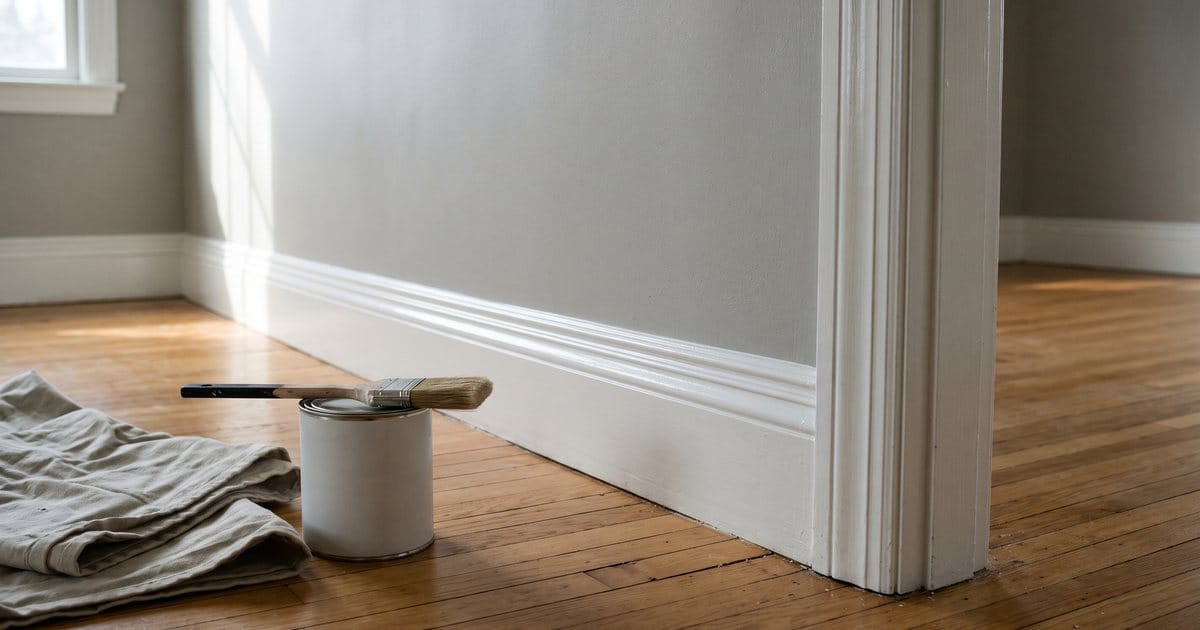
TL;DR: The cost to paint baseboards runs about $1 to $4 per linear foot in HomeGuide's cost guide and $2.30 to $4.88 per linear foot in Homewyse's May 2026 national estimate, which bundles in supplies, setup and overhead. One bedroom's baseboards come to about $40 to $200. Condition, caulking, old oil paint, height and whether the walls are painted at the same time move the number more than the paint does.
Planning trim, baseboards or doors this winter? Call or text Dave at (774) 217-9567. We will walk the rooms, look at what is on your trim now and price the work it actually needs.
Trim is the slow part of an interior. A wall is a big flat field you roll in minutes; a baseboard is a narrow strip with a top edge, a face, a bottom edge against the floor and a seam against the wall, and every inch of it is cut in by hand. That is why trim gets priced by the linear foot or by the room instead of by the square foot, and why two quotes for "the trim" can be far apart. This guide walks through the published market figures, what drives them up or down, and how to read a quote so you know what you are paying for.
What is the cost to paint baseboards per linear foot?
Most published guides put it between about $1 and $5 per linear foot, depending on what the estimate includes. The two cost guides we trust for this, and how they build their numbers:
- HomeGuide puts interior trim and baseboards at $1 to $4 per linear foot, or $500 to $2,000 for a home, in its trim and baseboard painting cost guide. The same guide lists crown molding at $1 to $5 per linear foot and chair rail at $1 to $4.
- Homewyse estimates $2.30 to $4.88 per linear foot as the May 2026 national average in its baseboard painting calculator. Its figure covers two coats rolled or brushed, job supplies such as masking, patching material and primer, and the setup time and overhead of a small job.
- Homewyse's separate base molding estimate runs a little higher, $2.37 to $5.02 per linear foot, because its labor includes "prep up to 2 hr per 100 LF," light scraping, sanding and patching, and "caulk edges and spot prime."
Most of the gap in the cost to paint baseboards is prep. A clean, previously painted baseboard that only needs a scuff and two coats sits at the low end. Trim with dents, open joints, failing caulk or a glossy oil finish sits at the high end.
By the room, HomeGuide lists bedroom baseboards at $40 to $200, a bathroom at $25 to $100 and a living room or kitchen at $60 to $200. For the rest of the trim in a room, its figures are $25 to $100 per interior window frame and $40 to $125 per side for an interior door and its trim. The guide also notes that many painters set a minimum charge of $250 to $500, which is why a single hallway of baseboard can cost more per foot than a whole floor.
These are general ranges. Every home is different, so call or text Dave at (774) 217-9567 for customized pricing and a free estimate.
Is the cost to paint baseboards lower when the walls are painted too?
Per foot, trim usually costs less when it is painted as part of a room. The setup, furniture moving, floor protection and the trip itself get shared across walls, ceiling and trim, and the painter can sequence the work so each coat dries while another surface is being painted.
Trim on its own carries all of that setup alone, which is why the cost to paint baseboards by themselves runs higher per foot. That is where the minimum charges in HomeGuide's guide come in, and where Homewyse's note about "labor setup time and mobilization typical of small jobs" shows up in the price. If you are planning to repaint walls within a year or two, it is usually worth pricing both together and deciding from there.
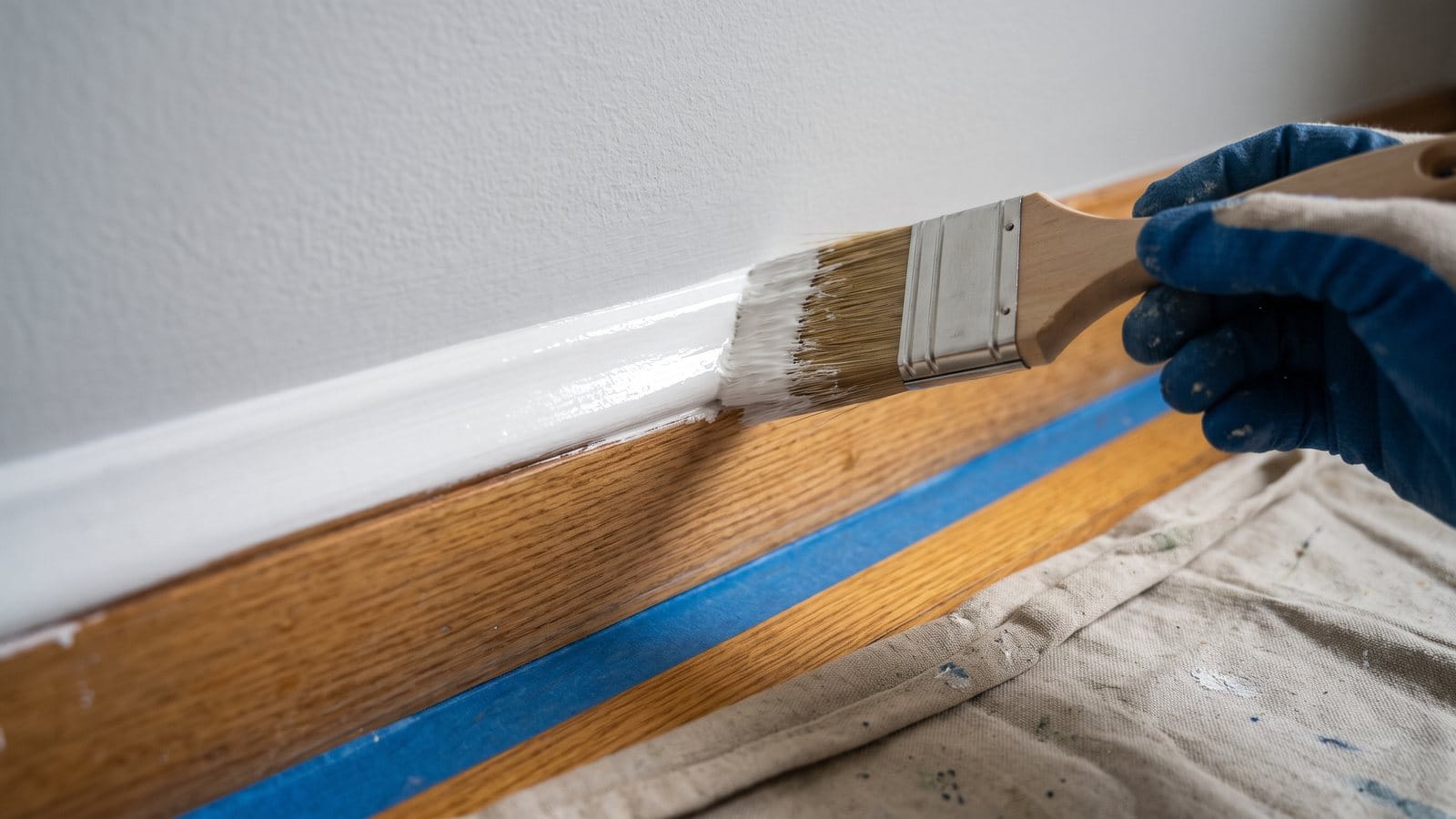
There is a practical reason too. When we paint a room, trim goes on after the walls are done so the cut line along the top of the baseboard is the last line painted, and it stays crisp. When only the trim is painted, that line has to be cut against an existing wall color without touching it, which is slower, careful work.
For the whole picture of a room with walls, ceiling and trim, see how much it costs to paint a room in Massachusetts. Crown, casings and built-in millwork have their own guide in trim, crown moulding and millwork painting in MetroWest.
These are general ranges. Every home is different, so call or text Dave at (774) 217-9567 for customized pricing and a free estimate.
What moves the cost to paint baseboards up or down?
Condition and prep move the cost to paint baseboards the most, followed by the existing finish, the amount of detail in the trim, height and how full the rooms are. The paint itself is a small part of the bill.
- Condition of the wood. Dents from vacuums, chipped edges, nail holes and open miter joints all get filled and sanded before paint. Homewyse's base molding estimate assumes only light defects; more than that is extra time.
- Caulk. The seam between baseboard and wall almost always needs fresh caulk on a repaint, and older caulk that has cracked or pulled away has to be cut out first. That is part of why the base molding estimate, which includes caulking, sits higher than the plain painting estimate.
- Old oil paint. Many older Massachusetts homes still have oil-based enamel on the trim. Latex over glossy oil without prep can peel. Benjamin Moore's data sheet for Advance semi-gloss says to "sand glossy alkyds before applying Advance" and that "glossy areas should be dulled." Sanding and a bonding primer add a step on every foot of trim.
- Profile and detail. A flat, modern baseboard is quick. A tall Colonial base with a cap and a shoe molding has three pieces and more edges to cut. Crown runs higher per foot than baseboard in HomeGuide's figures for the same reason.
- Height. HomeGuide says interior trim above 8 feet adds about $1 per linear foot, because it means ladders or staging. That mostly hits crown and stairwell trim, not baseboards.
- Color change. Going from stained wood to white, or from a dark trim color to a light one, takes primer and sometimes a third coat.
- Furnished rooms. Baseboards sit behind beds, sofas and bookcases. Moving furniture out from the walls and back is labor, and so is protecting floors and carpet edges.
- Drying time. Trim enamels are slower than wall paint. Benjamin Moore's data sheet for Advance lists 16 hours to recoat and says not to expose it to heavy abrasion for at least 3 to 5 days, and that it can take "up to 30 days to reach optimum hardness." Two coats of a slow enamel can mean an extra day on the schedule.
- Local labor costs. Labor is most of any trim job, and Massachusetts pays more for it. The federal Bureau of Labor Statistics put the May 2025 mean wage for painters in Massachusetts at $30.81 an hour, against $26.64 nationally. Those are wages, not billed rates, but they explain why national cost figures often land low for MetroWest.
These are general ranges. Every home is different, so call or text Dave at (774) 217-9567 for customized pricing and a free estimate.
How is the cost to paint baseboards measured?
Baseboard is measured in linear feet around the room, less the door openings. A 12 by 14 foot bedroom has a perimeter of 52 feet; take out a 3 foot door opening and a closet opening and you are somewhere in the mid 40s. A whole floor of a Colonial adds up quickly once halls, stairs and closets are counted.
Door and window casings are usually counted per opening rather than per foot, and doors themselves per side. Crown is linear feet at ceiling height. When you compare two quotes for the cost to paint baseboards, check that they measured the same things: some include closet baseboards and shoe molding, some do not.
A clear quote lists, for each room or area:
- Which trim is included: baseboard, shoe, casings, crown, chair rail, window stools and aprons.
- Prep: filling, sanding, caulking, and whether the old finish is oil.
- Primer, if any, and where it goes.
- The product line and sheen, and the number of coats.
Doors often get decided in the same conversation. If yours are worn or dated, paint or replace interior doors in Massachusetts walks through that choice.
Why does trim in older Massachusetts homes take longer?
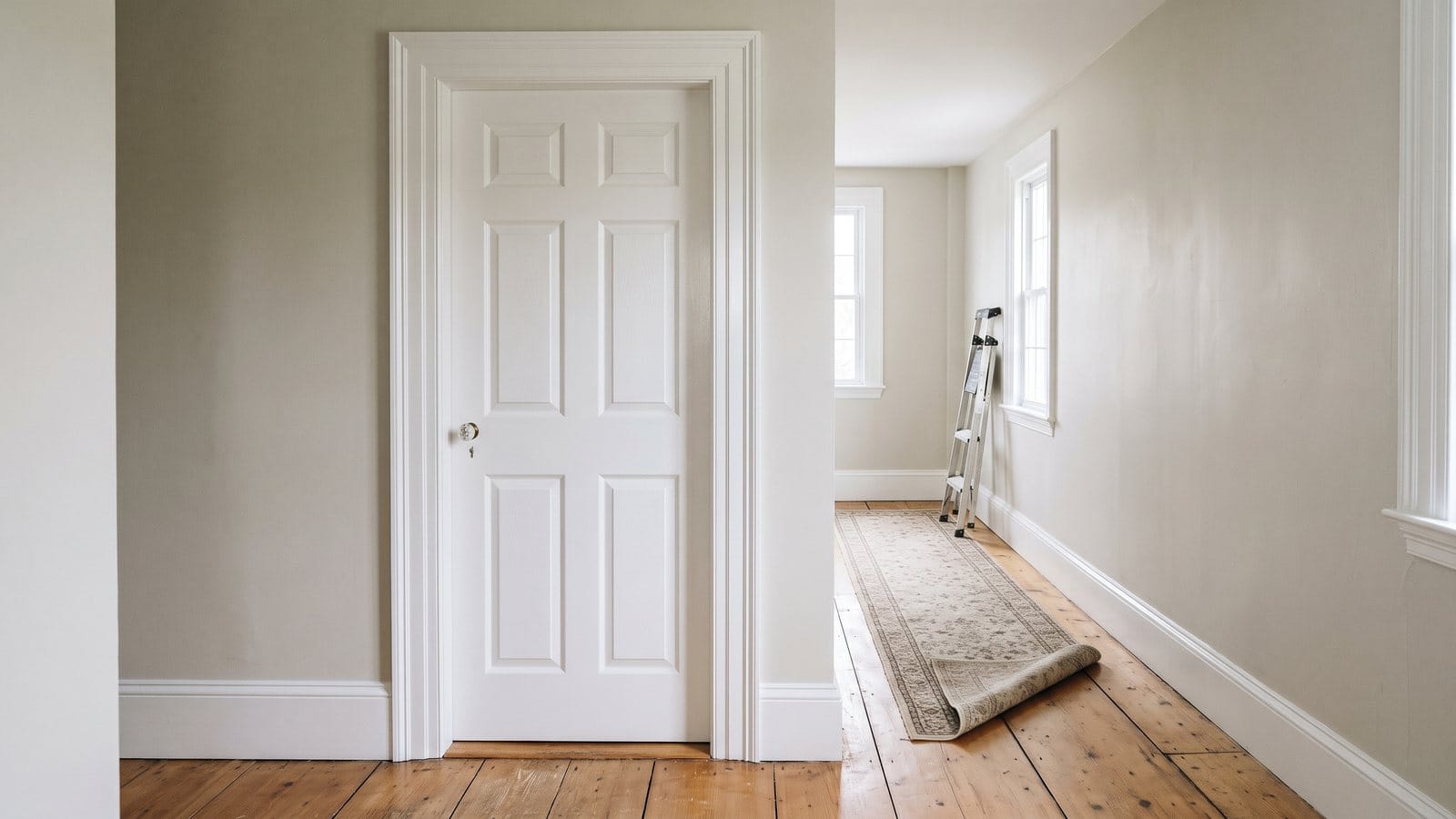
Older trim usually has more layers, more detail and more history. In MetroWest towns full of Colonials, Capes and Victorians, the baseboards may be original wood with decades of paint on them, sometimes oil over oil, with joints that have opened and closed through a lot of New England winters.
Three things come up again and again:
- Buildup. Thick layers soften the profile and chip at the edges. Sometimes the right call is to sand the edges smooth and paint; sometimes a section needs more careful stripping.
- Oil-based enamel. It needs dulling and a primer that bonds to it before a waterborne enamel goes on, as the Benjamin Moore data sheet above describes.
- Lead. The EPA says on its lead sources page that "if your home was built before 1978, it is more likely to have lead-based paint." Trim, windows and doors are where old paint is most often sanded. We use lead-safe methods on every pre-1978 home: containment, HEPA vacuums, wet scraping and proper disposal. That takes more setup and cleanup time than a standard prep, and it belongs in the quote.
None of this means older trim is a problem. Original wood trim, painted well, gives an old house much of its character. It just takes more hours to do right, and the cost to paint baseboards in an older home should reflect that.
What does it cost to paint baseboards yourself?
Less in cash, more in time, and many homeowners do it. The materials are modest: HomeGuide lists trim paint at about $20 to $80 a gallon, plus caulk, sandpaper, tape, a good angled brush and drop cloths. The cost is mostly your time and your knees.
Where DIY baseboard work tends to go wrong is prep and patience. Skipping the sanding on glossy trim, painting over dust, caulking with a product that is not paintable, or recoating before the enamel is ready all show up later as peeling, brush marks or tacky spots. Follow the recoat time on the can, keep the cut line straight and work in good light.
If you would rather hand it off, that is the work we do every day. Our interior painting covers walls, ceilings, trim and doors.
Frequently asked questions
How much do painters charge to paint baseboards?
Published market figures run about $1 to $4 per linear foot in HomeGuide's guide and $2.30 to $4.88 per linear foot in Homewyse's May 2026 national estimate, with prep, caulking and old oil paint pushing a job toward the high end.
What is the average cost to paint baseboards in one room?
HomeGuide lists bedroom baseboards at $40 to $200, a bathroom at $25 to $100 and a living room or kitchen at $60 to $200, before any minimum charge for a small job.
Is it cheaper to paint baseboards or replace them?
Painting is usually cheaper. HomeGuide puts painting at $1 to $4 per linear foot and installing new baseboards at about $6 to $9 per linear foot, and new trim still has to be painted. Replacement makes sense when the trim is damaged, rotted or the wrong style for the house.
Does the cost to paint baseboards include caulking?
It should, and a clear quote says so. Homewyse's base molding estimate includes caulking edges and spot priming, which is part of why it runs higher than its plain painting estimate.
How long does it take to paint baseboards?
Painting time depends on the length and prep, but drying sets the pace. Benjamin Moore's Advance data sheet lists 16 hours to recoat and 3 to 5 days before heavy abrasion, so two coats of trim enamel often spread across more than one day.
Why is the cost to paint baseboards higher in an older home?
Older trim often has thick paint buildup, oil-based enamel that has to be dulled and primed, open joints to fill and caulk, and, in homes built before 1978, lead-safe prep and cleanup, all of which add hours per foot.
Does the cost to paint baseboards go down if you move the furniture yourself?
It can, because pulling beds, sofas and bookcases away from the walls and putting them back is labor. Ask the painter to price it both ways. Protecting floors and carpet edges is still part of the job either way.
What sheen should you use on baseboards?
Most baseboards get semi-gloss or satin trim enamel. It wipes clean of scuffs and stands up to vacuums and boots better than wall sheens, and semi-gloss is the classic look for white trim in New England homes.
The bottom line
Published guides put the cost to paint baseboards and trim at roughly $1 to $5 per linear foot, with the range set by prep: caulking, filling, dulling old oil paint, and the care an older home needs. Painting trim along with the walls usually costs less per foot than doing it alone. When you compare quotes, compare what each one includes before you compare totals.
How we price: Dave works with each customer on the price, built around the job after a free estimate. Paint Pro is an expert painter, not a bargain shop: thorough prep and premium Benjamin Moore and Sherwin-Williams paints, priced for the work your home actually needs.
Talk to Paint Pro
Paint Pro New England is based in Holliston and has painted homes across MetroWest for more than fifteen years. We are fully licensed and insured, including workers' compensation, back our work with a 2-year warranty on all work, and have more than 60 five-star reviews on Houzz. Dave personally oversees each project from the estimate through the final walkthrough. See our interior painting services for walls, ceilings, trim and doors. Call or text Dave at (774) 217-9567. You can also request a free, no-obligation estimate online.
Dave Griffiths
Dave Griffiths is the owner of Paint Pro New England, a professional painting company serving MetroWest Boston since 2011. With 15+ years of interior and exterior painting experience across the region, he leads every project with thorough prep, premium Benjamin Moore and Sherwin-Williams paints, and a 2-year warranty.

